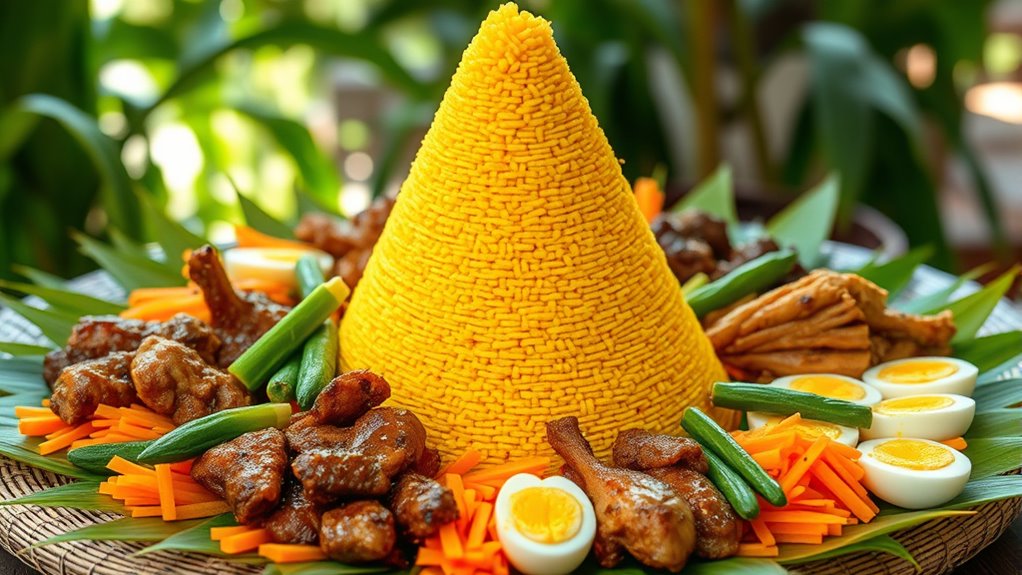

The cone shape of Nasi Tumpeng holds deep symbolic meaning in Indonesian culture. It represents prosperity, spiritual harmony, and reverence for tradition. The mountain-like form connects heaven and earth, reflecting spiritual balance. It’s often used in celebrations to honor community, gratitude, and blessings. Every element in the dish, from the shape to the decorated sides, underscores cultural values that bring people together. If you explore further, you’ll uncover even more about its rich significance.

Get kitchen staples and gadgets delivered free — and shop member deals
- Fast, free delivery on millions of items
- Access to Prime Big Deal Days deals on October 6–7
- Prime Video, Amazon Music and more included
Key Takeaways
- The cone shape represents a sacred mountain, symbolizing a connection between heaven and earth.
- It signifies prosperity, abundance, and social harmony within Indonesian cultural traditions.
- The cone embodies gratitude and reverence during celebrations and religious ceremonies.
- Its pyramid form highlights the importance of unity and community spirit.
- The visual symbolism emphasizes respect for nature, ancestors, and spiritual blessings.
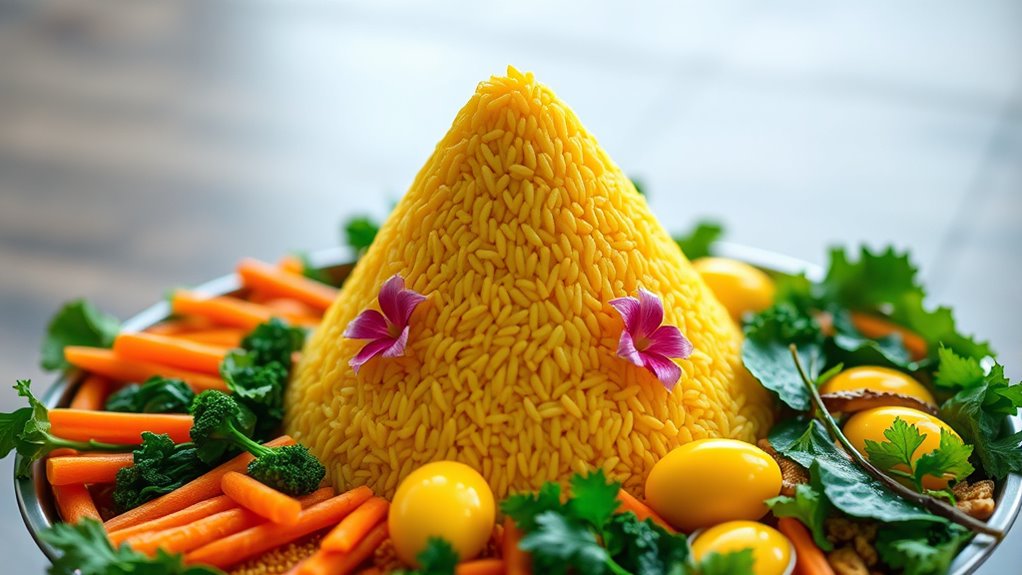
Nasi Tumpeng is a traditional Indonesian dish that symbolizes gratitude and celebration. When you see this vibrant cone of rice surrounded by assorted side dishes, you’re witnessing more than just a meal; you’re observing a powerful cultural symbol deeply rooted in Indonesia’s history and customs. This dish plays a crucial role in traditional ceremonies, where it’s used to mark important milestones such as birthdays, religious events, and communal gatherings. Its presence signifies respect for tradition and appreciation for life’s blessings. The cone-shaped rice, usually yellow turmeric rice, stands as a centerpiece, representing a mountain or a sacred hill, which is believed to connect heaven and earth. This visual and symbolic aspect makes Nasi Tumpeng more than just food; it’s an offering of gratitude to the divine and a way to honor ancestors. Cultural significance is a key aspect of understanding the dish’s importance beyond its appearance. When you participate in or observe a traditional ceremony featuring Nasi Tumpeng, you’ll notice how the culinary significance extends beyond symbolism. The process of preparing and serving the dish involves careful consideration of the ingredients and presentation, reflecting the community’s values and social harmony. The cone shape is carefully crafted, often with rice molded in a cone or pyramid shape, symbolizing prosperity and unity. Each side dish arranged around the cone holds its own meaning, representing abundance, fertility, and harmony with nature. These dishes typically include vegetables, chicken, eggs, and other local ingredients, emphasizing the importance of local produce and culinary traditions. When served, the dish becomes a communal experience, fostering togetherness and shared respect among participants. The culinary significance of Nasi Tumpeng also lies in its role as a storytelling medium; each component of the dish tells a part of Indonesia’s rich cultural narrative. It highlights the diversity of local flavors and ingredients, showcasing the nation’s culinary heritage. The act of serving Nasi Tumpeng during celebrations isn’t just about nourishment; it’s a ritual that reinforces social bonds and cultural identity. You might find that the dish is accompanied by prayers or blessings, further emphasizing its spiritual and communal importance. In summary, Nasi Tumpeng is a dish that embodies Indonesia’s values—gratitude, unity, and reverence—making it a true culinary treasure with profound cultural significance.
Top picks for "nasi tumpeng symbolism"
As an affiliate, we earn on qualifying purchases.
Frequently Asked Questions
How Is Nasi Tumpeng Traditionally Prepared?
You prepare nasi tumpeng through traditional cooking by carefully selecting and cooking rice, often using turmeric for a vibrant yellow color. The rice preparation involves steaming or boiling the rice until fluffy, then shaping it into a cone. You then decorate the cone with various side dishes like vegetables, meats, and eggs, creating a beautiful presentation that reflects cultural significance and culinary artistry in Indonesian tradition.
What Occasions Are Best Suited for Serving Nasi Tumpeng?
You might think nasi tumpeng is only for special moments, but its cultural significance makes it ideal for festive occasions. It’s traditionally served during celebrations like birthdays, anniversaries, and community events, symbolizing gratitude and togetherness. The cone shape reflects harmony and prosperity, enhancing the joy of these gatherings. So, whenever you want to honor traditions and bring people together, nasi tumpeng fits perfectly.
Are There Regional Variations of Nasi Tumpeng Across Indonesia?
You might wonder if regional flavors influence nasi tumpeng across Indonesia. Yes, they do. Different areas add their unique culinary adaptations, incorporating local ingredients and spices that reflect their culture. For example, Javanese versions might use sweeter rice, while Balinese styles include more vibrant spices. These regional variations showcase Indonesia’s diverse culinary landscape, allowing each community to put its own twist on this traditional dish, making it uniquely theirs.
What Are the Symbolic Meanings of Specific Toppings?
You’re curious about the specific toppings of nasi tumpeng and their symbolic significance. Toppings like eggs, chicken, and vegetables carry celebratory symbolism, representing prosperity, fertility, and gratitude. Each element embodies cultural importance, highlighting unity and abundance during special occasions. You’ll find that these toppings aren’t just delicious but also deeply meaningful, serving as a flavorful feast that celebrates community, tradition, and the richness of Indonesian heritage.
Can Nasi Tumpeng Be Customized for Different Dietary Restrictions?
You can definitely customize nasi tumpeng for different dietary restrictions. If you’re looking for vegetarian options, you can replace meat with vegetables or plant-based protein. For gluten-free adaptations, use gluten-free rice or side dishes without soy sauce or other gluten-containing ingredients. By adjusting toppings and sides, you make the dish inclusive, ensuring everyone can enjoy the celebration without compromising on tradition or dietary needs.
Conclusion
As you savor the vibrant layers of nasi tumpeng, remember it’s more than just a dish—it it’s a mountain of gratitude and unity. Like a sacred peak reaching towards the heavens, it symbolizes hope, prosperity, and the harmony of life’s blessings. Each cone reminds you that life’s greatest treasures are often those we share with others, standing tall as a mark of tradition and togetherness. Embrace it, and let its symbolism elevate your spirit.
NFL season / tailgating Picks
team gear
As an affiliate, we earn on qualifying purchases.