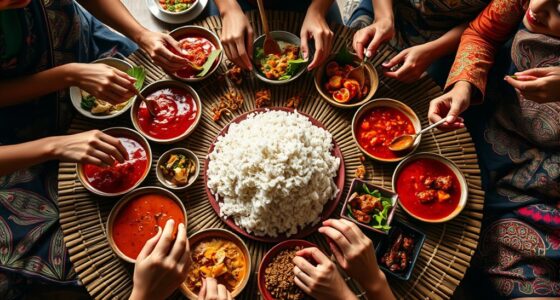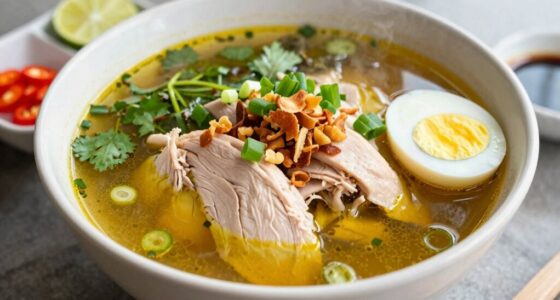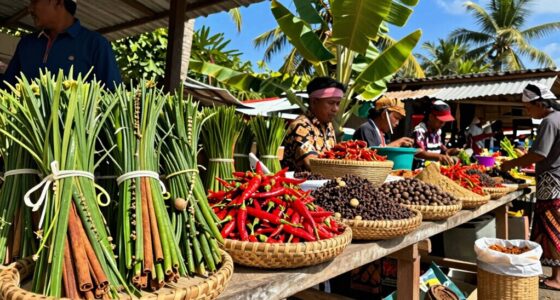
Indonesian noodle dishes like Mie Goreng and Mie Soto deserve more fans in the US for their bold, layered flavors and regional influences. These hearty dishes feature ingredients like kecap manis, sambal, and tempeh, offering a unique culinary experience beyond common Asian staples. Despite their cultural richness, they remain underappreciated here. If you want to uncover more about these vibrant dishes and how to enjoy them, there’s much more to discover.

Get kitchen staples and gadgets delivered free with Prime
- Fast, free delivery on millions of items
- Prime Video, Amazon Music and more included
- Member-only deals all year
Key Takeaways
- Mie Goreng offers rich, smoky flavors with customizable proteins, yet remains underappreciated outside Indonesia.
- Mie Soto features fragrant turmeric broth and fresh herbs, deserving more recognition among international noodle soups.
- Unique fusion recipes combining local spices and ingredients can elevate lesser-known dishes’ popularity.
- Indonesian noodle dishes showcase diverse regional influences, appealing to adventurous food enthusiasts in the US.
- Promoting authentic cooking techniques and ingredient versatility can help these dishes gain wider appreciation.
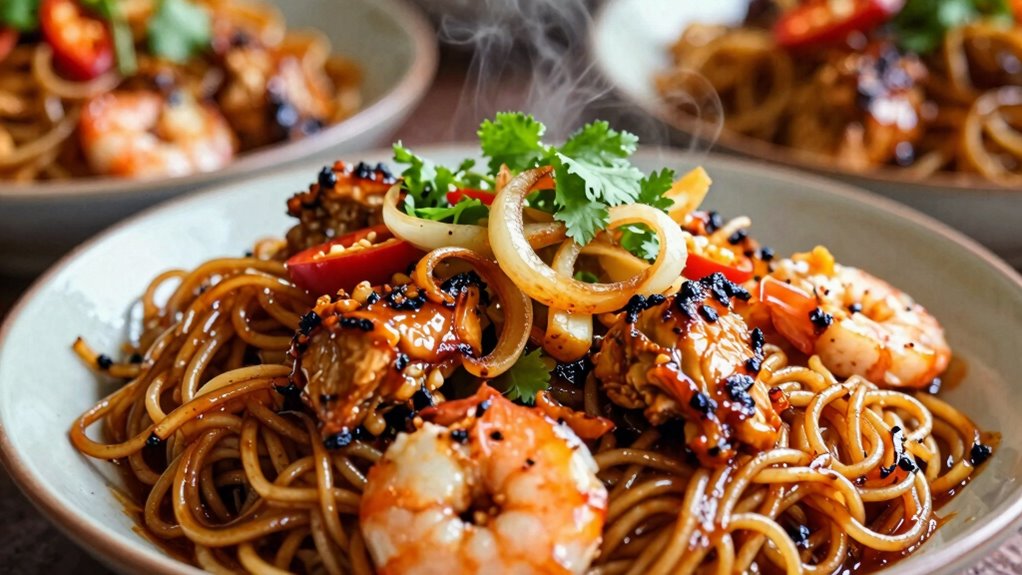
Have you ever wondered how Indonesia’s diverse culinary traditions come alive through its noodle dishes? These dishes are a vibrant reflection of Indonesia’s rich culture, blending flavors, ingredients, and cooking techniques from various regions. Yet, despite their deliciousness, many Indonesian noodle dishes remain underappreciated in the US. You might find yourself missing out on unique flavors if you only stick to familiar Asian staples. That’s why exploring these lesser-known Indonesian noodle dishes can be a game-changer for your palate.
One reason these dishes haven’t gained widespread popularity is because they often feature fusion recipes and ingredient variations that aren’t as common elsewhere. Indonesian cooks love to experiment, combining local spices, herbs, and sauces to create complex, layered flavors. For example, a typical Indonesian noodle dish might incorporate ingredients like kecap manis (sweet soy sauce), sambal (spicy chili paste), and tempeh or tofu, giving it a distinctive taste that’s both sweet and savory. These ingredient variations make the dishes versatile and adaptable, so you can tweak them to suit your preferences or what’s available in your local grocery store.
Indonesian noodle dishes feature unique fusion recipes with versatile ingredients like kecap manis, sambal, and tofu.
If you’re craving something different from the usual stir-fry or lo mein, you should try dishes like Mie Goreng, a flavorful fried noodle dish that uses a mix of vegetables, meats, and aromatic spices. It’s often served with a fried egg on top, adding richness to every bite. Another underrated gem is Mie Soto, a noodle soup with a fragrant broth infused with turmeric, lemongrass, and other herbs. It’s comfort food that’s hearty and nourishing, yet bursting with exotic flavors that can open your eyes to Indonesian cuisine. These dishes aren’t just about the ingredients but also about the techniques used—like stir-frying at high heat or simmering the broth to develop deep, layered flavors. Understanding fusion recipes and ingredient variations in Indonesian noodle dishes can also help you appreciate how regional influences shape these unique dishes. Exploring culinary techniques can further enhance your ability to recreate authentic flavors at home.
Learning about fusion recipes and ingredient variations in Indonesian noodle dishes can inspire you to get creative in your own kitchen. You can experiment with regional spices, swap out proteins, or even add local vegetables to give these dishes a personal touch. It’s a way to bring a piece of Indonesia into your home, broadening your culinary horizons. If you’re enthusiastic to expand your food repertoire, don’t overlook these lesser-known Indonesian noodle dishes. They’re packed with flavor, cultural richness, and the exciting potential for culinary innovation—waiting for you to discover and enjoy.
Indonesian kecap manis sweet soy sauce
As an affiliate, we earn on qualifying purchases.
As an affiliate, we earn on qualifying purchases.
Frequently Asked Questions
What Is the History Behind Indonesian Noodle Dishes?
You’re curious about Indonesian noodle dishes’ history, right? These dishes stem from traditional cooking, blending local flavors with influences from Chinese and Indian culinary fusion over centuries. Indonesian cuisine adapts regional ingredients, creating unique noodle recipes like Mie Goreng and Bakmi. This culinary fusion reflects Indonesia’s rich history of trade and cultural exchange, making these dishes a delicious proof to Indonesia’s diverse culinary heritage.
How Do Indonesian Noodles Differ From Other Asian Noodles?
Imagine a river carving its own path—that’s how Indonesian noodles differ from other Asian noodles. You notice regional variations and unique cooking techniques that set them apart. Unlike the more uniform styles elsewhere, Indonesian noodles often feature bold flavors, diverse ingredients, and distinct textures. You’ll find that these dishes emphasize local spices and methods, creating a vibrant culinary journey that flows uniquely through each region, inviting you to explore rich, authentic tastes.
Are Indonesian Noodle Dishes Suitable for Vegetarians?
Yes, Indonesian noodle dishes can be suitable for vegetarians. You can incorporate vegetarian substitutions like tofu, tempeh, or vegetables to match the rich flavor profiles typical of Indonesian cuisine. Many dishes, such as mie goreng, can be easily adapted by omitting meat and focusing on fragrant spices, savory sauces, and fresh produce. This way, you enjoy authentic flavors while keeping your meal vegetarian-friendly.
Where Can I Find Authentic Indonesian Noodle Restaurants in the US?
You can find authentic Indonesian noodle restaurants in the US by exploring fusion cuisine spots that blend traditional flavors with modern twists. Many cities boast restaurants influenced by celebrity chefs who specialize in Southeast Asian dishes, including Indonesian noodles. Check out popular food festivals and Asian culinary events, where authentic Indonesian cuisine often takes center stage. Online reviews and foodie apps also help you discover hidden gems serving genuine Indonesian noodle dishes.
What Are the Key Ingredients in Indonesian Noodle Recipes?
You’ll find that key ingredients in Indonesian noodle recipes include rice noodles or egg noodles, garlic, shallots, soy sauce, and sweet soy sauce for rich flavor. Fusion toppings like fried shallots, lime, and chili add depth, while authentic cooking techniques—like stir-frying and boiling—bring the dish to life. These elements combine to create vibrant, savory noodles that showcase Indonesia’s culinary diversity.
As an affiliate, we earn on qualifying purchases.
Conclusion
You might be surprised to learn that Indonesian noodle dishes like Mie Goreng and Mie Ayam are gaining popularity worldwide, yet they remain underappreciated in the US. With Indonesian cuisine itself seeing a 25% increase in international interest over the past year, it’s clear these flavorful dishes have the potential to capture more fans here. Embracing these noodles not only diversifies your palate but also helps introduce more people to Indonesia’s rich culinary heritage.
As an affiliate, we earn on qualifying purchases.
As an affiliate, we earn on qualifying purchases.
NFL season / tailgating Picks
team gear
As an affiliate, we earn on qualifying purchases.