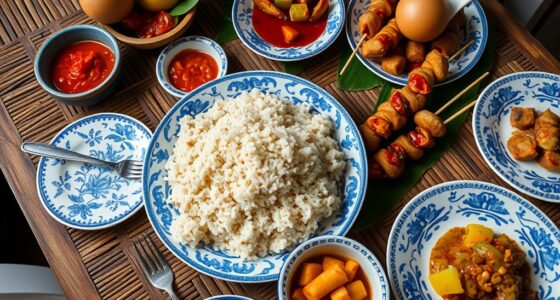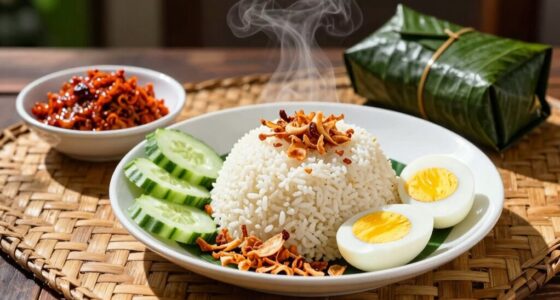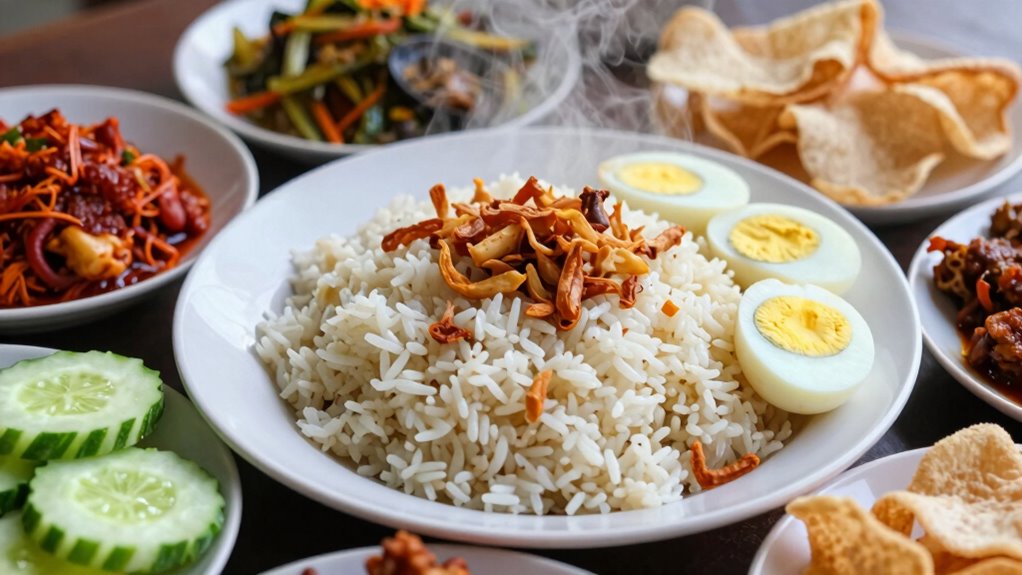

Indonesian rice dishes go far beyond Nasi Goreng, showcasing regional flavors and unique cooking methods. In Java, you’ll find sweet and savory rice creations, while Sumatra offers spicy, bold dishes. Bali features rice with fresh herbs, vegetables, and meats, and Sulawesi serves spicy coconut-flavored rice. Coastal areas emphasize seafood-based options, and inland regions focus on hearty stews. Exploring these diverse dishes reveals rich cultural stories—if you keep exploring, you’ll uncover even more culinary treasures.

Get kitchen staples and gadgets delivered free — and shop member deals
- Fast, free delivery on millions of items
- Access to Prime Big Deal Days deals on October 6–7
- Prime Video, Amazon Music and more included
Key Takeaways
- Indonesia’s diverse regions feature unique rice dishes like Bali’s lawar and Sulawesi’s pa’piong, each with distinct flavors.
- Variations include spicy, savory, coconut milk-based, and herbal rice dishes reflecting local ingredients.
- Traditional cooking techniques such as fermenting and slow cooking enhance the flavors of regional rice recipes.
- Coastal areas emphasize seafood and fresh herbs, while inland dishes focus on hearty vegetables and spices.
- Rice symbolizes cultural identity, with dishes narrating local history, environment, and community traditions across Indonesia.
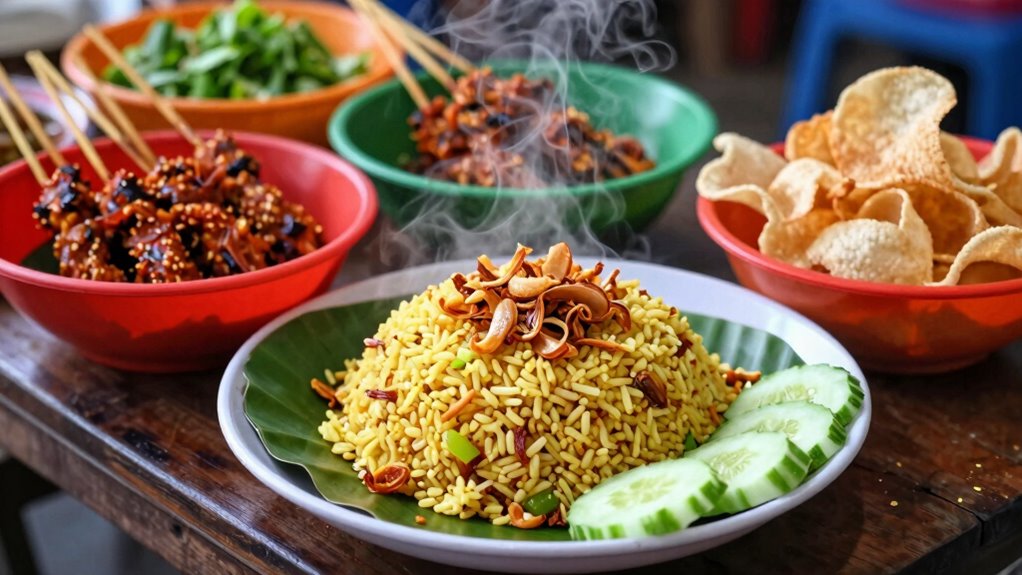
Indonesia’s rich culinary heritage is best showcased through its diverse rice dishes, which are central to everyday life and celebrations alike. While many travelers know about nasi goreng, the country’s iconic fried rice, there’s a whole world of traditional cooking that reveals Indonesia’s complex regional flavors. Each region has its own way of preparing rice, reflecting local ingredients, customs, and history. As you explore these dishes, you’ll notice how regional variations transform simple rice into culinary masterpieces. You might find that in Java, rice is often served with sweet and savory accompaniments, while in Sumatra, spicy and bold flavors dominate. This variety highlights how traditional cooking techniques adapt to local tastes and resources, making each dish unique.
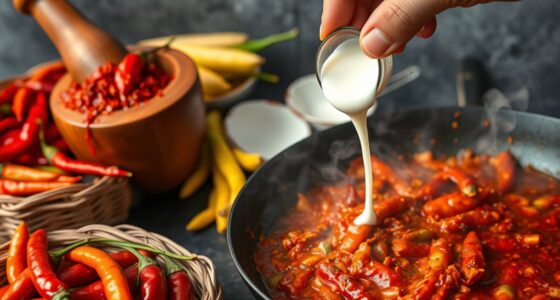
In many parts of Indonesia, rice isn’t just a staple; it’s a symbol of life and community. You’ll discover that in Bali, traditional dishes like lawar or nasi campur incorporate rice with fresh herbs, vegetables, and meats, reflecting the island’s rich agricultural produce. Meanwhile, in Sulawesi, you’ll encounter dishes like pa’piong, a spicy rice dish flavored with local spices and coconut milk, which showcase regional ingredients. The diversity in rice dishes stems from centuries-old cooking traditions passed down through generations. These traditional methods often involve specific techniques, like slow cooking or fermenting, that enhance flavors and create distinctive textures. Additionally, the use of regional ingredients plays a crucial role in shaping each dish’s unique character. Exploring these techniques can deepen your understanding of Indonesia’s sustainable food practices that maintain biodiversity and cultural heritage. Understanding these regional culinary techniques provides insight into how Indonesia’s diverse landscape influences its cuisine. Such techniques also reflect the importance of cultural preservation in Indonesian culinary heritage.
Understanding regional variations in Indonesian rice dishes helps you appreciate how local cultures influence cuisine. For instance, in the eastern islands, rice might be cooked with coconut milk or served alongside seafood, emphasizing the maritime environment. Conversely, in inland areas, you’ll find rice paired with hearty stews or vegetables, highlighting farming traditions. Each dish tells a story of the land, climate, and cultural exchanges that have shaped Indonesia’s culinary landscape. When you try these dishes, you’re not just tasting rice; you’re experiencing a slice of history and regional identity.
As an affiliate, we earn on qualifying purchases.
Frequently Asked Questions
What Are the Regional Variations of Indonesian Rice Dishes?
You’ll find regional variations of Indonesian rice dishes packed with fusion flavors and unique ingredients. In Sumatra, you might enjoy spicy, coconut-infused dishes like Nasi Padang, while Bali offers flavorsome, aromatic Nasi Campur with fresh vegetables and meats. In Jakarta, street food stalls serve quick, savory Nasi Goreng, blending local and Chinese influences. Each region showcases its own twist, highlighting Indonesia’s diverse culinary culture.
How Are Traditional Rice Dishes Prepared Authentically?
You’ll want to immerse yourself in authentic Indonesian rice dishes by mastering fermentation techniques and sourcing rice carefully. Imagine fragrant, perfectly cooked rice infused with flavors that tell stories of tradition. Use locally sourced rice, often from specific regions, to guarantee authenticity. Fermentation techniques, like in making tape or other fermented dishes, deepen the flavor and preserve the rice naturally. Follow these steps, and you’ll create dishes bursting with history and genuine Indonesian essence.
What Are Common Side Dishes Served With Indonesian Rice?
You’ll find that Indonesian rice is often paired with side dishes that highlight fusion flavors and modern twists. Common options include spicy sambal, crispy fried anchovies, and fresh vegetable sambal. You might also enjoy satay skewers, colorful salads, or pickled vegetables. These sides add vibrant textures and flavors, making your meal more diverse and exciting, blending traditional elements with contemporary culinary influences that elevate your dining experience.
Are There Vegetarian-Friendly Indonesian Rice Dishes?
Absolutely, Indonesian cuisine offers vegetarian-friendly rice dishes that might just make your taste buds dance. You can swap out meat with tasty vegetarian substitutes like tofu or tempeh, and spice things up with flavor enhancements like sambal or fresh herbs. Dishes like Nasi Uduk or Nasi Campur often come with veggie-packed options or can be customized. So, yes, your plant-based palate is well-catered to in Indonesian rice traditions!
How Do Indonesian Rice Dishes Influence Local Culture?
You see, Indonesian rice dishes deeply influence local culture through rice symbolism and culinary identity. They represent prosperity, unity, and tradition, often central to ceremonies and daily life. When you enjoy these dishes, you’re participating in a cultural expression that binds communities. These culinary traditions preserve history and reinforce social bonds, making rice more than just food—it’s an essential part of Indonesia’s cultural fabric.
traditional Indonesian spice blends
As an affiliate, we earn on qualifying purchases.
As an affiliate, we earn on qualifying purchases.
Conclusion
So, next time you think of Indonesian rice, don’t just settle for the familiar nasi goreng. Immerse yourself in these lesser-known gems and discover a whole world of flavors waiting to surprise your palate. Irony? While you might believe you’ve tried it all, these dishes prove there’s always more to explore — even in the humble grain of rice. Who knew that such simple ingredients could lead to such a delicious adventure?
As an affiliate, we earn on qualifying purchases.
As an affiliate, we earn on qualifying purchases.
NFL season / tailgating Picks
team gear
As an affiliate, we earn on qualifying purchases.