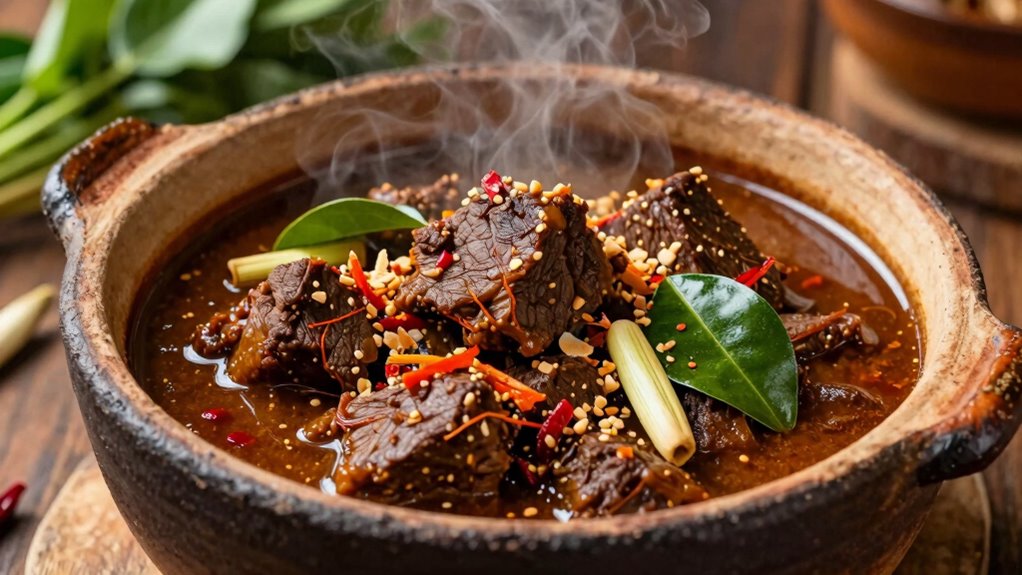

To make authentic rendang, start by finely grinding fresh spices like shallots, garlic, galangal, turmeric, lemongrass, and kaffir lime leaves, and toast some for added depth. Slowly cook the spice paste in oil until fragrant, then add coconut milk and beef cut into uniform pieces. Simmer on low heat for hours, stirring regularly, until the sauce thickens and the beef becomes tender. If you keep going, you’ll discover the secret to mastering this rich, flavorful dish.

Get kitchen staples and gadgets delivered free — and shop member deals
- Fast, free delivery on millions of items
- Access to Prime Big Deal Days deals on October 6–7
- Prime Video, Amazon Music and more included
Key Takeaways
- Prepare a fragrant spice paste using fresh, finely ground ingredients like shallots, garlic, galangal, turmeric, lemongrass, and kaffir lime leaves.
- Slowly cook the spice paste over medium heat until fragrant, then add coconut milk and beef chunks for flavor development.
- Use low heat and stir frequently during slow cooking to tenderize the beef and develop a rich, thick sauce.
- Properly cut beef into uniform pieces and incorporate it into the aromatic mixture, ensuring even cooking and flavor absorption.
- Continue simmering until the sauce thickens and coats the beef, adjusting seasoning for a deep, authentic rendang flavor.
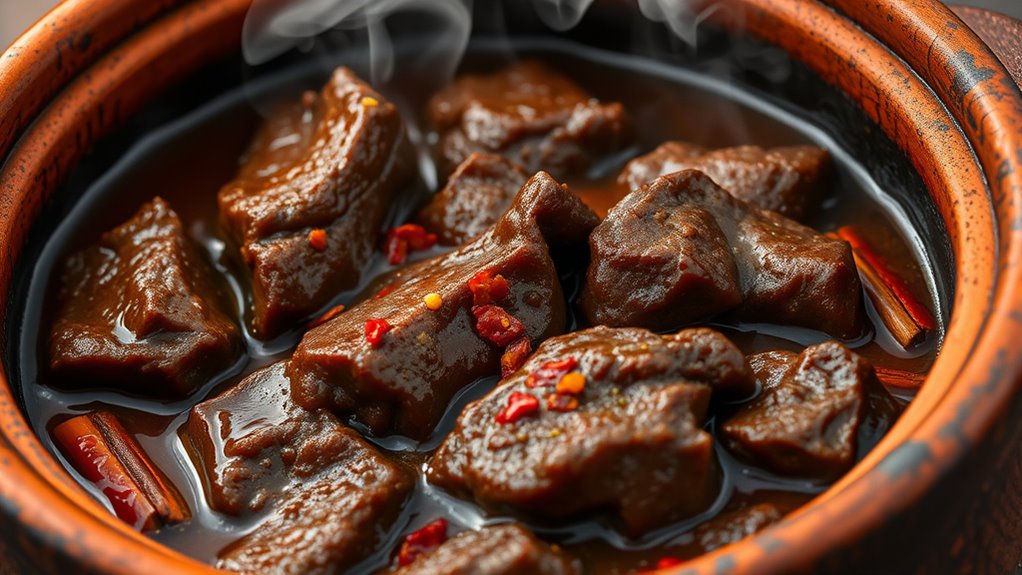
Making authentic rendang begins with selecting quality ingredients and understanding its traditional cooking process. The foundation of a great rendang lies in how well you master spice blending and adhere to traditional techniques. Start by gathering fresh, fragrant ingredients like shallots, garlic, galangal, turmeric, lemongrass, and kaffir lime leaves. These form the base of your spice paste, which is essential for achieving the deep, complex flavors characteristic of authentic rendang. When blending your spices, remember that traditional techniques emphasize grinding the ingredients finely, often using a mortar and pestle. This method releases essential oils and enhances flavor more effectively than a blender, giving your rendang that authentic, textured richness. Proper spice blending is crucial because it ensures the harmony and richness of flavors in your final dish. Additionally, understanding the traditional cooking process helps you replicate the authentic taste and texture that define rendang. Proper spice preparation also involves toasting some ingredients beforehand to deepen their flavor profile, which is a key step in authentic rendang.
As you prepare your spice paste, focus on balance and aroma. Mix together your blended spices with dried chilies, which add heat and depth, and consider toasting some ingredients beforehand to deepen their flavor. The process of spice blending isn’t just about combining ingredients; it’s about creating a harmonious mixture that embodies the soul of rendang. Once your spice mixture is ready, you’ll cook it slowly over medium heat, stirring constantly until fragrant. This stage is crucial because it marries the spices with the coconut milk and beef, forming the aromatic base of your dish. Be patient—traditional techniques involve slow cooking, allowing the flavors to develop fully and the sauce to thicken gradually. Incorporating slow cooking methods ensures the beef becomes tender and infused with flavor, which is essential for authentic rendang.
When you add the beef, cut it into chunks that are uniform in size for even cooking. As the beef cooks, it absorbs the spice mixture and releases its juices into the coconut milk, creating a rich gravy. Keep the heat low to preserve the integrity of the flavors and prevent burning, stirring frequently to prevent sticking. The slow cooking process is vital; it allows the connective tissues in the beef to break down, resulting in a tender, melt-in-your-mouth texture. During this time, the oil from the spices and coconut milk begins to separate, giving rendang its signature dry yet flavorful appearance. This is where traditional techniques shine—patience and attention to detail ensure your rendang isn’t rushed or watery, but instead thick, fragrant, and packed with layers of flavor.
Finally, as the rendang reaches the desired consistency, taste and adjust the seasoning if needed. The end result should be a deeply aromatic, tender beef coated in a thick, flavorful sauce. Remember, authentic rendang isn’t just about following a recipe; it’s about respecting centuries-old techniques and the art of spice blending. When you do, you’ll produce a dish that’s rich, complex, and truly irresistible—an Indonesian classic that’s worth every slow-minute of preparation.
authentic rendang spice paste ingredients
As an affiliate, we earn on qualifying purchases.
As an affiliate, we earn on qualifying purchases.
Frequently Asked Questions
Can I Use Chicken Instead of Beef for Rendang?
Yes, you can use chicken as a meat alternative for rendang. Chicken substitutions work well, especially if you prefer a lighter option or don’t eat beef. Keep in mind that chicken cooks faster, so adjust your cooking time accordingly. Use bone-in or boneless chicken pieces, and follow the same spice and coconut milk process for a flavorful, tender result. It’s a delicious twist on the traditional rendang!
How Long Does Authentic Rendang Typically Take to Cook?
Authentic rendang usually takes about 2 to 3 hours of slow cooking. This long cooking duration is essential for flavor development, allowing the spices and coconut milk to intensify and the beef to become tender. During this time, you’ll see the sauce reduce and thicken, resulting in rich, complex flavors. Patience in cooking is key to achieving the authentic taste and texture that defines traditional rendang.
What Are Common Regional Variations of Rendang?
You might find it interesting that rendang’s regional flavors vary because of local ingredients and traditions. In Indonesia, Padang rendang uses thick coconut milk and a rich spice blend, while Malaysian rendang emphasizes more turmeric and lemongrass. Cooking techniques also differ—some slow simmer to develop deep flavors, others quicken the process. These regional variations reflect how each culture adapts rendang to their unique tastes and resources.
Can I Prepare Rendang Ahead of Time?
Yes, you can prepare rendang ahead of time. In fact, meal prepping benefits from making it in advance, as the flavors develop and deepen over time. Store it in an airtight container in the fridge, and reheat gently before serving. This not only saves you time but also enhances the dish’s richness, making your rendang even more delicious and authentic when ready to enjoy.
What Are Suitable Side Dishes for Serving With Rendang?
You should serve rendang with traditional rice to balance its rich flavors and spicy sambal for added heat and zest. The rice absorbs the flavorful sauce, making each bite satisfying, while the spicy sambal complements the curry’s depth. Consider adding some fresh vegetables or pickles on the side for contrast. This combination creates a well-rounded, authentic Indonesian meal that highlights the bold flavors of rendang.
mortar and pestle for spice grinding
As an affiliate, we earn on qualifying purchases.
As an affiliate, we earn on qualifying purchases.
Conclusion
Now that you’ve mastered making authentic rendang, remember that patience is key—good things take time. As the saying goes, “Rome wasn’t built in a day,” and your flavorful, tender beef curry is no different. Savor the process and enjoy every step of creating this delicious dish. With love and care, you’ll impress everyone at the table. So, relax and enjoy the journey as much as the delicious end result. Happy cooking!
As an affiliate, we earn on qualifying purchases.
coconut milk for Indonesian curry
As an affiliate, we earn on qualifying purchases.
As an affiliate, we earn on qualifying purchases.
Fall Picks
fall essentials
As an affiliate, we earn on qualifying purchases.