
Nasi goreng has deep roots in Indonesia’s history, dating back centuries when it blended local flavors with influences from trade routes connecting India, China, and the Middle East. Born out of resourcefulness during colonial times, it became a dish enjoyed by all social classes, symbolizing unity and cultural pride. Its regional variations reflect Indonesia’s diverse cultures and ingredients. To discover how this beloved dish evolved into a national icon and global ambassador, keep exploring its fascinating story.

Get kitchen staples and gadgets delivered free with Prime
- Fast, free delivery on millions of items
- Prime Video, Amazon Music and more included
- Member-only deals all year
Key Takeaways
- Nasi goreng originated centuries ago, blending indigenous flavors with foreign spices from trade routes.
- It developed during colonial times using leftover rice, making it an accessible and economical dish.
- Regional variations reflect local ingredients and cultural preferences, showcasing Indonesia’s diverse culinary heritage.
- The dish symbolizes unity, resilience, and cultural pride, often served during festivals and family gatherings.
- Today, nasi goreng remains a popular, adaptable dish worldwide, embodying Indonesia’s rich history and culinary legacy.
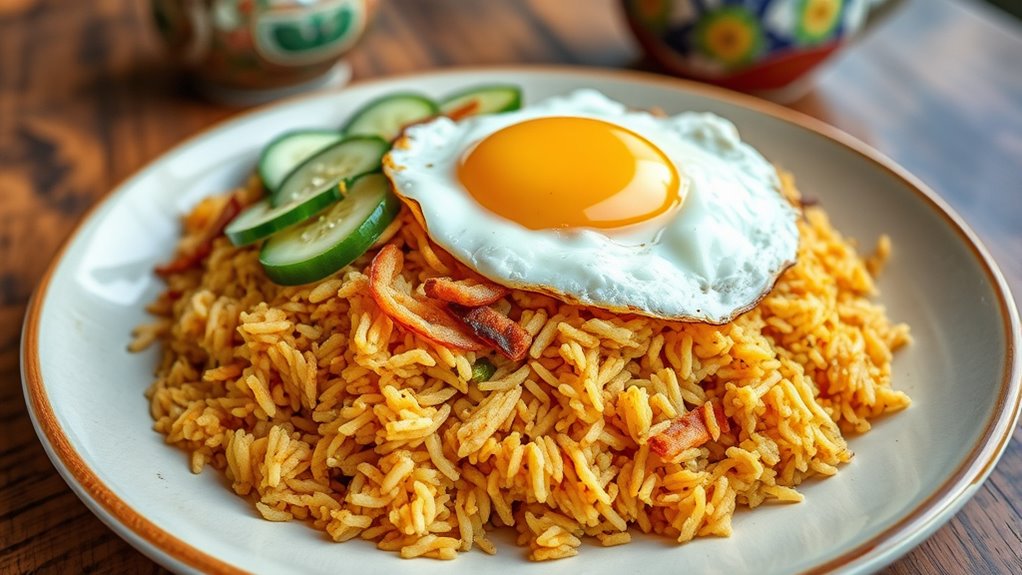
Have you ever wondered how Nasi Goreng, Indonesia’s beloved fried rice dish, became a staple in Southeast Asian cuisine? Its roots trace back centuries, blending indigenous flavors with foreign influences that shaped its unique identity. Over time, Nasi Goreng has evolved into more than just a quick meal; it’s a reflection of Indonesia’s rich history and diverse cultures. You’ll notice regional variations that showcase local ingredients and taste preferences, from sweet soy sauce in Jakarta to fiery chili in Sumatra. These differences aren’t just culinary; they carry cultural significance, illustrating how communities adapted the dish to their environment and traditions. For example, in Java, Nasi Goreng often includes sweet soy and shallots, emphasizing the island’s sweet-savory palate. Meanwhile, in Bali, you might find it spiced with turmeric and served with fresh seafood, highlighting the island’s coastal influence. Such regional variations reveal how Nasi Goreng isn’t a static dish but a versatile canvas reflecting local identities. Its cultural significance runs deep, often serving as a communal dish during family gatherings and festive celebrations, symbolizing unity and shared heritage. Historically, Nasi Goreng emerged during the colonial period when resourcefulness was crucial—using leftover rice and ingredients to create satisfying meals for laborers and families alike. Over time, it gained popularity among all social classes, becoming accessible and affordable, cementing its place in everyday life. The dish’s history also intertwines with trade routes and cultural exchanges, incorporating spices from India, China, and the Middle East, which enriched its flavor profile. As Indonesia gained independence and its cuisine gained recognition worldwide, Nasi Goreng transcended borders, becoming a culinary ambassador for Indonesian culture. Its widespread appeal lies in its simplicity yet depth of flavor, capable of being customized to regional tastes or personal preferences. Whether you prefer it with a fried egg on top, spicy sambal, or additional vegetables, Nasi Goreng’s adaptability is part of what makes it so beloved. Its role in Indonesian society isn’t just about nourishment; it’s a symbol of resilience, creativity, and cultural pride. The dish’s history highlights how food can serve as a living record of history, migration, and local traditions. So, the next time you enjoy a plate of Nasi Goreng, remember that you’re tasting centuries of history and cultural significance, expressed through a humble yet profound dish that continues to unite people across Southeast Asia.
Frequently Asked Questions
What Are the Regional Variations of Nasi Goreng in Indonesia?
You’ll find regional flavors deeply impact nasi goreng across Indonesia. In Java, it’s often sweeter with kecap manis, while Sumatra’s version might include spicy sambal. Bali offers a mix of tropical ingredients, and in Sulawesi, you’ll notice bold, smoky flavors. This culinary diversity ensures each area brings its unique twist, making nasi goreng a versatile dish that reflects Indonesia’s rich regional traditions.
How Has Nasi Goreng Evolved in Modern Indonesian Cuisine?
You’ve probably noticed that nasi goreng now includes fusion cuisine influences, blending traditional flavors with global ingredients. This evolution reflects its role in street food culture, where chefs experiment with spices, proteins, and even vegetarian options. Today, over 70% of Indonesians enjoy nasi goreng regularly, showcasing its adaptability. As a result, it’s become a symbol of modern Indonesian cuisine, constantly transforming while honoring its rich heritage.
What Are Traditional Ingredients Used in Authentic Nasi Goreng?
You’ll find that authentic nasi goreng uses rice varieties like jasmine or day-old cooked rice for the best texture. Traditional ingredients include garlic, shallots, sweet soy sauce, and chili paste, creating rich spice combinations. You might also add toppings like fried shallots, a fried egg, and shrimp or chicken. These ingredients come together to give nasi goreng its signature flavor and aroma, making it a beloved Indonesian dish.
How Is Nasi Goreng Typically Served During Indonesian Festivals?
During Indonesian festivals, you’ll find nasi goreng served as a vibrant festival delicacy, often presented as part of ceremonial presentations. It’s like a flavorful tapestry, symbolizing abundance and unity. You might see it garnished with fried eggs, prawns, or vegetables, arranged beautifully to honor tradition. This communal dish brings people together, turning a simple meal into a celebration of culture, history, and shared joy.
What Are the Health Benefits and Nutritional Aspects of Nasi Goreng?
Nasi goreng offers great nutritional value with protein from eggs or chicken, fiber from vegetables, and healthy carbs from rice. It provides health benefits like energy boost and essential nutrients that support your immune system. By choosing fresh ingredients and controlling oil, you can enjoy this dish while maintaining a balanced diet. Its versatility makes it a tasty, nutritious option for any meal.
Conclusion
You’ve just discovered how nasi goreng became Indonesia’s favorite comfort food, blending history, culture, and flavor. Did you know that Indonesia consumes over 9 million servings of fried rice daily? That’s enough to fill a stadium! Next time you enjoy a plate, remember you’re tasting a dish with centuries of tradition and stories behind every bite. It’s more than just food—it’s a symbol of Indonesia’s vibrant spirit and resilience.
Halloween Picks
halloween
As an affiliate, we earn on qualifying purchases.