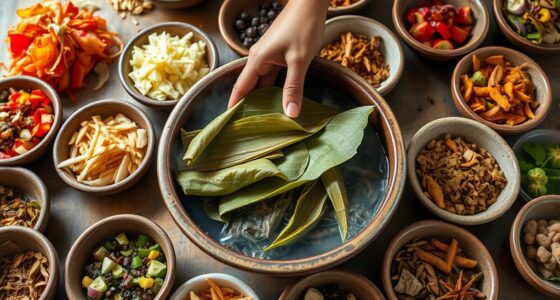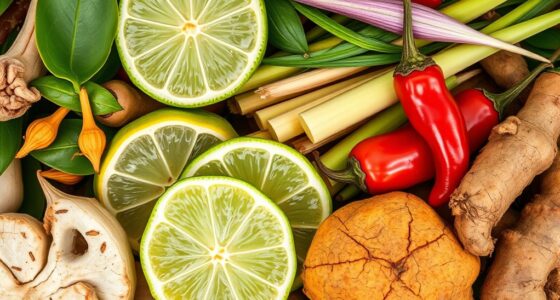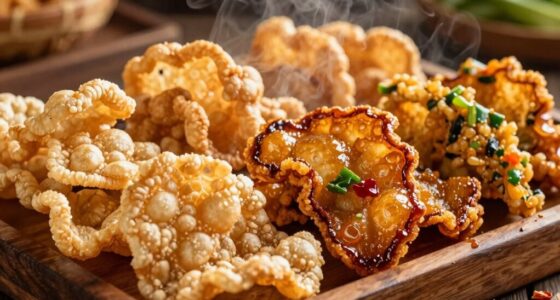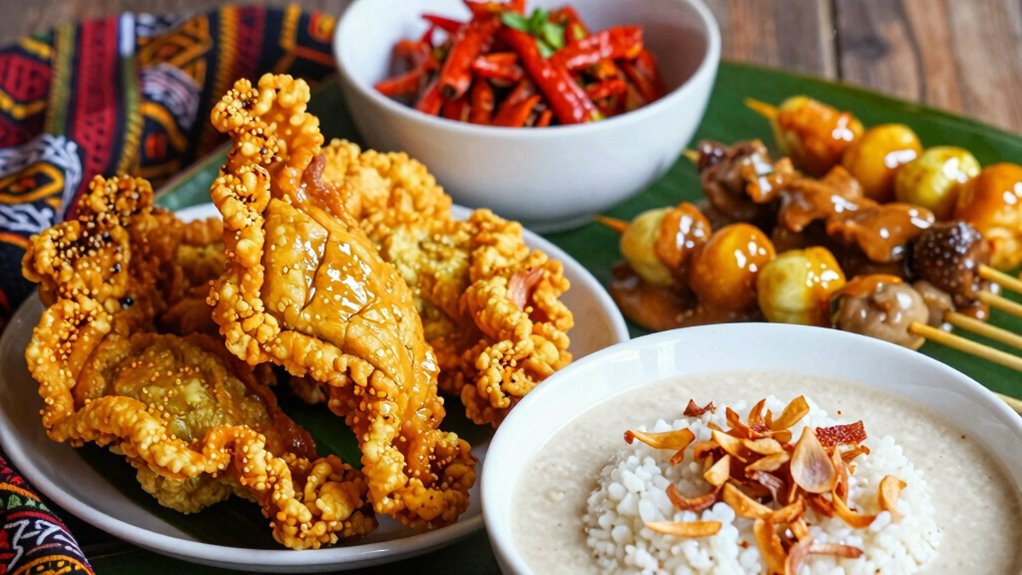

Indonesian holiday foods tell bigger stories of faith, community, and cultural identity. For example, ketupat during Ramadan symbolizes forgiveness, while rendang shows regional flavors on Sumatra. Dishes like lawar in Bali and offerings like canang sari hold special spiritual meanings and traditions. These foods connect people, honor ancestors, and pass down beliefs across generations. If you explore further, you’ll discover how these dishes embody centuries of history and cultural pride.
Open a free Amazon Business account
Business pricing, bulk buying and tax-exempt orders.
As an affiliate, we earn on qualifying purchases.
Key Takeaways
- Holiday foods symbolize cultural identity, unity, and spiritual renewal, reflecting centuries of tradition and community values.
- Regional variations like rendang, lawar, and opor ayam showcase local ingredients, climate, and history.
- Ritual foods and offerings, such as canang sari, embody sacred traditions and spiritual symbolism.
- Sharing traditional dishes during festivities strengthens social bonds and preserves cultural heritage.
- Foods act as stories in every bite, conveying beliefs, history, and the diverse identities of Indonesian communities.
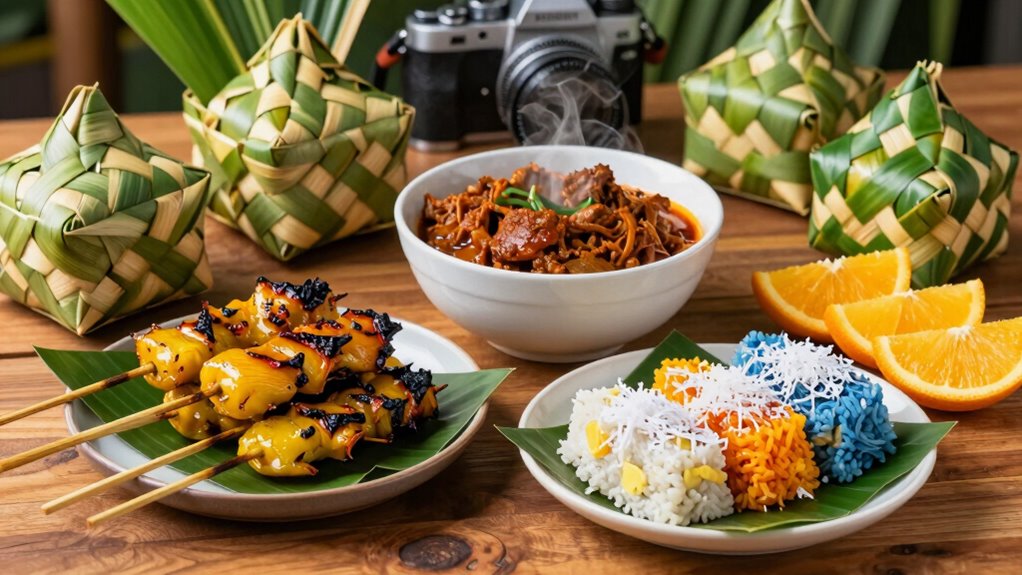
Have you ever wondered what special dishes Indonesians prepare to celebrate their holidays? These foods are more than just meals; they are symbols packed with cultural significance that reflect centuries of tradition and history. In Indonesia, where diversity is woven into every corner, holiday foods often carry deeper meanings. For example, during Ramadan, families gather to enjoy dishes like ketupat, a woven rice cake, which signifies forgiveness and unity. The intricate process of making ketupat and sharing it embodies the spirit of togetherness and spiritual renewal. Similarly, during Eid al-Fitr, people prepare a variety of sweets and savory dishes that symbolize gratitude and the blessings received during Ramadan. These foods aren’t just about sustenance—they are expressions of faith and community.
Indonesian holiday foods symbolize unity, gratitude, and cultural tradition, reflecting centuries of faith and community.
Regional variations play a crucial role in shaping holiday foods across Indonesia’s vast archipelago. In Java, you might find dishes like opor ayam, a creamy chicken curry, served during Lebaran, reflecting the island’s rich culinary heritage. Meanwhile, in Bali, offerings like lawar—a mix of vegetables, meat, and spices—are integral to religious festivals and represent the island’s unique cultural identity. In Sumatra, dishes such as rendang, a slow-cooked beef in coconut milk and spices, are often central to celebrations, highlighting local flavors and culinary techniques. These regional differences aren’t accidental; they showcase how local ingredients, climate, and history influence holiday traditions. No matter where you are in Indonesia, the foods prepared for holidays tell stories of the land, the people, and their beliefs.
You’ll also notice that certain foods are reserved for specific occasions, emphasizing their importance. For example, in Bali, canang sari—beautiful flower offerings—are prepared daily but take on special significance during temple festivals. The act of creating these offerings is a sacred tradition, illustrating how food and ritual are intertwined. Across Indonesia, communal cooking and sharing are vital parts of holiday celebrations, reinforcing social bonds and cultural values. These foods serve as a way to honor ancestors, invite divine blessings, and pass down traditions through generations. Additionally, cultural symbolism embedded in these dishes helps preserve Indonesia’s diverse heritage amid modern influences. This symbolic significance enhances the spiritual meaning behind traditional foods, connecting communities to their history and beliefs. Understanding the role of food in rituals provides deeper insight into how Indonesian culture maintains its spiritual and social fabric. Preserving these culinary traditions ensures the continuity of cultural identity and strengthens community bonds.
In essence, the holiday foods of Indonesia aren’t just about flavor; they are stories in every bite. They encapsulate cultural significance and regional variations that reflect the country’s rich, diverse heritage. Every dish offers a glimpse into the beliefs, history, and identities of the Indonesian people, making holiday feasts much more than just a celebration—they’re a living tapestry of tradition and identity.
As an affiliate, we earn on qualifying purchases.
Frequently Asked Questions
How Do Regional Differences Influence Holiday Food Traditions in Indonesia?
Regional differences shape your holiday food traditions through unique flavors and ingredients, reflecting local culture and history. You’ll notice culinary diversity across Indonesia, with each area offering distinctive dishes that highlight regional flavors. These variations influence the recipes, preparation methods, and celebrations, making your holiday feasts a vibrant tapestry of local identities. Embracing this diversity enriches your experience, connecting you to Indonesia’s rich cultural landscape through its diverse holiday foods.
Are There Specific Foods Associated With Modern Indonesian Holiday Celebrations?
You might think traditional foods dominate Indonesian holidays, but modern celebrations feature unique festive snack traditions that show culinary symbolism significance. During events like Independence Day or New Year, people enjoy colorful snacks, street foods, and innovative treats that blend tradition with modernity. These foods symbolize unity, hope, and progress, making them more than just sustenance—they’re a delicious way to celebrate Indonesia’s evolving cultural identity.
What Role Do Religious Beliefs Play in Holiday Food Choices?
Religious beliefs deeply influence your holiday food choices through religious symbolism and festive fasting. You might prepare special dishes that symbolize purity or prosperity, reflecting spiritual significance. During festive fasting, you abstain from certain foods, emphasizing discipline and devotion. These practices help you connect with your faith, honoring traditions that celebrate divine blessings. Food becomes more than sustenance; it’s a meaningful expression of your spiritual beliefs during holidays.
How Have Colonial Influences Shaped Indonesian Holiday Cuisine?
Think of Indonesia’s holiday cuisine as a vibrant tapestry, woven through colonial legacy and culinary fusion. You see, colonial influences introduced new ingredients and cooking styles, blending seamlessly with traditional flavors. This fusion creates dishes that tell stories of historical exchange and cultural resilience, shaping festive foods into symbols of unity and diversity. As you savor these dishes, you taste the enduring legacy of Indonesia’s complex history and the harmonious blend of its many cultural threads.
Are There Unique Foods for Lesser-Known Indonesian Festivals?
Yes, for lesser-known Indonesian festivals, you’ll find unique foods like festive street foods and traditional dessert variations. During these celebrations, street vendors serve special treats that aren’t common elsewhere, giving you a taste of local culture. Traditional desserts often feature regional ingredients and unique recipes, making each festival’s cuisine distinct. These foods help you connect deeply with local traditions and enjoy a truly authentic Indonesian holiday experience.
As an affiliate, we earn on qualifying purchases.
Conclusion
Don’t let unfamiliarity hold you back from exploring Indonesian holiday foods. These dishes aren’t just delicious—they’re rich with stories and traditions that connect us to the past. Even if you’re new to Indonesian cuisine, trying these foods can be a meaningful way to celebrate and understand a vibrant culture. So, give them a chance—you might find that they bring more than flavor, but a deeper appreciation for Indonesia’s history and spirit.
As an affiliate, we earn on qualifying purchases.
Indonesian traditional offerings canang sari
As an affiliate, we earn on qualifying purchases.
As an affiliate, we earn on qualifying purchases.
Flea & tick season Picks
flea and tick prevention
As an affiliate, we earn on qualifying purchases.