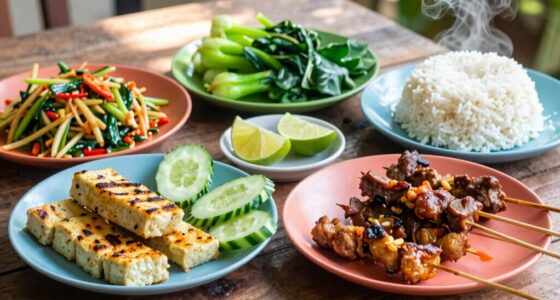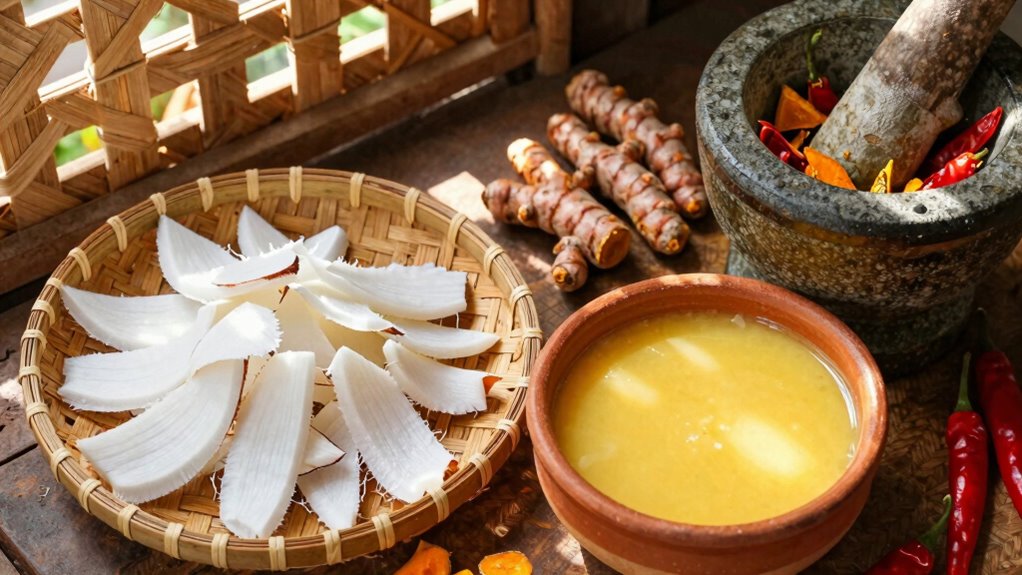

To master Indonesian cooking with coconut, focus on using different types of coconut milk—traditional, light, and cream—to enhance flavor and texture. Incorporate coconut milk into dishes like rendang, gulai, or soto for richness, and use coconut sticky rice paired with tropical fruits for desserts. Balancing creaminess with acidity highlights flavors and balance in your dishes. Keep exploring, and you’ll discover even more techniques to bring out the best in coconut-based Indonesian recipes.

Get kitchen staples and gadgets delivered free — and shop member deals
- Fast, free delivery on millions of items
- Access to Prime Big Deal Days deals on October 6–7
- Prime Video, Amazon Music and more included
Key Takeaways
- Master traditional coconut milk extraction from fresh flesh for authentic Indonesian curries and stews.
- Utilize various coconut milk types—regular, light, and cream—to customize dish richness and flavor.
- Incorporate coconut milk into popular Indonesian dishes like rendang, gulai, and soto for depth and tropical aroma.
- Balance coconut’s richness with tropical fruits and acidity in desserts like coconut sticky rice and fruit pairings.
- Enhance textures and flavors by combining coconut cream for sauces and light coconut milk for broths and soups.
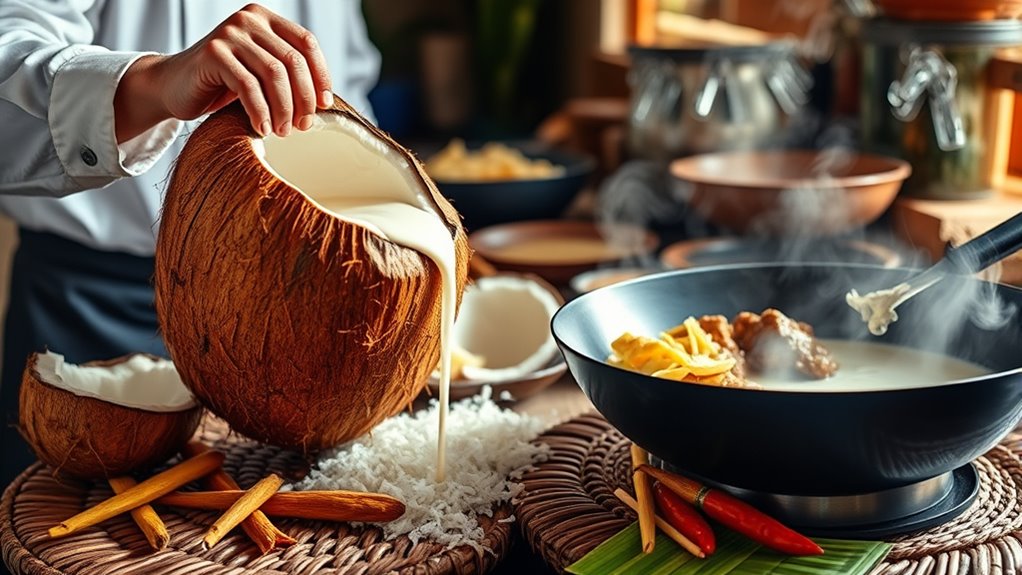
Have you ever wondered how coconut can transform your cooking? It’s an incredibly versatile ingredient that adds richness, depth, and a touch of tropical flavor to a variety of dishes. When working with coconut, exploring different coconut milk variations can truly elevate your culinary creations. Traditional coconut milk, made by grating fresh coconut flesh and squeezing out the cream, offers a thick, creamy texture perfect for hearty stews and curries. Light coconut milk, on the other hand, has less fat and is ideal when you want a subtler coconut flavor without added richness. There’s also coconut cream, which is thicker and more concentrated, perfect for making luscious desserts or adding a velvety finish to sauces. Using these variations allows you to tailor each dish to your desired consistency and flavor intensity, giving your cooking a professional touch.
In Indonesian cuisine, coconut milk is a foundational ingredient, especially in dishes like rendang, gulai, and soto. But coconut’s role isn’t limited to main courses. It’s equally essential in crafting tropical dessert pairings that delight the senses. Think about pairing a fragrant coconut milk-based pudding with fresh tropical fruits like mango, papaya, or pineapple. These vibrant combinations highlight coconut’s natural sweetness and complement the tangy, juicy flavors of the fruits. You can also make coconut sticky rice, a popular Indonesian dessert, by cooking glutinous rice with coconut milk and a little sugar until it’s tender and fragrant. Topped with toasted coconut flakes or a drizzle of palm sugar syrup, this dessert becomes a comforting, indulgent treat.
Coconut milk variations allow you to create a spectrum of flavors and textures, making your dishes more dynamic. For example, using coconut cream in a rich, spicy curry adds a luxurious mouthfeel, while light coconut milk can be used in lighter, broth-based soups. When it comes to tropical dessert pairings, the key is balancing the creaminess of coconut with the acidity and freshness of tropical fruits or citrus. You might also experiment with coconut-based ice creams or sorbets, incorporating flavors like lime, passionfruit, or ginger. These pairings not only celebrate the tropical essence but also provide a invigorating contrast to the heat and spice often found in Indonesian dishes.
Indonesian coconut milk extractor
As an affiliate, we earn on qualifying purchases.
As an affiliate, we earn on qualifying purchases.
Frequently Asked Questions
What Are the Health Benefits of Cooking With Coconut?
Cooking with coconut offers many health benefits. You can enjoy coconut oil benefits like improved brain function and healthy fats that boost your energy. Additionally, coconut fiber uses include aiding digestion and promoting weight loss. By incorporating coconut into your meals, you support heart health, boost immunity, and benefit from its antioxidant properties. It’s a versatile ingredient that not only enhances flavor but also contributes positively to your well-being.
How Do I Select the Best Coconut for Recipes?
Choosing the perfect coconut can feel like finding a hidden treasure! Look for coconuts with a heavy weight, indicating plenty of water inside. During coconut harvesting, selecting mature coconuts guarantees richer flavor and creaminess. Shake it; you should hear the water sloshing. Avoid cracked or moldy shells. Fresh coconuts have green or brown husks, and the eyes should be dry and free of mold. Your culinary treasure awaits!
Can Coconut Be Used as a Dairy Substitute?
Yes, coconut can be a great dairy substitute. You can use coconut milk as a plant-based milk alternative in recipes like coffee, smoothies, or baking. Its creamy texture mimics dairy well, making it versatile for many dishes. Just make certain you choose unsweetened coconut milk to avoid added sugars. This dairy alternative offers a rich, tropical flavor that enhances your recipes while catering to plant-based diets.
What Are Traditional Indonesian Coconut Desserts?
Like a treasure chest revealing its riches, traditional Indonesian coconut desserts shine brightly. You’ll find coconut kue, a sweet treat symbolizing harmony and prosperity, crafted from shredded coconut, palm sugar, and rice flour. These traditional sweets, often served during festivals, embody cultural heritage and warmth. Indulge in these confections to taste the soulful sweetness and deep-rooted history that coconut brings to Indonesian celebrations.
How Long Does Homemade Coconut Milk Last?
Homemade coconut milk typically lasts about 3 to 4 days when stored properly. To guarantee coconut preservation, keep it in an airtight container and refrigerate immediately after making it. For longer storage, consider freezing it in small portions. Always check for sour smell or curdling before use, as homemade milk doesn’t contain preservatives. Proper homemade milk storage helps maintain freshness and prevents spoilage.
As an affiliate, we earn on qualifying purchases.
Conclusion
Cooking with coconut opens an explosion of flavors that can transform any dish into a culinary masterpiece. By mastering Indonesian techniques, you’ll tap into a world of rich, aromatic, and vibrant tastes that are simply unbeatable. Once you embrace these recipes, you’ll realize coconut’s magic is nothing short of a flavor revolution — it’s like tasting paradise in every bite. So go ahead, get creative and let coconut elevate your cooking to legendary status!
As an affiliate, we earn on qualifying purchases.
As an affiliate, we earn on qualifying purchases.
NFL season / tailgating Picks
team gear
As an affiliate, we earn on qualifying purchases.