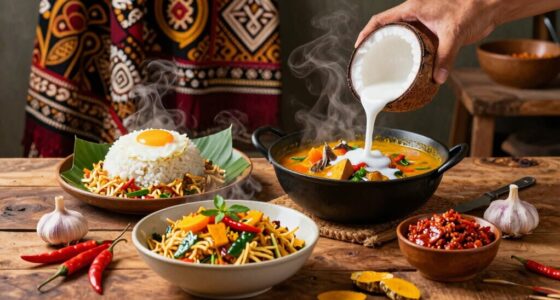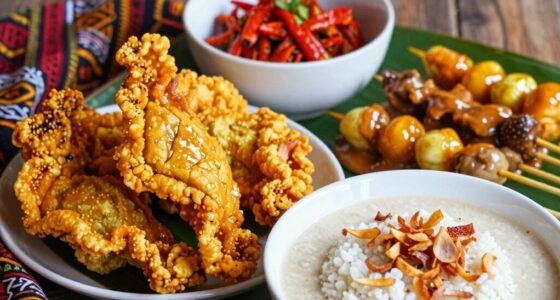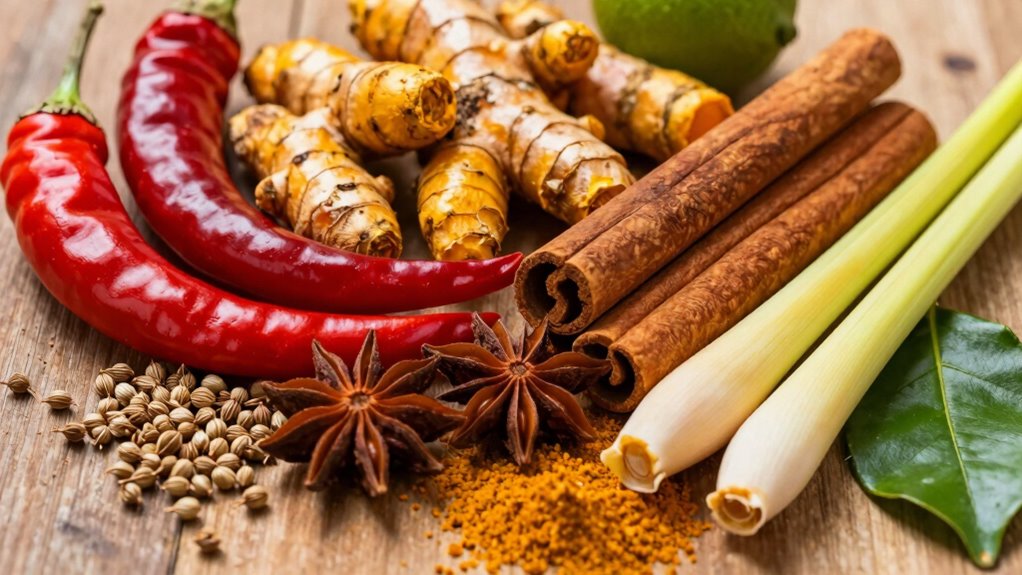

Indonesian spices are the vibrant backbone of its cuisine, blending bold, aromatic flavors that vary by region. Common ingredients like turmeric, coriander, cumin, cloves, shallots, garlic, and chili create rich, customizable pastes essential for authentic dishes. Visiting local spice markets immerses you in a sensory world of colors, aromas, and lively chatter, revealing the cultural and historical roots behind each blend. Exploring these spices connects you more deeply to Indonesia’s culinary heritage—there’s much more to discover beyond the surface.

Get kitchen staples and gadgets delivered free — and shop member deals
- Fast, free delivery on millions of items
- Access to Prime Big Deal Days deals on October 6–7
- Prime Video, Amazon Music and more included
Key Takeaways
- Indonesian cuisine features a variety of aromatic spices like turmeric, coriander, cumin, and cloves, essential for authentic flavor profiles.
- Spice blending involves toasting and grinding ingredients to create versatile pastes that serve as flavor bases.
- Regional variations influence spice mixes, reflecting local ingredients, tastes, and culinary traditions across Indonesia.
- Traditional spice markets (“pasar rempah”) offer fresh ingredients and cultural insights, enriching the cooking experience.
- The rich history of spice trade and craftsmanship shapes Indonesia’s unique, vibrant spice flavors integral to its cuisine.
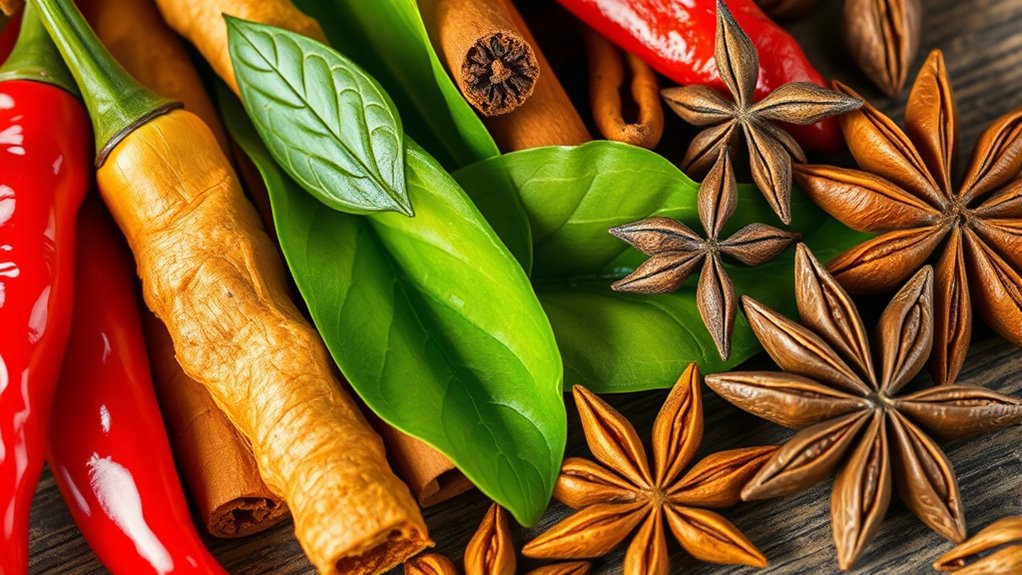
Have you ever wondered what makes Indonesian cuisine so vibrant and flavorful? The secret lies in the art of spice blending, a skill passed down through generations, and the rich offerings found in traditional spice markets. These markets are bustling hubs where vendors display an array of aromatic spices, herbs, and ingredients that form the backbone of Indonesian dishes. When you stroll through these lively markets, you’re immersed in a sensory experience—bright colors, pungent aromas, and the lively chatter of vendors negotiating prices. It’s here that you learn how different spices are combined to create the complex flavors that define Indonesian cuisine.
Spice blending is more than just mixing ingredients; it’s an intricate process that requires a keen palate and deep cultural understanding. Indonesians often toast and grind spices fresh, which releases their full aroma and flavor potential. Common ingredients like turmeric, coriander, cumin, and cloves are blended with fresh shallots, garlic, and chili to produce spice pastes that serve as foundational flavor bases for many dishes. These blends are highly customizable, allowing cooks to tailor the intensity of heat, sweetness, or earthiness to suit specific recipes. Whether preparing a fiery sate sauce or a fragrant rendang, mastering spice blending guarantees each dish reflects authentic Indonesian flavors.
Your journey into Indonesian spices isn’t complete without exploring the traditional spice markets, or “pasar rempah.” Here, vendors display their wares in colorful heaps—bright yellow turmeric, deep red chili peppers, and fragrant lemongrass bundled neatly. These markets are crucial to understanding Indonesian cuisine because they offer fresh, high-quality ingredients that are essential to achieving authentic flavors. You can ask vendors for advice on spice combinations, learn about the origins of each ingredient, and even pick up some unique spices that aren’t commonly found elsewhere. The vibrant atmosphere encourages curiosity, and many vendors are happy to share recipes or tips, enriching your culinary knowledge.
Spice blending in these markets is an art form shaped by tradition and regional influences. Each island and region has its own signature mixes, reflecting local tastes and available ingredients. By exploring these markets and learning how to blend spices yourself, you gain insight into the cultural tapestry that makes Indonesian cuisine so unique. It’s not just about adding heat or flavor; it’s about understanding the story behind each ingredient, the history of the spice trade, and the craftsmanship involved in creating these vibrant flavors. So, when you embark on Indonesian cooking, remember that mastering spice blending at traditional markets is your first step toward capturing the true essence of this flavorful cuisine.
Frequently Asked Questions
Which Indonesian Spice Is the Most Versatile for Cooking?
Cumin is the most versatile Indonesian spice for cooking. You can easily incorporate it into various dishes, as it blends well with spice combinations and enhances different flavor profiles. Whether you’re making soups, curries, or grilled meats, cumin adds depth and warmth. Its adaptability makes it a staple in Indonesian cuisine and beyond, allowing you to experiment with flavors while maintaining authentic tastes.
How Are Indonesian Spices Traditionally Harvested and Processed?
You’re invited to experience the rich tradition behind Indonesian spices, where harvesting techniques often involve gentle handpicking to preserve their essence. The processing methods include sun-drying, pounding, or grinding, which reveal their full aromatic potential. These practices honor centuries-old traditions, ensuring each spice retains its unique flavor. By embracing these methods, you connect with the cultural heartbeat of Indonesian cuisine, making every dish more authentic and heartfelt.
Are Indonesian Spices Suitable for Vegetarian or Vegan Diets?
Yes, Indonesian spices are suitable for vegetarian and vegan diets. You can find vegetarian friendly spice blends that enhance your dishes without animal products. When cooking, use vegan substitution tips like replacing fish sauces with coconut aminos or tamari. These spices add vibrant flavors to plant-based meals, making Indonesian cuisine a delicious, inclusive choice for vegetarians and vegans alike.
What Are Common Substitutes for Indonesian Spices Abroad?
Think of flavor profiles as musical notes—substitute options can create harmony even when the original spices are out of reach. For Indonesian spices, consider cumin, coriander, turmeric, and galangal as substitutes. These options mimic the warm, earthy, and spicy notes, allowing you to recreate authentic dishes abroad. By experimenting with these, you keep the vibrant essence alive in your cooking, no matter where you are.
How Do Indonesian Spices Influence Health and Wellness?
Indonesian spices considerably influence your health and wellness by offering natural herbal remedies that boost your immune system. Ingredients like turmeric, ginger, and lemongrass have anti-inflammatory properties and can help fight off illness. Incorporating these spices into your diet supports overall well-being, aids digestion, and reduces inflammation. You benefit from their immune-boosting effects, making your meals not only flavorful but also a powerful tool for maintaining health.
Conclusion
Now that you’ve uncovered the secrets behind Indonesian spices, imagine the endless culinary adventures awaiting you. Each blend holds a story, a tradition waiting to be explored through your cooking. But there’s so much more to discover—hidden herbs and ancient recipes that could transform your dishes forever. Are you ready to dive deeper into Indonesia’s flavorful world? The journey has only just begun, and the most surprising flavors are still hidden just beneath the surface.
Evergreen bestsellers Picks
bestsellers
As an affiliate, we earn on qualifying purchases.