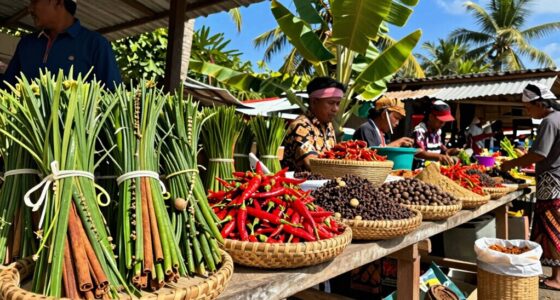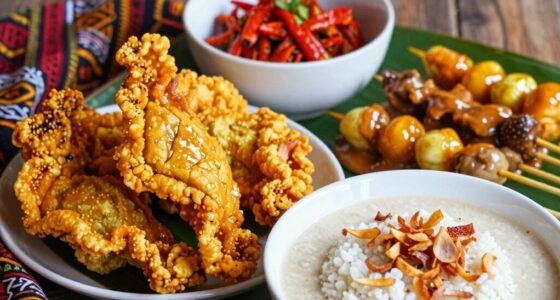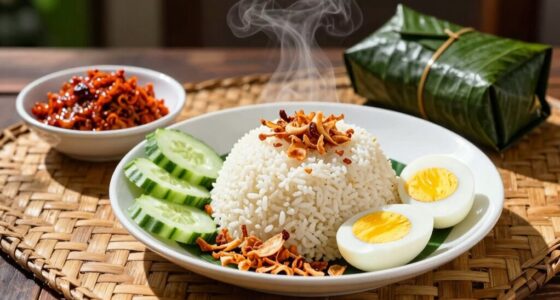
Before you travel to Indonesia, it’s essential to explore iconic street foods like nasi goreng, satay, and bakso, which reflect deep culinary traditions and local flavors. Make sure to choose vendors who prioritize hygiene and serve foods fresh and hot. Try fruits like durian and rambutan, but wash them thoroughly. Paying attention to food safety and respecting local customs will help you enjoy authentic tastes safely. Keep exploring to uncover more tasty insights into Indonesia’s vibrant street food scene.

Get kitchen staples and gadgets delivered free with Prime
- Fast, free delivery on millions of items
- Prime Video, Amazon Music and more included
- Member-only deals all year
Key Takeaways
- Familiarize yourself with popular dishes like nasi goreng, satay, and martabak to enhance your culinary experience.
- Learn essential food safety tips, such as choosing busy vendors and ensuring food is freshly prepared.
- Try a variety of local fruits like mangosteen, rambutan, and durian, ensuring they are washed or prepared hygienically.
- Observe vendor hygiene and food handling practices to enjoy authentic flavors safely.
- Respect local food traditions while practicing safety to have a memorable and culturally immersive experience.
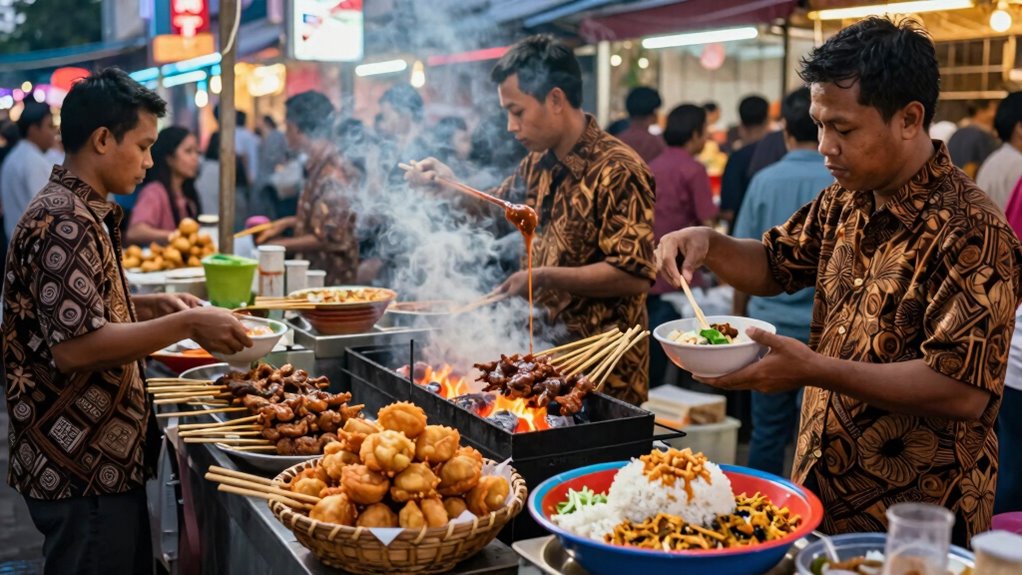
Before you pack your bags and head to Indonesia, it’s worth familiarizing yourself with the vibrant street foods that define the country’s culinary landscape. Indonesian street foods are more than just quick snacks; they’re a reflection of deep culinary traditions passed down through generations. From savory satays to sweet treats, each dish tells a story about local ingredients and cultural influences. To enjoy these foods safely, it’s helpful to learn some food safety tips. Street vendors often serve food straight from the grill or wok, so choosing vendors that look busy and well-maintained can reduce the risk of foodborne illnesses. Make sure the food is freshly prepared and served hot, and avoid foods that look like they’ve been sitting out too long. Using bottled water for drinking and brushing your teeth is also a smart move, especially in areas where water safety is uncertain.
As you explore Indonesia’s street food scene, you’ll encounter a wide array of flavors and textures. You might start with a plate of nasi goreng, a flavorful fried rice dish often topped with a fried egg. It’s a staple breakfast food but available throughout the day. Another must-try is satay—grilled skewers of meat served with spicy peanut sauce. These are usually cooked right in front of you, giving you a chance to see the culinary traditions in action. Be mindful of how the meat is handled and cooked; vendors who keep raw and cooked foods separate tend to prioritize food safety. Alongside these, you’ll find various snacks like martabak, a sweet or savory pancake, and bakso, flavorful meatballs served in broth or with noodles. Recognizing local food safety standards can help you identify vendors who adhere to good hygiene practices.
Don’t forget to try local fruits like mangosteen, rambutan, and durian, which are often sold by street vendors. While these can be delicious, wash them thoroughly or buy from vendors who peel or prepare the fruit fresh. When sampling street foods, keep an eye on cleanliness and hygiene practices. It’s wise to observe how vendors handle food and whether they use fresh utensils and gloves. Bringing along some hand sanitizer can help keep your hands clean before eating. Additionally, understanding the food safety standards practiced by vendors can help you make better choices and enjoy your culinary adventure with peace of mind. Being aware of local hygiene practices can also help you choose vendors who prioritize cleanliness and reduce health risks. Recognizing local regulations and how they influence food handling can further enhance your safety awareness. By respecting local culinary traditions and practicing food safety tips, you’ll not only enjoy authentic flavors but also stay healthy during your Indonesian adventure. The vibrant street food scene offers an unforgettable way to immerse yourself in Indonesia’s rich culture—just approach it with a mindful eye for safety and enjoy every bite.
Products Worth Considering

Instant Pot Duo Crisp Ultimate 6.5-Quart 13-in-1 Pressure Cooker and Air Fryer

Vitamix Propel Series 510 Professional-Grade Blender, 3 Programs, Black

Instant Pot Pro Plus 6 Qt 10-in-1 Electric Pressure Cooker, Black
As an affiliate, we earn on qualifying purchases.
Frequently Asked Questions
Are Indonesian Street Foods Suitable for Vegetarians?
Yes, many Indonesian street foods are suitable for vegetarians. You can find vegetarian alternatives like grilled vegetables, tofu satay, and vegetarian lontong. However, always ask about street food safety and ingredients, as some dishes may contain fish sauce or broth. By communicating your dietary preferences clearly, you’ll enjoy authentic Indonesian flavors safely and deliciously without compromising your vegetarian lifestyle.
What Are the Common Ingredients Used in Indonesian Street Foods?
Ever wonder what makes Indonesian street foods so flavorful? You’ll find common ingredients like rice, noodles, and spices like turmeric and chili, all prepared with traditional cooking techniques. Fresh vegetables, seafood, and meats are often used, showcasing regional flavor variations. These ingredients come together to create vibrant dishes that highlight Indonesia’s rich culinary diversity. Wouldn’t you love to taste the authentic flavors right from the bustling streets?
How Hygienic Are Indonesian Street Food Stalls?
You might wonder about street food safety and hygiene standards in Indonesia. While many stalls maintain good hygiene, practices can vary widely. Look for busy vendors with fresh ingredients and clean cooking areas, and observe if staff wear gloves or hairnets. Trust your instincts—if something looks or smells off, skip it. Prioritizing stalls with higher turnover and visible cleanliness helps guarantee you enjoy authentic Indonesian street foods safely.
Can I Find Gluten-Free Options Among Indonesian Street Foods?
Can you find gluten-free options among Indonesian street foods? Absolutely, you can! Many dishes like satay, grilled fish, and fresh fruit skewers naturally lack gluten. However, be cautious of street food allergens, as some ingredients might contain soy sauce or other gluten-rich seasonings. Always ask vendors about ingredients, and look for clearly labeled or naturally gluten-free options — they’re often delicious and safe to enjoy!
What Should I Know About Tipping Street Vendors in Indonesia?
In Indonesia, tipping street vendors isn’t a strict requirement, but understanding cultural tipping customs helps. You can leave small change or extra cash if you’re pleased with the vendor’s hospitality and the food quality, as it’s appreciated but not obligatory. Keep in mind vendor hospitality expectations—many vendors see it as a sign of gratitude rather than an obligation. A friendly smile and a small tip can go a long way in showing your appreciation.
Conclusion
Before you travel to Indonesia, embrace its vibrant street foods—each bite offers history, culture, and community. Savor the flavors, learn the stories, and connect with the people behind the stalls. Let each experience inspire curiosity, ignite your senses, and deepen your appreciation. Because in Indonesia’s street foods, you don’t just find nourishment—you find tradition, you find joy, and you find a place where every flavor tells a story worth exploring.