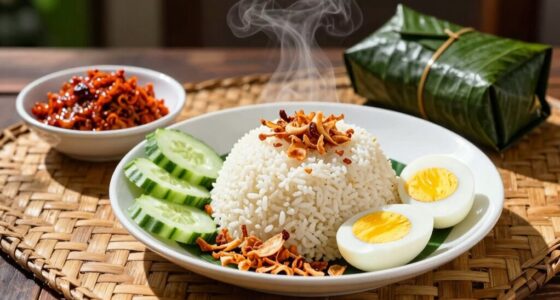
You’ll notice that Indonesian table traditions make meals feel special by emphasizing communal sharing through family-style dishes in the center, fostering social bonds and togetherness. Using respectful gestures like passing dishes with your right hand and waiting for elders show cultural appreciation. Beautifully presented, aromatic food reflects artistry and hospitality. These traditions, rooted in respect and identity, create a warm, inclusive atmosphere. Keep exploring to discover more about how these customs deepen the dining experience in Indonesia.

Get kitchen staples and gadgets delivered free with Prime
- Fast, free delivery on millions of items
- Prime Video, Amazon Music and more included
- Member-only deals all year
Key Takeaways
- Meals are served family-style, emphasizing sharing and social bonding among diners.
- Using the right hand for eating and serving reflects cultural respect and etiquette.
- Passing dishes and waiting for elders demonstrate deference and foster harmony.
- Colorful, aromatic presentation showcases culinary artistry and respect for tradition.
- Sharing food symbolizes community, interdependence, and reinforces Indonesia’s cultural identity.
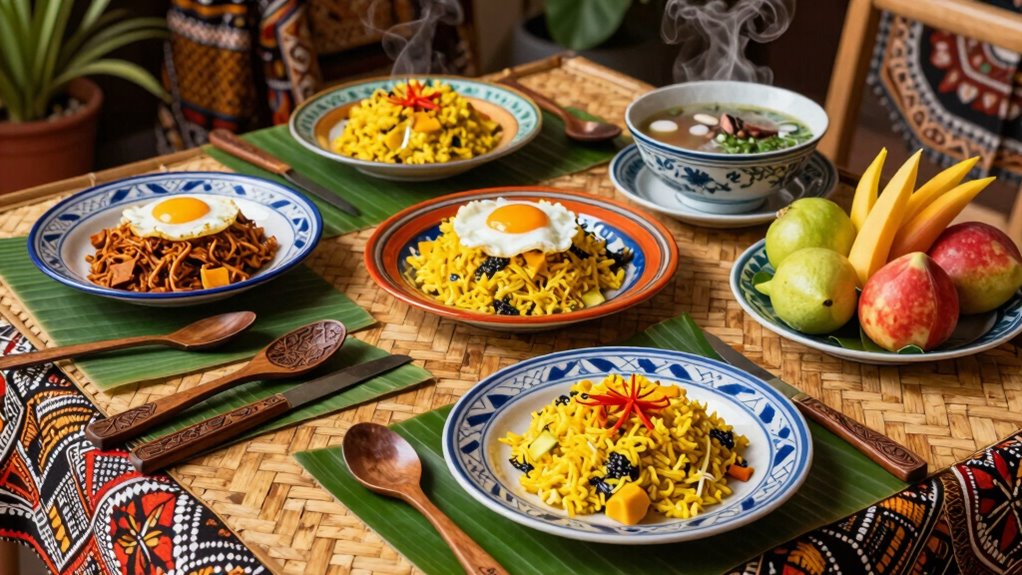
Have you ever wondered what makes Indonesian dining traditions so unique? It’s not just about the food itself, but the way meals are shared and the cultural significance behind each gesture. In Indonesia, dining isn’t simply about nourishment; it’s a reflection of community, respect, and harmony. You’ll notice that the way people approach the table reveals much about their values and social bonds. Understanding these traditions enhances your appreciation for Indonesian culture and helps you navigate social situations with respect and confidence.
One of the most prominent aspects of Indonesian dining is the emphasis on communal eating. Meals are often served family-style, with dishes placed in the center for everyone to share. This practice symbolizes social cohesion and togetherness, emphasizing that eating isn’t just a personal act but a collective experience. When you join an Indonesian meal, you’ll likely be expected to partake in this shared style, which fosters bonds and creates a warm, inclusive atmosphere. The act of passing dishes and serving others is a sign of respect and hospitality, reinforcing the cultural significance of togetherness. This tradition is also linked to cultural values that prioritize social cohesion and mutual care. Additionally, the act of sharing food reinforces a sense of community and interdependence that is central to Indonesian social life. Recognizing the importance of tradition during meals helps deepen your understanding of Indonesia’s social fabric.
Dining etiquette in Indonesia also involves specific gestures that convey respect. For example, using your right hand to eat or serve is customary, as the left hand is traditionally considered unclean. When you’re invited to someone’s home, it’s polite to accept food graciously and often with both hands, demonstrating appreciation and humility. It’s common to wait for the elders or the host to start the meal, showing deference to their authority and experience. These practices aren’t merely formalities—they’re deeply rooted in the cultural fabric, symbolizing respect for tradition and social harmony. Respect for the food itself and the act of sharing is also evident in how dishes are prepared and presented. Meals are often colorful and aromatic, reflecting a deep reverence for culinary artistry and the importance of hospitality. When you’re invited to an Indonesian table, you’ll notice that the presentation isn’t just about aesthetics but about honoring the effort and tradition behind each dish. Sharing food, using respectful gestures, and observing proper etiquette all serve to deepen your understanding of Indonesia’s cultural significance and the values it upholds during meals. Additionally, recognizing the cultural symbolism embedded in these practices can enrich your experience and foster genuine respect.
In essence, Indonesian table traditions are more than customs—they’re expressions of community, respect, and identity. When you participate in these traditions, you’re not just eating; you’re engaging in a meaningful cultural dialogue that strengthens bonds and celebrates shared heritage.
Indonesian family-style serving dishes
As an affiliate, we earn on qualifying purchases.
As an affiliate, we earn on qualifying purchases.
Frequently Asked Questions
How Do Indonesian Table Manners Vary Across Different Regions?
You’ll notice that Indonesian table manners vary across regions due to diverse cultural etiquette and regional customs. In some areas, people use their hands, especially the right hand, for eating, while others prefer utensils. In Bali, offering food to elders before eating is customary. These differences highlight local traditions, making each region’s dining experience unique. Respect for elders and sharing food are common themes throughout Indonesia’s diverse cultural etiquette.
Are There Specific Utensils Used in Traditional Indonesian Dining?
You’ll find traditional Indonesian utensils uniquely significant, symbolizing regional dining customs. Often, you’ll use your hands, especially the right hand, to connect with the food and respect tradition. In some areas, you might see bamboo spoons or small plates called “piring,” but hand-feeding remains common. This tactile technique emphasizes togetherness and tradition, making each meal a meaningful, memorable moment. The utensils and customs beautifully blend to deepen your dining experience.
What Are Common Dishes Served During Indonesian Communal Meals?
During Indonesian communal meals, you’ll often enjoy dishes like nasi goreng, satay, and gado-gado, which are perfect for sharing. You might also encounter Indonesian snack customs, such as kerupuk or pisang goreng, served alongside main dishes. Traditional beverage pairings like tebu or jasmine tea complement the flavors well. These dishes and customs create a lively, shared atmosphere that makes the meal feel special and culturally rich.
How Do Indonesian Table Traditions Influence Family Bonding?
Imagine a scene from the Renaissance, yet you’re part of Indonesian family rituals. These traditions, rich in cultural significance and ritual practices, strengthen bonds by fostering shared participation and respect. When you gather around the table, you connect through customary behaviors like passing dishes with your right hand or saying a prayer before eating. This creates a sense of unity, reinforcing family ties and preserving cultural identity across generations.
Are There Any Forbidden Behaviors at Indonesian Dining Tables?
Yes, there are forbidden behaviors at Indonesian dining tables. You should avoid forbidden gestures like pointing your feet at others or using your left hand for eating, as it’s considered unclean. Also, follow seating etiquette by waiting for the elder or host to start eating before you do. Respectful behavior like these maintains harmony and shows your politeness, making the meal more enjoyable for everyone.
traditional Indonesian serving platters
As an affiliate, we earn on qualifying purchases.
As an affiliate, we earn on qualifying purchases.
Conclusion
As you embrace Indonesian table traditions, you’ll notice how these customs transform every meal into a meaningful experience. It’s funny how a simple act—sharing food with respect and gratitude—can create a deeper connection, almost like fate brought you to this cultural richness. Just like how each dish holds a story, your participation makes you part of something bigger. Sometimes, it’s the little traditions that unexpectedly leave the biggest impact on your heart.
Indonesian dining etiquette guide
As an affiliate, we earn on qualifying purchases.
As an affiliate, we earn on qualifying purchases.
aromatic Indonesian food presentation
As an affiliate, we earn on qualifying purchases.
As an affiliate, we earn on qualifying purchases.
Halloween Picks
halloween
As an affiliate, we earn on qualifying purchases.