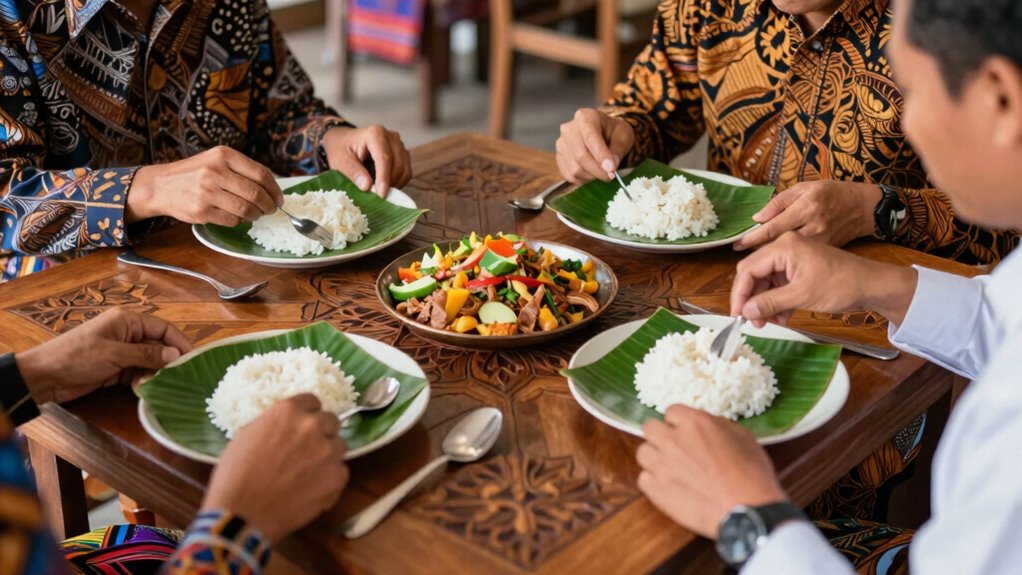

When dining in Indonesia, you should share dishes and use your right hand to eat, as it’s the customary way. Wash your hands beforehand and wait for the host to start. Avoid sticking chopsticks upright in rice, as it resembles funeral rituals. Show gratitude by saying “Terima kasih” and complimenting the food. Keep proper posture and respect local customs to enjoy the meal politely. If you keep exploring, you’ll discover more about their rich dining traditions.
Key Takeaways
- Wash hands thoroughly with provided water before eating, as hand hygiene is essential in communal dining.
- Use the right hand for eating, passing food, and utensils, and avoid sticking chopsticks upright into rice.
- Wait for the host or eldest person to start eating and avoid beginning the meal prematurely.
- Share dishes family-style, and use fingers to pick small portions of rice and side dishes.
- Show gratitude by saying “Terima kasih,” complimenting the food, and bringing small gifts when visiting someone’s home.
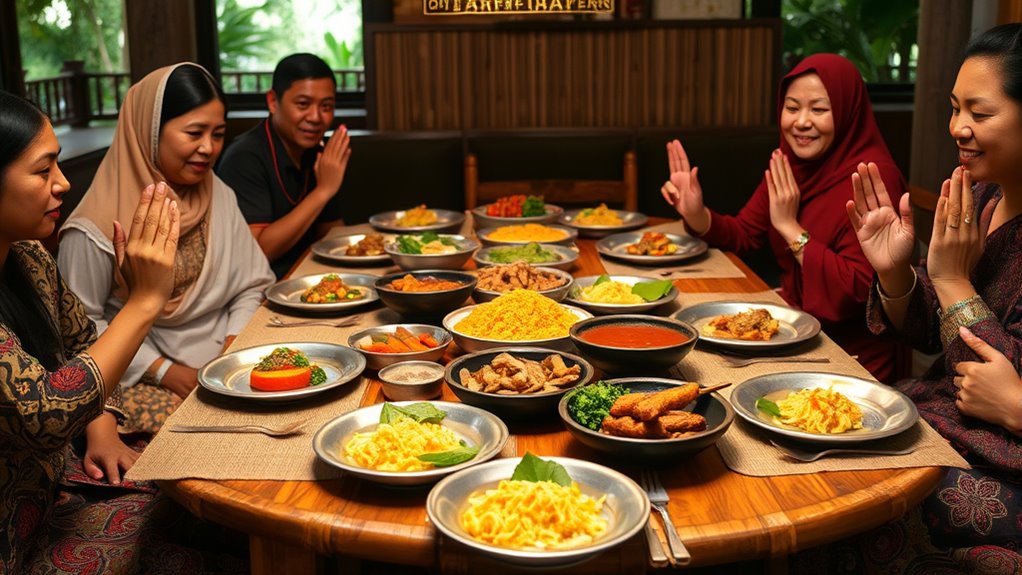
Dining in Indonesia is a vibrant experience that reflects the country’s rich cultural diversity. When you sit down to enjoy a meal, you’re not just eating—you’re participating in centuries-old traditions that emphasize respect, community, and harmony. Understanding traditional dining customs is essential to fully appreciating the local culture, and knowing some dining etiquette tips can help you navigate social situations smoothly. Indonesian meals often involve specific rituals that you’ll want to follow to show your respect and appreciation.
In Indonesia, meals are typically centered around sharing, so it’s common to eat with your hands, especially when dining with locals. The use of your right hand is customary, as the left hand is considered unclean in many traditional contexts. Before eating, it’s polite to wash your hands thoroughly, often with water provided at the table or a communal bowl. When it comes to traditional dining customs, it’s respectful to wait for the host or the eldest person to begin eating first. You should also avoid starting your meal before others, as this signals good manners and patience.
When handling food, you’ll find that many dishes are served family-style, encouraging communal eating. It’s customary to use your fingers to pick up small portions, especially rice and side dishes. Keep your hand above the plate while eating, and avoid pointing with your fingers or sticking them in your mouth. If you need to pass food or utensils, do so with your right hand, maintaining eye contact and a friendly attitude. Showing gratitude by saying “Terima kasih” (thank you) after the meal is considered polite, and it’s appreciated if you compliment the host on the food. Additionally, understanding the significance of color symbolism in Indonesian culture can enhance your appreciation of traditional dishes and table settings.
Respecting local dining etiquette tips also means being mindful of table manners. Don’t stick your chopsticks or utensils upright into your rice bowl, as this resembles a funeral ritual and is considered bad luck. Instead, rest them on the side of your plate or a chopstick rest if provided. When drinking from a communal glass or cup, take small sips and pass it along politely. If you’re invited into someone’s home, bringing a small gift, such as fruit or sweets, is a thoughtful gesture that shows appreciation and respect for their hospitality. Moreover, being aware of ear wax odor and other sensory cues can help you better understand local customs and hygiene practices, which are often subtly integrated into social interactions. Additionally, paying attention to cultural sensitivities can help you avoid unintended offenses and foster respectful exchanges during meals.
Top picks for "manner meal etiquette"
Open Amazon search results for this keyword.
As an affiliate, we earn on qualifying purchases.
Frequently Asked Questions
Are There Specific Dining Customs for Different Indonesian Regions?
Yes, you’ll notice regional culinary differences and traditional tableware across Indonesia. In Bali, for example, you might use banana leaves as plates, while in Sumatra, communal eating with shared dishes is common. Each region has its unique customs, so respect local practices by observing how locals handle their utensils and serve food. Embracing these regional culinary traditions enriches your experience and shows appreciation for Indonesia’s diverse cultural heritage.
Is It Acceptable to Eat With Your Hands in Formal Settings?
Yes, eating with your hands is acceptable in Indonesia, even in formal settings, but you should follow proper hand eating customs. Use your right hand only, keep your hands clean, and avoid wasting food. In formal dining etiquette, guarantee your hands are washed beforehand, and be respectful of local traditions. Observing these customs shows appreciation for Indonesian culture and demonstrates good manners during your meal.
What Should I Do if I Accidentally Use the Wrong Hand?
If you accidentally use the wrong hand, stay calm and politely apologize, showing cultural sensitivity. In Indonesia, hand etiquette is important, and using the left hand can be seen as disrespectful, especially during meals. Gently correct yourself and continue eating with the proper hand. Most locals will appreciate your effort to respect their customs, and it demonstrates your genuine respect for their culture.
Are Tipping Practices Different at Local Eateries Versus Upscale Restaurants?
A wise man once said, “Know your audience.” When it comes to tipping etiquette in Indonesia, you’ll find that small local eateries often don’t expect tips, whereas upscale restaurants usually do. At upscale venues, leaving 10% is appreciated, reflecting higher restaurant service standards. In contrast, tipping at local spots is optional, so observing locals or asking discreetly can help you navigate these cultural nuances comfortably.
How Do I Politely Decline Additional Food or Drinks?
When you want to politely decline additional food or drinks, do so with a respectful refusal and a warm smile. Say something like, “No, thank you, I’m full,” or “I appreciate it, but I must decline.” Keep your tone friendly and polite to show gratitude for the offer. This respectful refusal is appreciated and helps maintain harmony, ensuring your host feels comfortable and valued.
Conclusion
As you embrace Indonesia’s dining customs, remember that each shared meal is a bridge connecting hearts across generations. Your respectful gestures become the gentle ripples in a vast ocean of tradition, showing your appreciation for their culture. By honoring these etiquette practices, you’re not just eating—you’re weaving yourself into a rich tapestry of family, history, and harmony. Let every mindful bite symbolize your genuine respect and openness to the beautiful world of Indonesian hospitality.