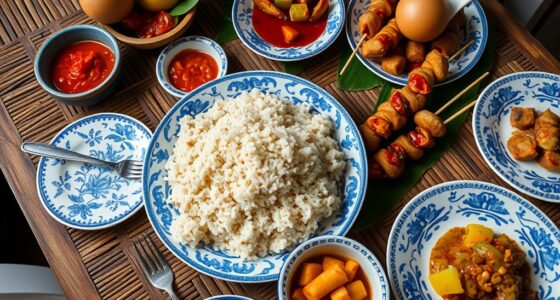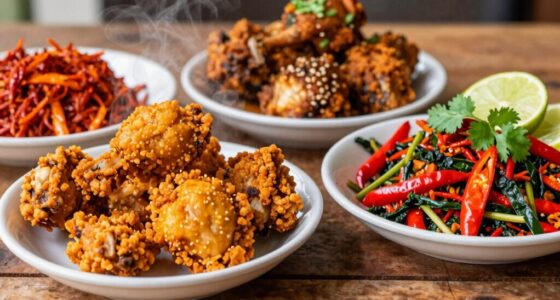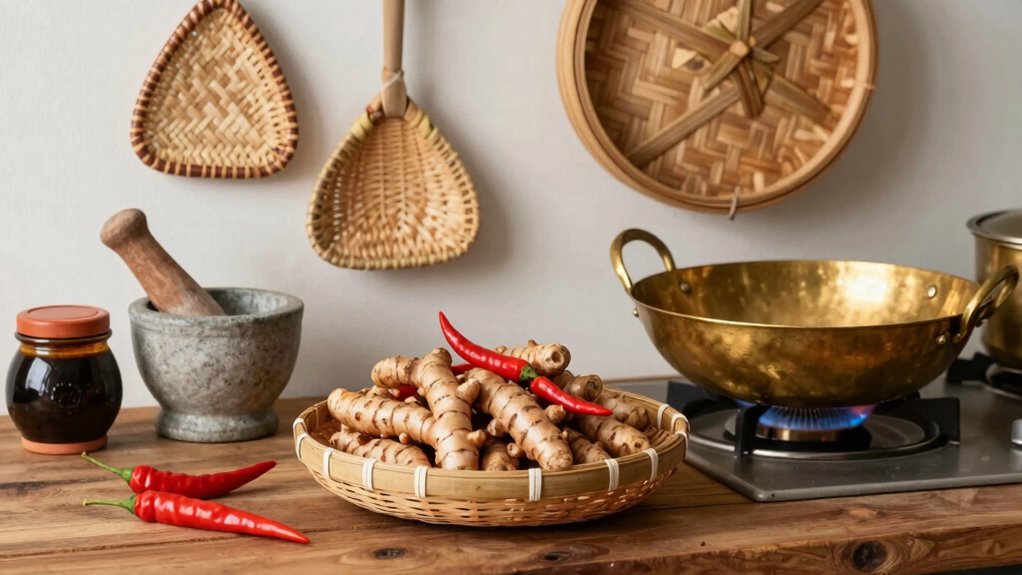

Inside an Indonesian kitchen, you’ll find essential tools like a mortar and pestle for grinding spices, a wok or wajan for stir-frying, a bamboo steamer, and clay pots for slow-cooking. Fresh ingredients such as turmeric, galangal, lemongrass, shallots, and chili peppers are prepared through pounding or slicing to maximize flavor. These tools and ingredients come together using traditional techniques, creating vibrant, authentic dishes. Keep exploring to discover how each element brings the cuisine to life.
Key Takeaways
- Essential tools include mortar and pestle, wok-like wajan, bamboo steamer, clay pots, and sharp knives for authentic preparation.
- Core ingredients feature fresh turmeric, galangal, lemongrass, chili peppers, garlic, shallots, and various vegetables.
- Spice blending using mortar and pestle enhances aroma and flavor layers in traditional dishes.
- Traditional cooking methods involve slow-simmering, stir-frying, charcoal grilling, and sautéing spice pastes.
- Fresh ingredients and specialized tools work together to create vibrant, authentic Indonesian flavors.
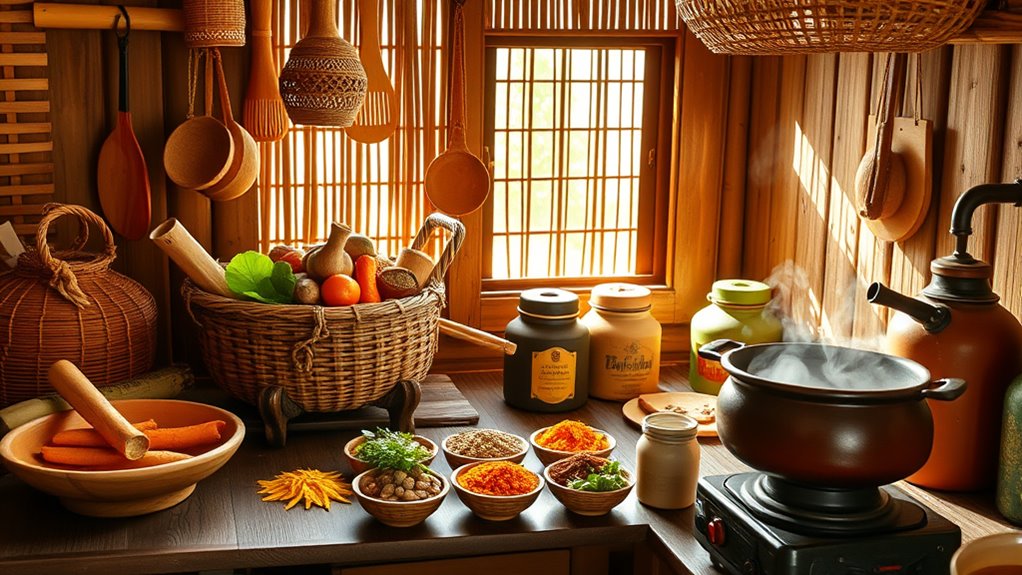
Have you ever wondered what makes Indonesian dishes so flavorful and authentic? The secret lies in a combination of skillful spice blending and mastery of traditional cooking techniques. When you step into an Indonesian kitchen, you’ll notice a vibrant array of spices, herbs, and tools that have been passed down through generations. These ingredients are carefully prepared and combined, creating complex layers of flavor that define Indonesian cuisine. Spice blending is a cornerstone of this culinary tradition, where fresh turmeric, galangal, lemongrass, and chili peppers are ground together using a mortar and pestle. This process releases essential oils and intensifies the aroma, allowing each dish to burst with flavor. The traditional cooking techniques, such as slow-simmering, stir-frying, and charcoal grilling, help develop depth and richness that are hard to replicate with modern appliances. You’ll find that many recipes begin with sautéing spice paste in hot oil, which helps extract flavors and create a fragrant base for curries, soups, and sambals.
In an Indonesian kitchen, the tools you see aren’t just functional—they’re essential for achieving authentic results. A sturdy mortar and pestle are indispensable for grinding spices and creating smooth, aromatic spice pastes. Wok-like wajan pans are often used for stir-frying ingredients quickly over high heat, preserving their texture and taste. A traditional bamboo steamer might be used for delicate dishes like ketupat or certain vegetables, while a clay pot, or panci, is perfect for slow-cooked stews and rice dishes. These tools aren’t just about convenience—they’re integral to the cooking process, helping you access the full potential of each ingredient. You’ll also notice various knives suited for slicing and chopping fresh herbs and vegetables, essential for maintaining the freshness and vibrancy of Indonesian dishes.
Furthermore, the use of fresh ingredients is key to authentic Indonesian cooking. You’ll find an abundance of fresh turmeric, ginger, shallots, garlic, and lemongrass, which are often prepared with traditional techniques like pounding or slicing to maximize their flavor. These ingredients are then combined with carefully measured spices to create intricate spice blends tailored to specific dishes. Whether it’s a fiery sambal, a rich rendang, or a fragrant chicken satay, the magic happens through precise spice blending and traditional techniques that have stood the test of time. When you understand and respect these methods, you’ll appreciate why Indonesian cuisine feels so alive and inviting—each bite a testament to centuries of culinary craftsmanship.

KitchenAid Artisan, 5-Qt Tilt Head Stand Mixer, KSM150PS, Milkshake
- Durable Metal Construction: Built to last with 59 touchpoints
- 5-Quart Stainless Steel Bowl: Handles small or large batches, dishwasher safe
- Tilt-Head Design: Easy ingredient addition and access to bowl
As an affiliate, we earn on qualifying purchases.
Frequently Asked Questions
How Do I Choose Authentic Indonesian Spices?
To choose authentic Indonesian spices, look for spice freshness by checking for vibrant colors and strong aromas. Sourcing tips include visiting local markets or specialty stores that focus on Southeast Asian ingredients. Avoid pre-ground spices stored for long periods, and opt for whole spices you can grind yourself. Trust your senses—fresh, fragrant spices are key to capturing the true flavors of Indonesian cuisine.
Are There Modern Tools Suitable for Indonesian Cooking?
You can definitely use modern kitchen gadgets for Indonesian cooking. Blenders make grinding spices easier, and pressure cookers can cut down cooking time for tougher ingredients. For health-conscious modifications, consider air fryers instead of deep fryers or non-stick pans to reduce oil use. These tools help you stay true to traditional flavors while making your cooking more efficient and healthier, blending modern convenience with authentic Indonesian dishes.
How Do I Store Fresh Herbs and Ingredients?
To keep your herbs fresh and preserve ingredients, you should store herbs in a damp paper towel inside a plastic bag in the fridge, which helps maintain herb preservation and ingredient freshness. For longer storage, consider freezing herbs in ice cube trays with water or oil. Keep spices in airtight containers away from direct sunlight. Proper storage methods guarantee your ingredients stay flavorful and ready for your Indonesian dishes.
What Are Common Substitutions for Unavailable Ingredients?
When ingredients are unavailable, you can use alternative seasoning options like soy sauce instead of fish sauce or tamarind paste for sourness. Ingredient substitution tips include using lime juice in place of lemon or coconut milk instead of fresh coconut. These swaps enhance flavor while maintaining authenticity. Always adjust quantities to taste, and don’t hesitate to experiment to find the best fit for your dish.
How Can I Adapt Indonesian Recipes for Dietary Restrictions?
To adapt Indonesian recipes for dietary restrictions, start by exploring vegetarian options like tofu or tempeh to replace meat and fish. For gluten-free adaptations, swap soy sauce with coconut aminos or tamari. You can also use rice or corn-based products instead of wheat noodles or bread. Keep experimenting with herbs and spices to maintain authentic flavors while customizing dishes to meet your dietary needs.
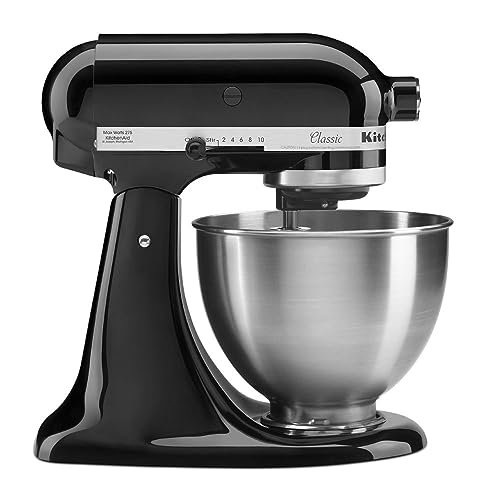
KitchenAid Classic Series 4.5 Quart Tilt-Head Stand Mixer K45SS, Onyx Black
- Durable Metal Construction: Built to last with 59 touchpoints
- Large Stainless Steel Bowl: Mix up to 8 dozen cookies
- Dishwasher Safe Bowl: Easy to clean and maintain
As an affiliate, we earn on qualifying purchases.
Conclusion
So, with all these tools and ingredients, you’re practically ready to conquer Indonesia’s vibrant flavors. Just be prepared—your kitchen might turn into a mini culinary adventure zone, complete with lingering spices and colorful pastes. Who knew that a few simple tools could unseal a world of taste? Now, go ahead and embrace the chaos—after all, mastering Indonesian cuisine is just a few ingredients and a dash of patience away from turning your kitchen into a flavorful chaos.

Bento Box Adult Lunch Box, Containers for Adults Men Women with 4 Compartments, Lunchable Food Container with Utensils, Sauce Jar, Muffin Liners, 40 Oz/5 Cup, Microwave & Dishwasher Safe, Brown
- Color Accuracy Guarantee: Correct color inside the packaging
- Complete Dining Set: Includes utensils, sauce jar, muffin liners
- Four-Compartment Design: Separate sections for different foods
As an affiliate, we earn on qualifying purchases.

buluker 4 Pack Bento Lunch Box Set 3 Compartment Food Storage Containers Wheat Straw Meal Prep Lunch Box Plastic Food Storage Containers, Microwave and Dishwasher Safe (light colour)
- 3-Compartment Design: Separate sections for different foods
- Safe and Reusable Materials: Made from polypropylene and wheat fiber
- Lightweight and Portable: Easy to carry in backpack or lunch bag
As an affiliate, we earn on qualifying purchases.