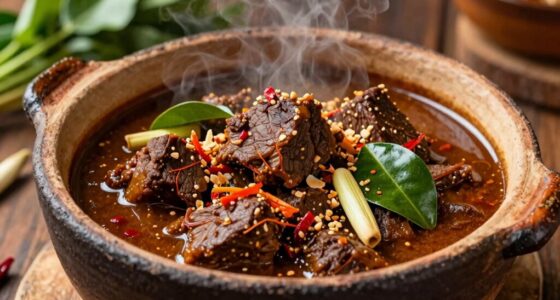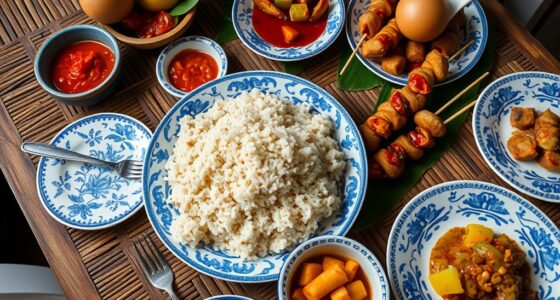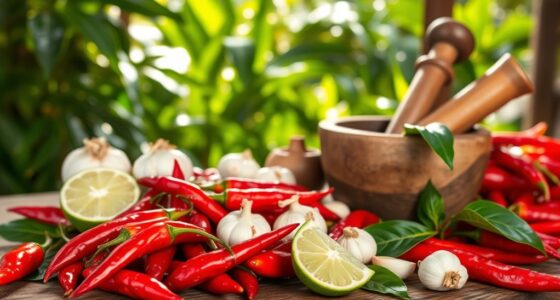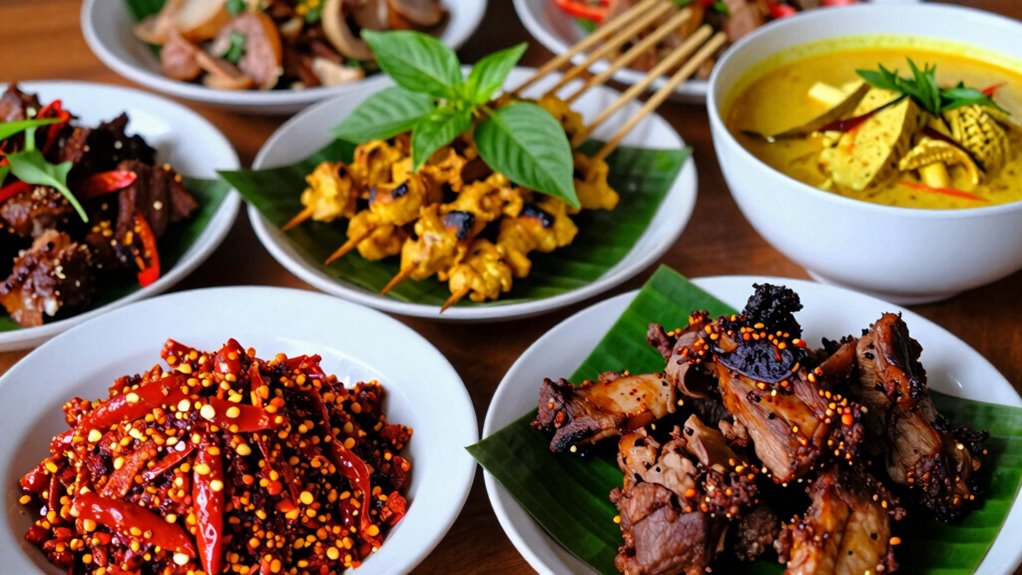

You’ll find Indonesian dishes unforgettable because of their bold, layered flavors that balance heat, earthiness, and fragrant aromas. Mastering spice blends with ingredients like turmeric, coriander, and lemongrass adds depth, while regional styles influence the combination of spices and herbs like basil or kaffir lime leaves. Herbal infusions and the choice of fresh or dried herbs further enhance complexity. Keep exploring, and you’ll discover how these vibrant flavor combinations create truly memorable culinary experiences.

Get kitchen staples and gadgets delivered free with Prime
- Fast, free delivery on millions of items
- Prime Video, Amazon Music and more included
- Member-only deals all year
Key Takeaways
- Layered flavors of heat, earthiness, and aroma create a bold, harmonious taste profile.
- Skillful spice blending with turmeric, coriander, cumin, and lemongrass adds depth and regional authenticity.
- Regional spice variations, like fiery Padang or sweet Javanese, define distinctive flavor profiles.
- Herbal infusions from fresh basil, kaffir lime leaves, and lemongrass enhance aroma and complexity.
- Using herbs in fresh or dried forms allows precise flavor adjustments, ensuring memorable dishes.

Indonesian cuisine is renowned for its vibrant and complex flavor combinations that excite the palate. When you immerse yourself in its dishes, you immediately notice how the flavors are layered, creating a sensory experience that’s both bold and harmonious. At the heart of this complexity is your skillful use of spice blending. You combine ingredients like turmeric, coriander, cumin, and lemongrass to craft a flavorful base that forms the backbone of many dishes. These spices aren’t just added randomly; you blend them thoughtfully, balancing heat, earthiness, and aroma to develop depth in every bite. It’s this careful mixing that transforms simple ingredients into memorable meals. Your mastery of spice blending allows you to tailor each dish to specific regional styles—whether it’s the fiery heat of Padang cuisine or the sweeter, aromatic flavors of Javanese recipes. The process involves not just mixing spices but also toasting or grinding them to release their full aroma, ensuring each bite bursts with robust flavor. Understanding spice blending is essential to mastering Indonesian culinary traditions. Equally important are herbal infusions, which elevate your dishes with fresh, fragrant notes. You often infuse herbs like basil, kaffir lime leaves, or lemongrass into your cooking, allowing their natural oils and aromas to permeate the dish. These infusions lend a freshness that balances the richness of coconut milk or the heat from chili peppers. When you simmer herbs in your broth or stew, you’re not just adding flavor—you’re creating a complex aroma that awakens the senses even before the first bite. Incorporating herb infusion techniques into your cooking can significantly elevate the authenticity and depth of your dishes. Additionally, understanding the different forms of herbs—whether fresh or dried—can help you manipulate flavor intensity and tailor dishes more precisely. Recognizing the versatility of herbs allows you to adapt recipes based on availability, ensuring consistent quality and taste.
As an affiliate, we earn on qualifying purchases.
Frequently Asked Questions
How Do Regional Influences Affect Indonesian Flavor Combinations?
Regional influences shape Indonesian flavor combinations through cultural fusion and ingredient diversity. As you explore different regions, you’ll notice local traditions blending with neighboring cuisines, creating unique tastes. Ingredients like spices, herbs, and tropical fruits vary regionally, influencing dishes’ flavors. This diversity allows you to experience a wide range of vibrant, memorable flavors, reflecting Indonesia’s rich history and cultural mosaic. Embrace these regional nuances to truly appreciate Indonesian cuisine’s complexity.
What Spices Are Essential in Authentic Indonesian Dishes?
Think of Indonesian cuisine as a vibrant tapestry, with spices weaving the story. Essential spices include turmeric for warmth, coriander for depth, and lemongrass for brightness. Spice blending is an art, and ingredient sourcing guarantees authenticity, bringing fresh, aromatic flavors to life. Without these, dishes lose their soul. You’ll find that mastering these spices transforms simple ingredients into unforgettable culinary adventures, echoing Indonesia’s rich, colorful heritage.
How Do Traditional Cooking Methods Impact Flavor Pairings?
Traditional cooking methods considerably influence flavor pairings by enhancing ingredient interactions. When you use fusion techniques like grilling or slow cooking, the flavors deepen, making unexpected ingredient substitutions more harmonious. For example, slow simmering brings out sweetness in spices, balancing savory elements. These methods create a foundation that allows you to experiment confidently with ingredient swaps, ensuring your dishes stay authentic while offering delightful, memorable flavor combinations.
Are There Modern Twists on Classic Indonesian Flavor Combinations?
Yes, modern twists on classic Indonesian flavors often involve fusion techniques and ingredient substitutions. You might see chefs blending traditional spices with international elements or swapping out ingredients for healthier or local alternatives. For example, turmeric could be paired with quinoa, or sambal might be combined with creamy avocado. These innovations keep the dishes exciting while honoring the rich heritage, allowing you to enjoy familiar flavors with a contemporary, creative twist.
How Do Indonesian Flavors Compare to Neighboring Southeast Asian Cuisines?
Imagine strolling through bustling street food stalls, where Indonesian dishes burst with vibrant flavors like tangy tamarind and sweet palm sugar, blending seamlessly with tropical fruits. Compared to neighboring Southeast Asian cuisines, Indonesia’s flavors feel richer and more layered, often incorporating bold spices and coconut milk. While Thai and Vietnamese foods highlight fresh herbs and citrus, Indonesian dishes offer a deeper, more indulgent taste experience rooted in diverse, tropical ingredients.
As an affiliate, we earn on qualifying purchases.
Conclusion
You’ll find that Indonesian flavor combinations are like a vibrant tapestry, each thread adding richness and depth. I once tried a simple satay, and the burst of sweet, savory, and spicy notes reminded me how these flavors weave unforgettable stories on your palate. Just as a well-crafted song stays with you long after the last note, these dishes linger in your memory, inviting you to explore and savor Indonesia’s culinary magic again and again.
As an affiliate, we earn on qualifying purchases.
As an affiliate, we earn on qualifying purchases.
Columbus Day / Indigenous Peoples' Day Picks
long weekend sales
As an affiliate, we earn on qualifying purchases.