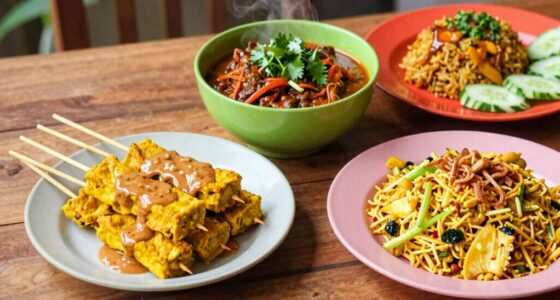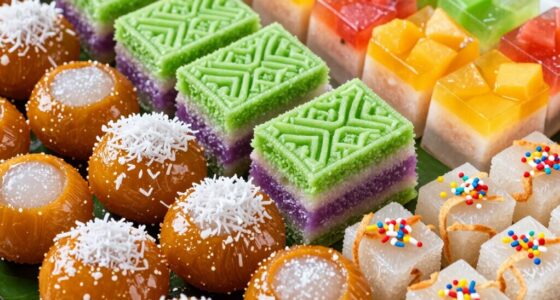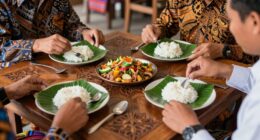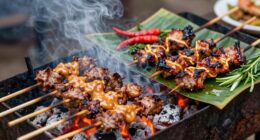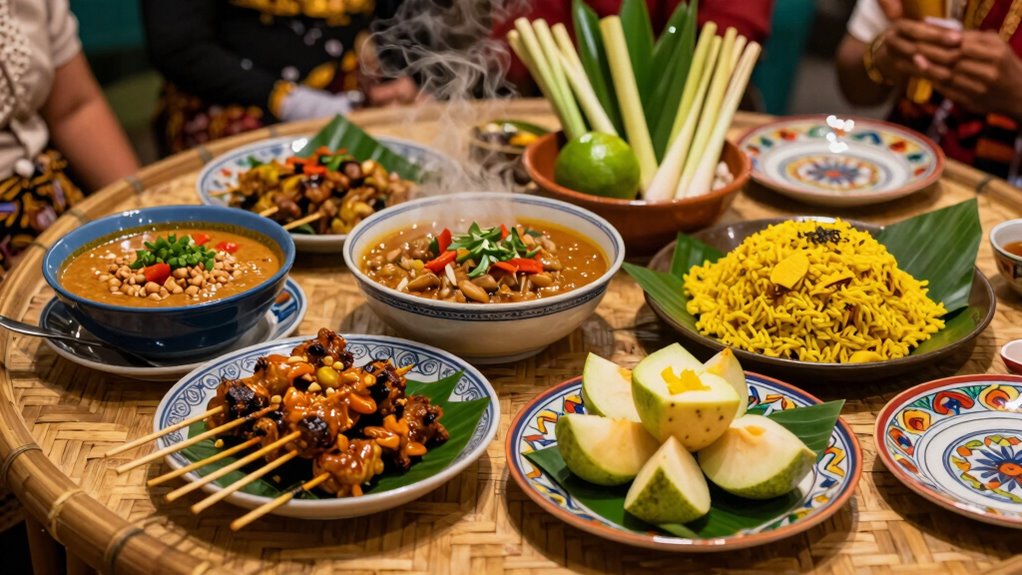
Indonesian celebration dishes are more than just food; they are symbols of culture, history, and community. You’ll find dishes like ketupat, opor ayam, and lawar that carry meanings of unity, gratitude, and prosperity. These recipes often involve special techniques and rituals passed down through generations, connecting you to Indonesia’s rich heritage. As you explore these festive foods, you’ll discover their deep cultural significance and the stories they tell—if you keep exploring, more fascinating insights await.
Key Takeaways
- Traditional Indonesian dishes symbolize cultural identity, unity, and prosperity during festivals and celebrations.
- Key festive foods like Ketupat and Babi Guling carry deep spiritual and communal meanings.
- Preparation techniques and rituals preserve authenticity and connect communities through shared culinary practices.
- Celebration dishes serve as a link to heritage, marking important religious and cultural milestones.
- Food fosters social bonds, reflecting Indonesia’s diverse culture and reinforcing community and spiritual values.
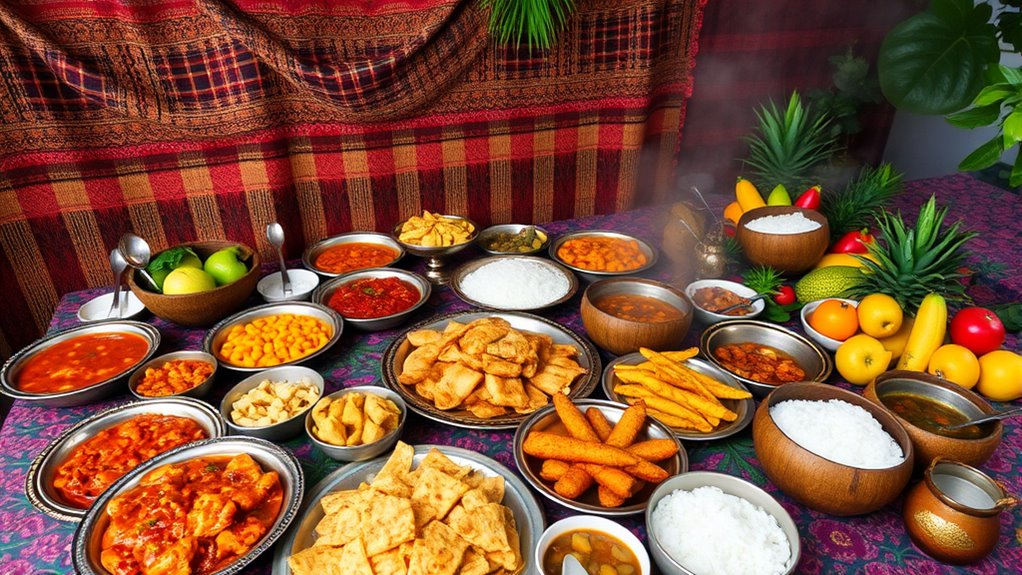
Feasts and festivals are vibrant celebrations that bring communities together to honor traditions, history, and seasonal changes. When you participate in Indonesian festivities, you’ll quickly notice how food plays a central role in expressing cultural identity. Traditional recipes are more than just dishes; they’re a reflection of centuries-old customs passed down through generations. These recipes often carry deep cultural significance, symbolizing prosperity, unity, or spiritual beliefs. For example, during big celebrations, you might indulge in dishes like *ketupat*—rice cakes wrapped in woven palm leaves—whose preparation and presentation hold symbolic meaning, representing togetherness and harmony. Learning about these traditional recipes allows you to appreciate the history behind each bite, revealing stories of resilience, migration, and community bonding.
Food in Indonesian festivals symbolizes unity, prosperity, and tradition, deepening cultural bonds and celebrating shared history.
As you explore Indonesian celebration dishes, you realize that each dish is carefully crafted with a specific purpose and meaning. During religious festivals like Eid al-Fitr, families prepare *ketupat* and *opor ayam* (chicken cooked in coconut milk), both of which are integral to the festivities. These dishes are not only delicious but also steeped in cultural significance, marking the end of fasting and the beginning of communal joy. Similarly, during Hindu festivals such as Galungan, you’ll find offerings of *lawar* (a vegetable and meat salad) and *babi guling* (suckling pig), which symbolize gratitude and spiritual connection. The preparation of these foods becomes a ritual itself, emphasizing the importance of tradition and community participation.
In many Indonesian festivals, traditional recipes serve as a bridge between past and present. You might notice that certain dishes are reserved for special occasions, and their preparation involves specific techniques handed down through generations. This preserves the authenticity of the flavors and the cultural stories they carry. For instance, *gudeg*, a sweet jackfruit stew from Yogyakarta, is often made with meticulous care during celebrations, representing regional pride. These recipes are more than just food; they’re expressions of cultural identity that foster a sense of belonging. When you partake in these celebrations, you become part of a living tradition, experiencing firsthand how food sustains cultural memory and brings people together in joy and reverence.
Furthermore, understanding the role of traditional recipes in Indonesian festivals enhances your appreciation for their cultural importance and the craftsmanship involved. Ultimately, Indonesian celebration dishes encapsulate the country’s rich history and diverse cultural landscape. They remind you that food isn’t just nourishment but a powerful symbol of community, faith, and continuity. By embracing these traditional recipes, you gain insight into the Indonesian way of life—where every meal is a story, every festival a shared experience that unites people across generations.
Frequently Asked Questions
What Are the Most Popular Indonesian Festival Dishes Worldwide?
You’ll find that dishes like Nasi Goreng, Satay, and Gado-Gado are the most popular Indonesian festival foods worldwide. You’re drawn to their vibrant flavors and traditional recipes, which often feature colorful food presentation that highlights Indonesia’s rich culture. These dishes are celebrated for their delicious taste and beautiful presentation, making them favorites at international food festivals and Indonesian celebrations across the globe.
How Do Regional Ingredients Influence Festival Dishes Across Indonesia?
Imagine a vibrant tapestry where each thread represents local spices and regional influences shaping festival dishes. You’ll notice how regional ingredients like lemongrass, turmeric, and chili vary across Indonesia, adding unique flavors that reflect local cultures. These local spices influence the taste and aroma, making each dish a flavorful expression of regional identity. So, your festival experiences are enriched by these diverse ingredients, creating a delicious mosaic of Indonesia’s culinary heritage.
Are There Specific Etiquette Rules for Serving Festive Indonesian Foods?
You should follow proper etiquette when serving festive Indonesian foods by respecting local serving customs. Use your right hand or a spoon to serve and eat, as it’s considered polite. Avoid pointing with your fingers and don’t place dishes directly on the table without a serving tray. Be mindful of communal eating practices, sharing dishes with gratitude. Observing these customs shows respect for the cultural significance of the celebration.
How Have Modern Influences Changed Traditional Celebration Dishes?
Your traditional Indonesian celebration dishes have transformed into culinary masterpieces, blending fusion cuisine and modern plating techniques. These influences make the dishes more visually stunning and innovative, turning age-old recipes into contemporary art. You’ll notice bolder flavors, creative presentations, and new ingredient combinations that keep traditions alive while embracing change. It’s like your festive foods have been given a vibrant, modern makeover, making every celebration feel fresh, exciting, and unforgettable.
What Are Unique Vegetarian Options for Indonesian Festival Feasts?
You can enjoy unique vegetarian options like flavorful vegetarian skewers, which feature marinated vegetables grilled to perfection, and plant-based sambal, offering a spicy, tangy kick without animal products. These dishes are perfect for festival feasts, showcasing Indonesian flavors in a vegetarian-friendly way. By incorporating fresh herbs and traditional spices, you get an authentic taste experience that celebrates the richness of Indonesian cuisine while catering to vegetarian preferences.
Conclusion
As you savor the vibrant tapestry of Indonesian celebration dishes, you’re not just tasting food—you’re immersing yourself in a symphony of culture and tradition. These dishes are like lively dancers, each step and flavor telling a story passed down through generations. So, embrace the feast, let it awaken your senses, and carry the spirit of Indonesia’s festivities in your heart, where every bite becomes a cherished memory dancing in the rhythm of celebration.