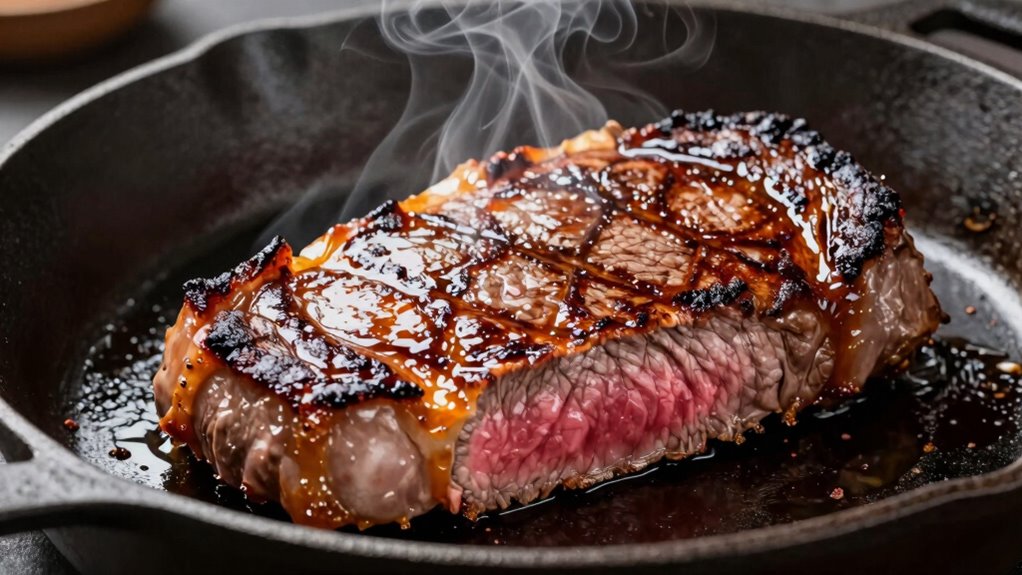

The key to perfectly cooked steak is controlling the temperature throughout cooking. Use a reliable thermometer to monitor internal doneness, and aim for moderate, consistent heat to avoid burning or undercooking. Remove the steak just before it reaches your ideal temperature, then let it rest to let juices redistribute. Mastering this balance guarantees tender, flavorful results. Keep going to discover more tips for achieving steak perfection every time.
Key Takeaways
- Use a reliable meat thermometer to monitor internal temperature during cooking.
- Remove the steak from heat at the target temperature to prevent overcooking.
- Rest the steak for 5-10 minutes to allow juices and temperature to stabilize.
- Cook at moderate, consistent heat to ensure even doneness and prevent burning.
- Know the ideal internal temperatures for different doneness levels to achieve perfect results.

Cooking a perfect steak might seem straightforward, but achieving that ideal balance of tenderness and flavor requires more than just a hot pan. It’s about understanding the nuances that make each cut special, especially the role of marbling techniques and resting methods. Marbling refers to the streaks of fat within the muscle, which melt during cooking, adding flavor and juiciness. When selecting your steak, look for good marbling; the more evenly distributed fat you see, the more tender and flavorful your steak will be. But it’s not just about choosing the right cut—how you handle it before and after cooking makes a huge difference. Proper marbling techniques involve understanding how to prepare and cook the steak to maximize these fat streaks without overcooking the meat, which can cause the fat to render too quickly and result in a dry bite. Understanding marbling helps you select the best cuts for flavor and tenderness, ensuring a superior final product. Additionally, applying quality control measures during cooking can help maintain consistent results and prevent overcooking.
Once you’ve cooked your steak to the right internal temperature, resting methods come into play. Resting is vital because it allows the juices, which are pushed toward the center during cooking, to redistribute evenly throughout the meat. Skipping this step often leads to a dry, less flavorful steak. To rest properly, remove the steak from heat once it hits your desired temperature, then loosely cover it with foil. Let it sit for about five to ten minutes. During this time, the internal juices settle, and the temperature continues to rise slightly—this is known as carryover cooking. Resting also helps the muscle relax, making each bite more tender. Additionally, proper handling during resting can help maintain the steak’s optimal moisture content. Proper resting techniques are essential to preserving the steak’s moisture and flavor, making your effort worthwhile.
Pay attention to your cooking temperature, aiming for a consistent, moderate heat to avoid burning the outside while keeping the inside at your preferred level of doneness. Using a reliable meat thermometer ensures you hit that perfect internal temperature, whether you like your steak rare, medium, or well done. Remember, the goal is to get that beautiful, warm interior with a flavorful crust. Incorporate marbling techniques by choosing well-marbled cuts and handling them with care, and follow proper resting methods to lock in those juices. It’s a simple step that elevates your steak from good to exceptional. Mastering these details—marbling and resting—puts you in control of the final outcome, guaranteeing every steak you cook is juicy, tender, and bursting with flavor.
Frequently Asked Questions
How Long Should I Rest My Steak After Cooking?
You should rest your steak for about 5 to 10 minutes after cooking. This resting time allows carryover cooking to finish, ensuring the juices redistribute evenly for maximum flavor and tenderness. Keep in mind, thicker steaks need more resting time. Cover it loosely with foil to retain warmth. Don’t skip this step; it’s essential for a perfectly cooked, juicy steak that’s full of flavor.
What’s the Best Way to Measure Steak Temperature Accurately?
To measure steak temperature accurately, use a reliable meat thermometer. Insert it into the thickest part of the steak, avoiding bone or fat, for the best reading. Refer to cooking charts to determine the ideal temperature for your preferred doneness. This method guarantees precision, preventing over- or under-cooking. Always clean the thermometer after each use to maintain accuracy and food safety.
Does Thick Steak Require Different Cooking Temperatures?
Imagine a thick steak resting on your grill, its size hinting that thickness matters. Yes, it does—thick steaks need lower, more controlled heat to allow even heat penetration without burning the outside. You should cook them at a slightly lower temperature and for longer, ensuring the center reaches your desired doneness. Remember, patience and proper heat control are key to achieving perfectly cooked, juicy thick steaks.
Can I Use a Microwave to Check Steak Doneness?
You shouldn’t use a microwave to check steak doneness because it’s not accurate and can pose microwave safety concerns. Microwaves heat unevenly, which can give false readings, and frequent testing might damage your appliance. Instead, use alternative tools like a meat thermometer for precise temperature readings. This way, you guarantee your steak is cooked perfectly without risking microwave safety or sacrificing accuracy.
How Does Steak Cut Affect Optimal Cooking Temperature?
Think of steak cuts like different musical instruments, each needing a unique touch. Your cutting style and marbling level directly influence the ideal cooking temperature. For instance, a tenderloin needs a gentler heat, while a ribeye with higher marbling can handle higher temps to melt the fat perfectly. Adjust your temperature based on the cut’s characteristics, and you’ll enjoy a perfectly cooked steak every time.
Conclusion
Remember, mastering steak is like tending a flame—control the temperature, and you ignite a perfect, juicy center. Each sizzle is a promise, each turn a step closer to culinary harmony. When you get the heat just right, you’re not just cooking meat—you’re forging an experience, a symbol of patience and precision. So, keep your thermometer steady, and let your confidence turn raw potential into a masterpiece on your plate.