

To boost flavor in any dish through marinating, start by using acids like lemon juice, vinegar, or yogurt to add brightness and depth. Keep your ingredients refrigerated for safety and avoid cross-contamination by using separate utensils. Marinate vegetables for 30 minutes to an hour—longer isn’t necessary—and consider adding herbs and spices for extra flavor. Remember, timing and proper handling make all the difference, so explore further for more expert tips and tricks.

Get kitchen staples and gadgets delivered free — and shop member deals
- Fast, free delivery on millions of items
- Access to Prime Big Deal Days deals on October 6–7
- Prime Video, Amazon Music and more included
Key Takeaways
- Use acidic ingredients like lemon juice, vinegar, or yogurt to enhance flavor and tenderize vegetables and meats.
- Marinate in the refrigerator for safety and to prevent spoilage, especially when using raw ingredients.
- Keep marinating times short for vegetables (30 minutes to 1 hour) to preserve texture and prevent over-softening.
- Incorporate herbs and spices in your marinade to add depth and complexity to the dish’s flavor profile.
- Always boil or cook marinade before using as a sauce to eliminate bacteria and ensure food safety.
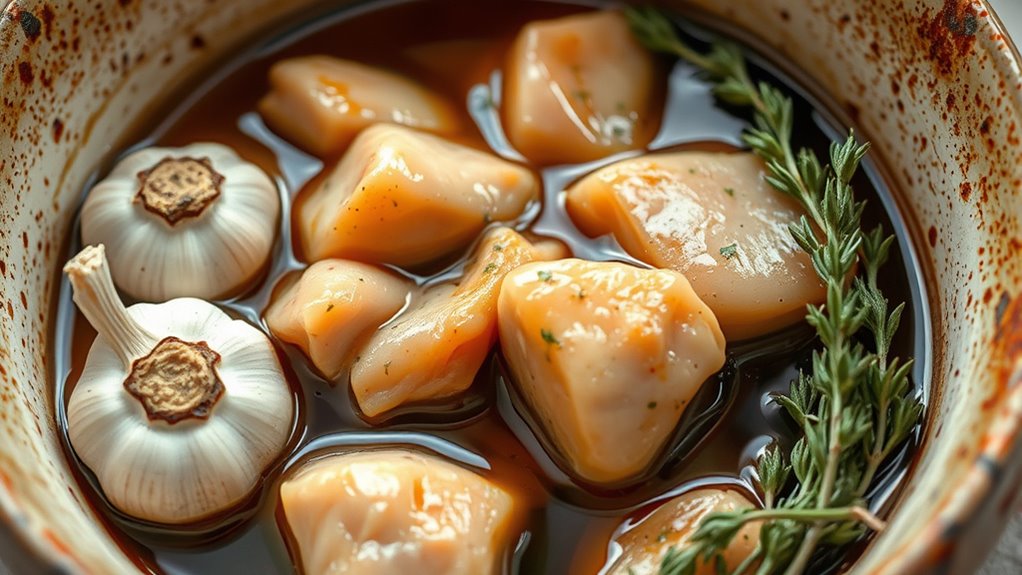
Marinating is one of the simplest ways to enhance the flavor and tenderness of your meats, vegetables, and even tofu. When you’re preparing to marinate, it’s essential to prioritize marinating safety to prevent foodborne illnesses. Always keep your marinating ingredients refrigerated until you’re ready to cook. Avoid leaving marinades at room temperature for extended periods, especially if they contain raw meat or seafood, as bacteria can multiply rapidly. It’s also wise to use separate utensils and containers for raw ingredients and the marinade itself. If you plan to use the marinade as a sauce afterward, make sure to boil it first to kill any bacteria from contact with raw food.
When it comes to marinades for vegetables, the goal is to boost their natural flavors without overpowering them. Vegetables tend to absorb marinades quickly, so you don’t need to marinate them for as long as you would meat—usually about 30 minutes to an hour is enough. Choose marinades with acidity from lemon juice, vinegar, or yogurt, combined with herbs and spices to add depth. Since vegetables are porous, they will soak up flavors fast, so keep an eye on the time to prevent them from becoming too soft or mushy. For grilling or roasting, marinating vegetables beforehand adds a layer of flavor that makes even simple dishes stand out.
In addition to flavor, marinades can also act as a tenderizer, especially those containing acids or enzymes. When marinating vegetables, focus on light, invigorating flavors that complement their natural taste. Avoid overly salty or spicy marinades that could overpower the vegetable’s subtle qualities. For safety, always marinate vegetables in the refrigerator and avoid cross-contamination by keeping raw produce separate from raw meats or seafood. If you’re using marinades for vegetables that contain ingredients like garlic or chili, be aware these can burn easily during cooking, so consider marinating in a non-reactive container and adding such ingredients later during grilling or roasting.
marinating containers for food safety
As an affiliate, we earn on qualifying purchases.
As an affiliate, we earn on qualifying purchases.
Frequently Asked Questions
Can I Reuse Marinade for Future Dishes?
You should avoid reusing marinade for future dishes unless you boil it first. For marinade safety, always set aside some fresh marinade before adding raw meat, or boil any leftover marinade thoroughly to kill bacteria. Reuse guidelines suggest never reusing marinade that touched raw meat unless it’s cooked. This prevents cross-contamination and ensures your dish stays safe. When in doubt, discard leftover marinade to keep your cooking safe and delicious.
How Do I Prevent Marinated Meat From Becoming Mushy?
Don’t let your meat turn to mush like a forgotten floppy disk. To prevent this, keep marinating times short—around 30 minutes for delicate cuts—and avoid overly acidic marinades, which can break down meat texture. Use a balanced marinade with moderate acidity, and don’t over-marinate. This way, your meat stays tender but firm, maintaining a great texture without becoming mushy.
What Are Some Vegetarian Marinade Options?
You can explore vegetarian marinade options by using ingredients like soy sauce, balsamic vinegar, lemon juice, and olive oil to enhance plant-based flavors. Incorporate vegetarian proteins such as tofu, tempeh, or seitan, which absorb marinades well. Add garlic, herbs, and spices to boost flavor. Let your vegetarian proteins marinate for at least 30 minutes, so they soak up the flavors and become more delicious and savory.
Should I Marinate at Room Temperature or in the Fridge?
You should marinate in the fridge to guarantee food safety and control marinating duration. Leaving food at room temperature can promote bacteria growth, risking foodborne illness. Keep your marinating dishes refrigerated, especially for longer periods, typically 30 minutes to 24 hours depending on the recipe. This keeps your food safe and flavors well-infused. Think of the fridge as a protected environment where your marinade can work its magic without health risks.
How Long Can Marinated Ingredients Be Stored Safely?
You can safely store marinated ingredients in the fridge for up to 24 hours for poultry or seafood, and up to 2 days for beef, pork, or vegetables. Always use airtight storage containers to prevent contamination and maintain food safety. After these times, bacteria can grow, so discard any leftovers. Proper storage guarantees your marinated ingredients stay fresh and safe to enjoy without risking foodborne illnesses.
As an affiliate, we earn on qualifying purchases.
Conclusion
Don’t let the idea of marinating scare you off—it’s simpler than you think and truly boosts your dishes. Even if you’re pressed for time, a quick 30-minute soak can add amazing flavor. Remember, you don’t need fancy ingredients or hours of waiting; just a little patience and a good marinade can turn everyday meals into something special. So go ahead, experiment and enjoy the delicious results—your taste buds will thank you!
As an affiliate, we earn on qualifying purchases.
As an affiliate, we earn on qualifying purchases.
NFL season / tailgating Picks
team gear
As an affiliate, we earn on qualifying purchases.