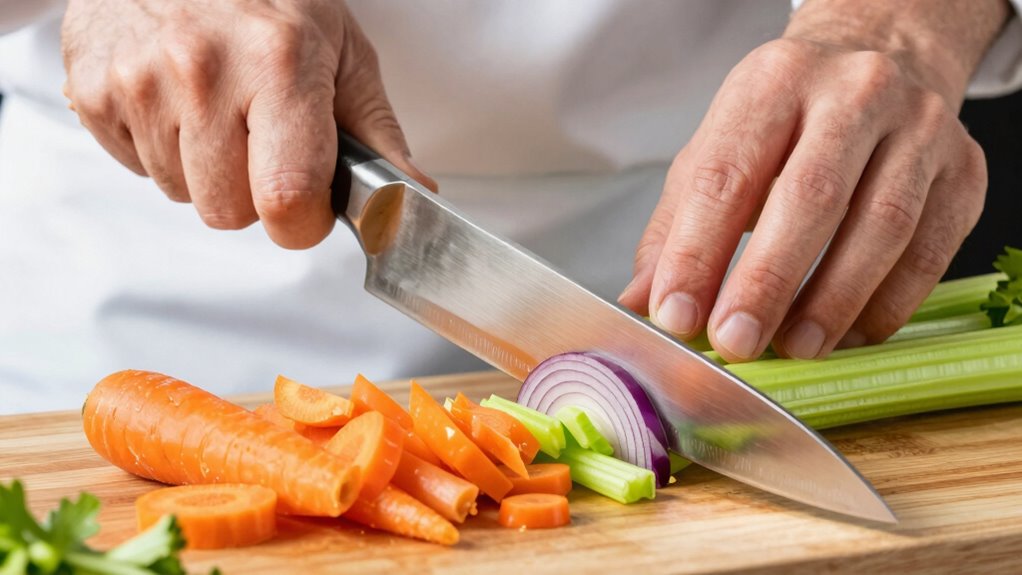

To chop like a pro, start by mastering proper knife handling and grip for better control. Keep your fingers tucked in on your guiding hand and use a rocking motion for clean cuts. Keep your knife sharp to reduce effort and prevent slips, and always cut on a stable surface. Practice consistently to improve your technique and confidence. Continue exploring these tips to elevate your skills and make your prep safer and more precise.
Key Takeaways
- Use a proper grip on the handle and keep fingers tucked in on the guiding hand to ensure control and safety.
- Practice a smooth rocking motion, slicing downward and slightly forward for even, precise chops.
- Keep knives sharp; regularly hone and sharpen to reduce effort and prevent slips.
- Maintain a stable cutting surface and avoid rushing to improve accuracy and safety.
- Develop consistent technique and practice regularly to enhance precision and confidence in chopping skills.
Have you ever struggled to chop vegetables evenly or worried about accidentally cutting yourself? If so, you’re not alone. Proper knife skills are essential for efficiency and safety in the kitchen. The first step is understanding knife safety, which means always handling your knife with care and awareness. Keep your fingers tucked in on the hand holding the food, forming a claw to prevent accidental nicks. Use a stable cutting surface and avoid rushing your cuts; a steady hand is a safe hand. When not in use, store your knives properly—either in a knife block or with blade guards—to prevent accidents and keep the blades sharp.
Master knife safety: handle carefully, store properly, and keep blades sharp for efficient, safe cooking.
Speaking of blades, sharpening techniques are vital for maintaining a safe and effective knife. A dull knife requires more force to cut through ingredients, increasing the risk of slipping and injury. Regularly honing your knife with a honing steel realigns the edge, but over time, you’ll need to sharpen it with a whetstone or a professional sharpener. When sharpening, maintain a consistent angle—usually around 15 to 20 degrees—and use even, controlled strokes. This not only extends the life of your knife but also ensures cleaner cuts, making your prep work safer and more precise. Remember, a sharp knife is a safe knife; it responds smoothly to your cuts, requiring less pressure and reducing fatigue.
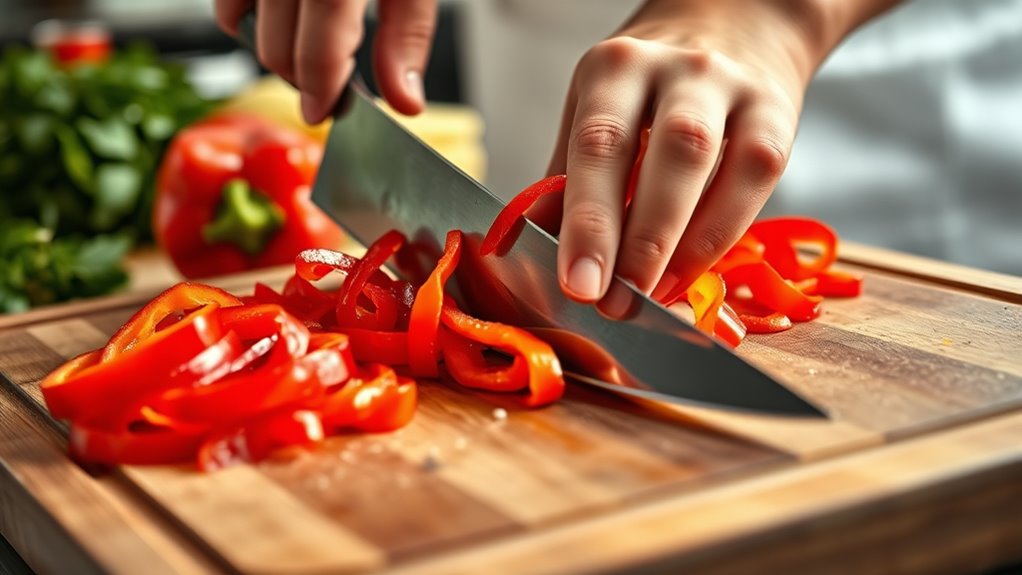
Once your knife is sharp and your safety habits are in place, focus on your technique. Use a rocking motion, slicing downward and slightly forward, rather than pressing straight down. This method helps you control the blade and reduces the likelihood of slipping. Keep your guiding hand firm but relaxed, and move the knife in a fluid motion across the food. Practice makes perfect, so start with softer vegetables like bell peppers or zucchini to build confidence before tackling tougher items. Pay attention to your grip—hold the handle firmly but comfortably, keeping your wrist steady to enhance control.
Mastering these basics—knife safety, sharpening techniques, and proper handling—sets a solid foundation for improving your overall knife skills. As you practice, you’ll notice your cuts becoming more uniform and precise, saving you time and effort in the kitchen. Always prioritize safety and maintenance; a well-cared-for knife not only performs better but also keeps you safe from injuries. With patience and consistent effort, you’ll soon chop like a pro, turning what once felt intimidating into a seamless part of your cooking routine.
Frequently Asked Questions
What Is the Best Type of Knife for Beginners?
For beginners, a versatile chef’s knife is your best choice. It handles various cutting techniques and makes chopping easier. Remember, proper knife maintenance keeps it sharp and safe, so regularly hone and sharpen your blade. Start with controlled, precise cuts, and avoid applying excessive force. As you gain confidence, you can explore other specialized knives, but a good chef’s knife will serve you well in most kitchen tasks.
How Do I Sharpen My Knives at Home?
Imagine your knife as a dancer needing the perfect touch to stay graceful. To sharpen at home, use sharpening tools like a whetstone or a manual sharpener. Keep your knives in good knife maintenance by honing them regularly, then carefully slide the blade across the stone or through the sharpener’s slots, maintaining a consistent angle. This keeps your blades keen and ready to glide through ingredients effortlessly.
What Safety Precautions Should I Follow While Chopping?
When chopping, prioritize knife safety by always maintaining a proper grip, keeping your fingers tucked, and using a stable cutting surface. Focus on your hand placement to prevent slips, and stay attentive to the task. Never rush, and verify your knife is sharp to reduce accidents. By following proper knife safety and practicing a proper grip, you minimize risks and chop efficiently and confidently.
How Do I Store Knives to Keep Them Sharp?
To keep your knives sharp, store them properly by using knife blocks, magnetic strips, or protective sheaths, which prevent dulling and damage. Always avoid tossing them in drawers, as this causes unnecessary wear. Regularly use sharpening tools like honing rods or sharpening stones to maintain their edge. Proper knife storage not only preserves sharpness but also guarantees safety and extends the lifespan of your blades.
Can I Use a Food Processor Instead of Chopping by Hand?
You can use a food processor instead of hand-chopping, but beware—food processor safety is key. It’s a whirlwind of blades that can turn ingredients into mush if not careful. Manual chopping tips help you control texture and avoid over-processing. If you want precise, textured pieces, stick to chopping by hand. Otherwise, a food processor can save time, just handle it with care and stay attentive to avoid mishaps.
Conclusion
Now that you’ve mastered the basics, your knife becomes an extension of your hand—like a painter with their brush or a poet with their pen. With practice, you’ll chop with confidence, precision, and finesse, transforming simple ingredients into culinary art. Remember, every cut brings you closer to chef-level skills. So, keep honing your technique, embrace the rhythm, and let your kitchen adventures unfold with the grace of a seasoned artist at work.