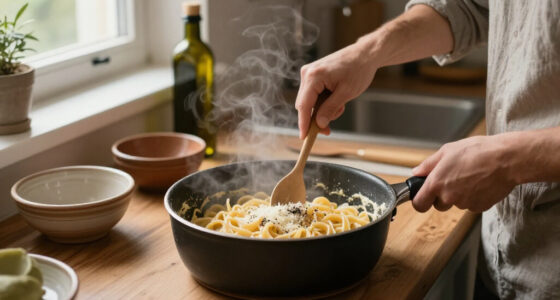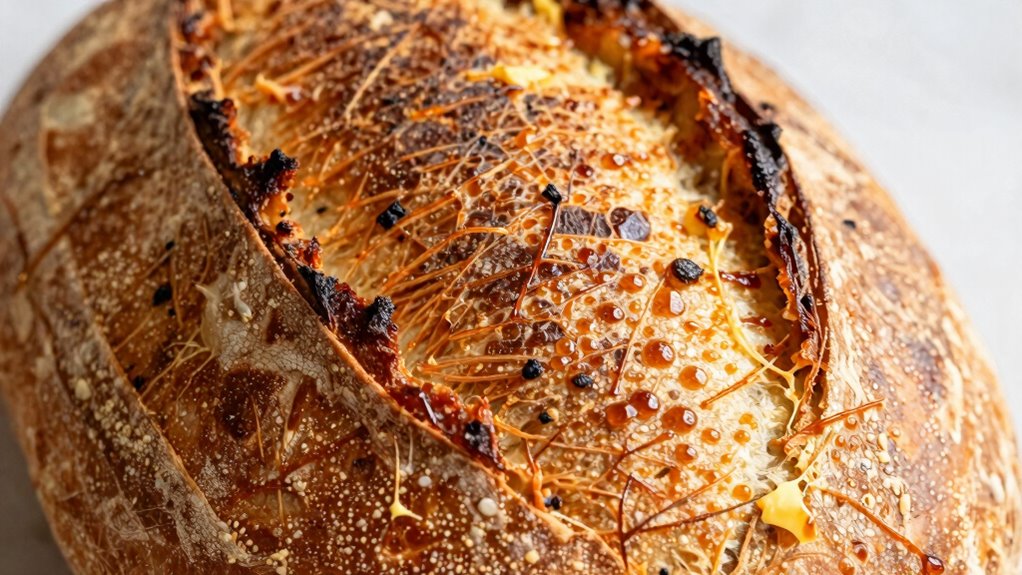

To get those perfect golden, crispy crusts, start with dry ingredients and pat them thoroughly to remove excess moisture. Use high heat with a hot skillet, broiler, or oven to accelerate the Maillard reaction, which creates browning and flavor. Control temperature carefully to prevent burning, and avoid overcrowding to ensure even browning. Mastering these techniques helps you develop rich flavors and perfect crusts—if you want to learn more, there’s plenty to uncover about optimizing your cooking process.

Get kitchen staples and gadgets delivered free with Prime
- Fast, free delivery on millions of items
- Prime Video, Amazon Music and more included
- Member-only deals all year
Key Takeaways
- Use high heat and dry cooking methods like searing, roasting, or broiling to promote the Maillard reaction.
- Pat ingredients dry before cooking to eliminate moisture that inhibits browning.
- Ensure the surface temperature reaches at least 300°F (150°C) for effective crust formation.
- Avoid overcrowding the pan to maintain high heat and allow proper caramelization.
- Control moisture levels and cook briefly at high heat for a golden, crispy crust without burning.
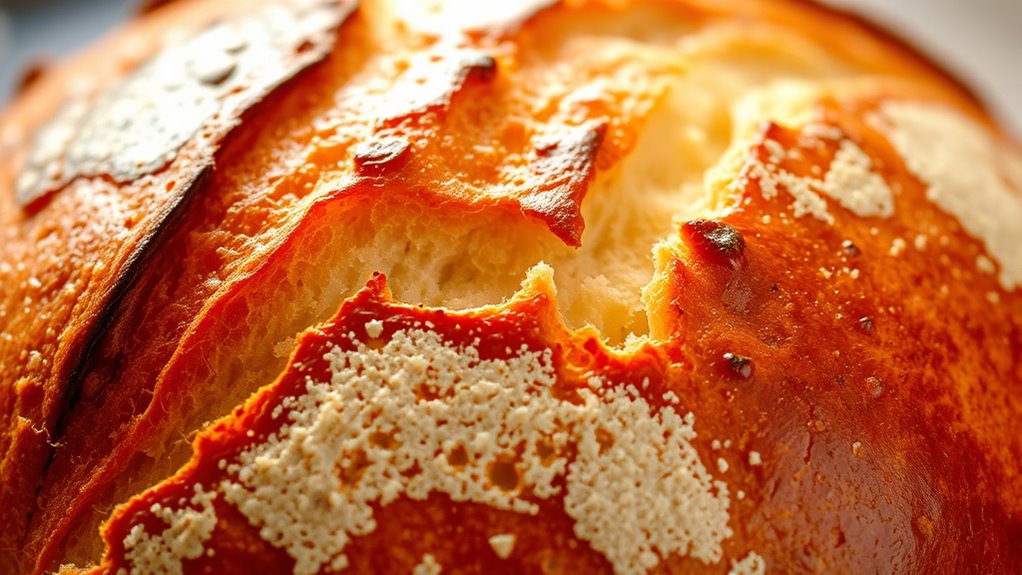
Have you ever wondered what causes that delicious browning and aroma when you cook meat, bread, or roasted coffee? It’s a fascinating chemical process called the Maillard reaction, and understanding it can help you achieve those perfect, golden, crispy crusts. This reaction occurs when amino acids from proteins and reducing sugars interact under heat, leading to complex flavor development and appealing color. The key to mastering this process lies in controlling temperature, moisture, and ingredients, so you can bring out the best in your cooking.
At the heart of the Maillard reaction is sugar browning. When heat is applied, reducing sugars like glucose or fructose react with amino acids, creating new compounds that give your food that rich, caramelized look and taste. This isn’t just about aesthetics; it also enhances flavor, adding depth and complexity to your dishes. As the sugars caramelize, they release aroma compounds that make your kitchen smell irresistible. The process is delicate—too much heat too quickly can burn the sugars, resulting in a bitter taste, while too low a temperature might not produce enough browning. Finding the right balance ensures you get that attractive, crispy exterior without sacrificing flavor quality.
Flavor development is another critical aspect of the Maillard reaction. The molecules formed during this process are responsible for a broad spectrum of flavors—nutty, roasted, savory, even slightly sweet—making your food taste richer and more satisfying. When you sear a steak or toast bread, you’re essentially triggering this reaction to heighten flavor complexity. It’s important to note that moisture plays a role too; excessive water can inhibit Maillard browning because it cools the surface and prevents the temperature from rising high enough. To optimize flavor development, many chefs dry their ingredients slightly before cooking or use high heat briefly to jump-start the reaction, then lower the temperature to avoid burning. Proper temperature control is essential for achieving the perfect balance between browning and burning. Additionally, understanding heat transfer can help you develop more consistent results in your culinary endeavors. Using dry heat techniques like roasting or broiling can further enhance browning and flavor. Moreover, employing precise thermal management strategies can significantly improve your ability to master the Maillard process.
Understanding how the Maillard reaction works allows you to manipulate your cooking techniques effectively. For instance, using a hot cast-iron skillet or broiler can accelerate browning, while patting ingredients dry before cooking can enhance the process. Additionally, controlling heat and moisture levels is essential to achieve the best results. Keep in mind that patience is crucial—allowing food to brown gradually gives the flavors time to develop fully, resulting in that desirable crispy crust. With practice, you’ll learn how to control heat and moisture to produce beautifully browned, flavorful dishes that look as good as they taste. Mastering the Maillard reaction transforms everyday cooking into an art, giving your meals a professional touch and irresistible appeal.
cast iron skillet for high heat searing
As an affiliate, we earn on qualifying purchases.
As an affiliate, we earn on qualifying purchases.
Frequently Asked Questions
Can the Maillard Reaction Occur at Low Temperatures?
Yes, the Maillard reaction can occur at low temperatures, but it’s much less efficient. You need precise temperature control to promote flavor development without burning. At lower temperatures, the reaction happens more slowly, allowing subtle flavor notes to develop gradually. To achieve a golden, crispy crust, you might need to increase temperature slightly or extend cooking time. Patience and careful temperature management are key to optimizing this reaction.
How Does Humidity Affect the Maillard Reaction?
Humidity effects can slow down the Maillard reaction because excess moisture prevents browning. When you control moisture carefully, you promote a better, more even crust. Too much humidity keeps surfaces damp, hindering crispness. To get that perfect golden, crispy crust, you need to manage moisture levels, ensuring there’s not too much humidity. This moisture control accelerates browning and enhances flavor development, making your baked goods irresistibly delicious.
Is the Maillard Reaction Safe to Consume in Excess?
The Maillard reaction is generally safe when consumed in moderation, but excessive browning can raise toxicity concerns due to the formation of compounds like acrylamide. While it enhances flavor and texture, overdoing it may impact nutritional quality and pose health risks. You should enjoy crispy, golden foods in moderation, balancing the delicious benefits with potential health impacts. Eating a varied diet helps minimize any adverse effects.
Does the Maillard Reaction Occur in All Cooking Methods?
No, the Maillard reaction doesn’t occur in all cooking methods. You need proper temperature control, typically above 300°F (150°C), to trigger flavor development through this reaction. When you sear, roast, or fry, you’re creating ideal conditions for browning and complex flavors. However, methods like boiling or steaming don’t reach these high temperatures, so the Maillard reaction isn’t part of those processes.
How Can I Prevent Over-Browning During Roasting?
Think of your roast like a delicate painting—you want the perfect hue without overdoing it. To prevent over-browning, keep a close eye on your oven temperature; lower it slightly if needed. Use moisture control techniques, like tenting with foil or adding a splash of water, to regulate browning. This way, you get that beautiful, crispy crust without burning, ensuring your roast stays tender and flavorful.
digital kitchen thermometer for cooking
As an affiliate, we earn on qualifying purchases.
As an affiliate, we earn on qualifying purchases.
Conclusion
So there you have it—mastering the Maillard reaction is your golden ticket to crusts so crispy, they might just crack a smile. Just remember, patience and heat are your best friends, unless you enjoy eating burnt toast—your call. With a little practice, you’ll be turning bland ingredients into culinary masterpieces faster than you can say “browned perfection.” Now go forth, conquer those kitchens, and make every dish look like it’s been kissed by a golden fairy.
As an affiliate, we earn on qualifying purchases.
As an affiliate, we earn on qualifying purchases.
Halloween Picks
halloween
As an affiliate, we earn on qualifying purchases.