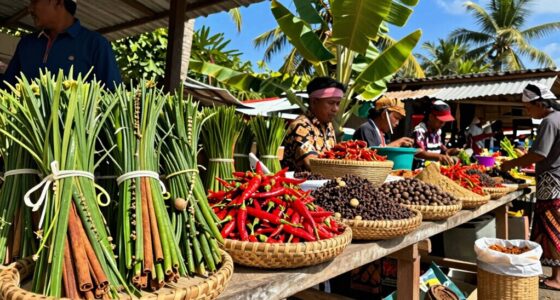
Tempeh’s 400-year journey begins in Java, where locals developed traditional fermentation methods using molds like Rhizopus oligosporus to transform cooked soybeans into a nutritious, protein-rich cake. Over centuries, it became a essential part of Indonesian culture, passed down through generations. As people migrated and became aware of its health benefits, tempeh gained global popularity, especially in plant-based diets. Exploring its history reveals a rich blend of tradition and modern appreciation—there’s much more to uncover.
Key Takeaways
- Tempeh originated over 400 years ago in Java, Indonesia, as a traditional fermented soy product.
- It involves fermenting cooked soybeans with molds like Rhizopus oligosporus, transforming them into a nutrient-rich cake.
- Traditionally made at home, tempeh reflects Java’s cultural practices, community, and ancestral fermentation skills.
- The fermentation techniques and cultural significance spread beyond Java through migration and trade.
- Today, tempeh is globally appreciated for its health benefits, plant-based protein, and preservation of traditional making methods.

Tempeh’s journey spans over 400 years, showcasing its enduring popularity across Asia and beyond. Originally from Java, this traditional soy product has traveled through time and geography, becoming a staple in many diets worldwide. Its long history is deeply rooted in fermentation techniques passed down through generations, which not only preserve the soy but also develop its unique flavor and texture. These fermentation methods involve inoculating cooked soybeans with specific molds, like Rhizopus oligosporus, then incubating them under controlled conditions. This process transforms the soy, creating a firm, nutty-tasting cake rich in protein and probiotics. Over centuries, different regions have refined and adapted these techniques, but the core principles remain the same, highlighting the cultural significance of tempeh as more than just food—it’s a symbol of tradition, community, and resourcefulness.
Additionally, the traditional fermentation process is a delicate art that requires skill and knowledge passed down through generations, ensuring the quality and authenticity of each batch.
In Java, tempeh holds a special cultural significance. It’s more than a daily protein source; it represents local ingenuity and a connection to ancestral practices. Families often prepare tempeh at home, passing down fermentation techniques that are considered part of their heritage. The process of making tempeh is communal, fostering social bonds and sharing knowledge across generations. Its role in local cuisine is profound, used in diverse dishes that reflect regional flavors and customs. Tempeh’s cultural importance is also evident in its integration into religious festivals and traditional celebrations, where it’s served to honor ancestors and community unity. Over time, these cultural practices have helped preserve the authenticity of tempeh, even as it gained popularity outside Indonesia.
As tempeh migrated beyond Java, it carried its cultural significance and fermentation techniques into new contexts. In the West, chefs and health enthusiasts embraced it for its nutritional benefits and plant-based protein content. Today, it’s a versatile ingredient in vegan and vegetarian dishes globally. Despite this expansion, the core fermentation techniques remain essential to maintaining its authentic qualities. Understanding the cultural significance behind tempeh’s traditional preparation helps you appreciate its deep roots and the care that goes into making it. Whether enjoyed in Indonesia or in a modern kitchen abroad, tempeh’s history is a testament to how ancient fermentation techniques and cultural values can endure and adapt, connecting communities across time and continents through a shared love of this humble yet powerful soy product.

Apple iPad 11-inch: A16 chip, 11-inch Model, Liquid Retina Display, 128GB, Wi-Fi 6, 12MP Front/12MP Back Camera, Touch ID, All-Day Battery Life — Blue
WHY IPAD — The 11-inch iPad is now more capable than ever with the superfast A16 chip, a...
As an affiliate, we earn on qualifying purchases.
Frequently Asked Questions
How Did Tempeh Originally Become Popular in Java?
You might find that tempeh originally became popular in Java through its integration into local culinary traditions, where fermentation techniques played a key role. As people discovered the nutritional benefits and unique flavor it added, it became a staple in traditional dishes. Its ease of preparation and cultural significance helped it spread across the region, making it a beloved part of Java’s food history and culinary identity.
What Are the Traditional Fermentation Methods Used for Tempeh?
You’ll find that traditional fermentation techniques for tempeh involve using simple, natural methods passed down through generations. Typically, you soak and dehull soybeans, then inoculate them with a starter culture containing Rhizopus mold. Fermentation techniques rely on traditional ingredients like rice straw or banana leaves to maintain humidity and warmth. This process usually takes 24 to 48 hours, resulting in a firm, nutritious product with a distinct flavor.
How Has Tempeh Influenced Global Plant-Based Diets?
You see how tempeh has influenced global plant-based diets through plant-based innovation and cultural adaptation. As more people seek sustainable, protein-rich foods, tempeh’s versatility inspires new recipes worldwide. Its cultural significance encourages culinary diversity, blending traditional fermentation techniques with modern health trends. This adaptability helps tempeh become a staple in various diets, promoting plant-based eating and fostering a broader acceptance of fermented foods across different cultures.
What Are the Nutritional Benefits of Consuming Tempeh?
Did you know tempeh packs nearly 20 grams of protein per serving? That makes it a true Protein Power for your diet. Plus, its fermentation process boosts Gut Health by introducing beneficial probiotics. Tempeh is also rich in vitamins, minerals, and antioxidants, supporting overall wellness. When you include tempeh in your meals, you benefit from its nutritional punch, helping you stay energized and healthy every day.
Are There Regional Variations of Tempeh Across Indonesia?
You’ll find regional variations of tempeh across Indonesia, each reflecting local flavors and ingredients. In Java, you might enjoy a spiced, fermented version with garlic and chili, while in Bali, coconut and herbs add unique tastes. Sumatra’s tempeh often incorporates local spices and herbs for richer flavors. These regional differences showcase how local ingredients influence tempeh’s flavor profile, making each version distinct and tied to its cultural background.

Fusion5 2026 Version 12" 2K Display Windows 11 Tablet PC with Stylus Pen - Built in USA - 12GB DDR5 RAM 512GB SSD, 13th Gen CPU, 12 inch Windows Tablet Computer, Built-in Fan, Fast Charging, Metallic
Proudly Assembled in Florida, USA: Each Fusion5 Helios 12 windows tablet is meticulously assembled in Pasco County, Florida,...
As an affiliate, we earn on qualifying purchases.
Conclusion
Your journey with tempeh shows how a humble marvel can carve its path across centuries and continents. Like a resilient seed breaking through soil, it’s woven into the fabric of cultures worldwide, carrying stories and flavors that transcend borders. Tempeh’s voyage reminds you that good things, rooted in tradition, grow stronger with time and travel. Embrace this ancient treasure, for it’s a proof to how food can unite, inspire, and stand the record of history.

Fusion5 Built in USA 10.1” Windows 11 Professional Rugged Tablet PC - 12GB RAM, 512GB SSD, Intel 13th Gen, Full HD Windows Tablet Computer, HDMI, USB C - 2 Year Full Warranty with Accidental Damage
Proudly Assembled in Florida, USA: Each Fusion5 FWIN232 PRO N5 is meticulously assembled in Pasco County, Florida, ensuring...
As an affiliate, we earn on qualifying purchases.

2-in-1 Laptop Tablet 2026 with Magnetic Keyboard & 1-Year Office 365, 12" 2K FHD IPS Touchscreen, 12GB RAM 512GB SSD, 6500Y Processor, USB-C, Dual Speakers, Windows 11 Laptop for Home Office Students
START WORKING IMMEDIATELY with a full 1-Year Office 365 Subscription - pre-installed on this versatile 2-in-1 device. Seamlessly...
As an affiliate, we earn on qualifying purchases.