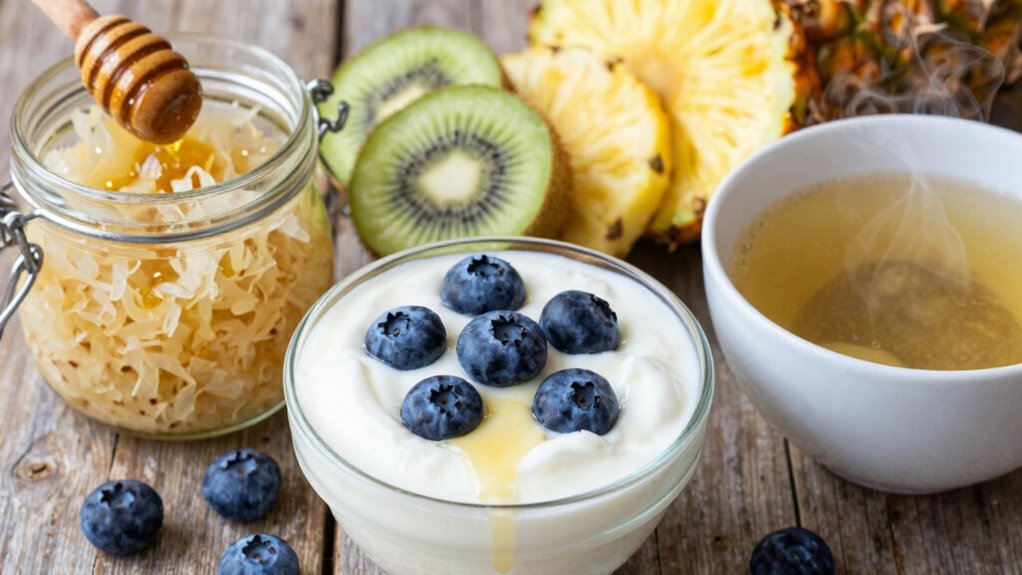

To keep your gut happy, include probiotic-rich foods like kefir, kombucha, and yogurt in your diet, as they introduce beneficial bacteria that support digestion and immunity. Pair these with prebiotic foods such as garlic, onions, and bananas, which feed your good bacteria and boost their growth. Combining these strategies strengthens your microbiome, improves energy, and reduces bloating. If you want to discover how to optimize your gut health further, there’s more to explore ahead.

Get kitchen staples and gadgets delivered free with Prime
- Fast, free delivery on millions of items
- Prime Video, Amazon Music and more included
- Member-only deals all year
Key Takeaways
- Fermented drinks like kefir, kombucha, and yogurt supply beneficial probiotics that support gut health.
- Consuming prebiotic foods such as garlic, onions, and bananas fuels probiotic bacteria and enhances their growth.
- Combining probiotics with prebiotics creates a synergistic effect, improving digestion and maintaining a balanced microbiome.
- Supporting gut health can reduce bloating, boost immunity, and improve mental clarity and energy levels.
- Regular intake of probiotic-rich foods and prebiotics promotes long-term gut resilience and overall well-being.
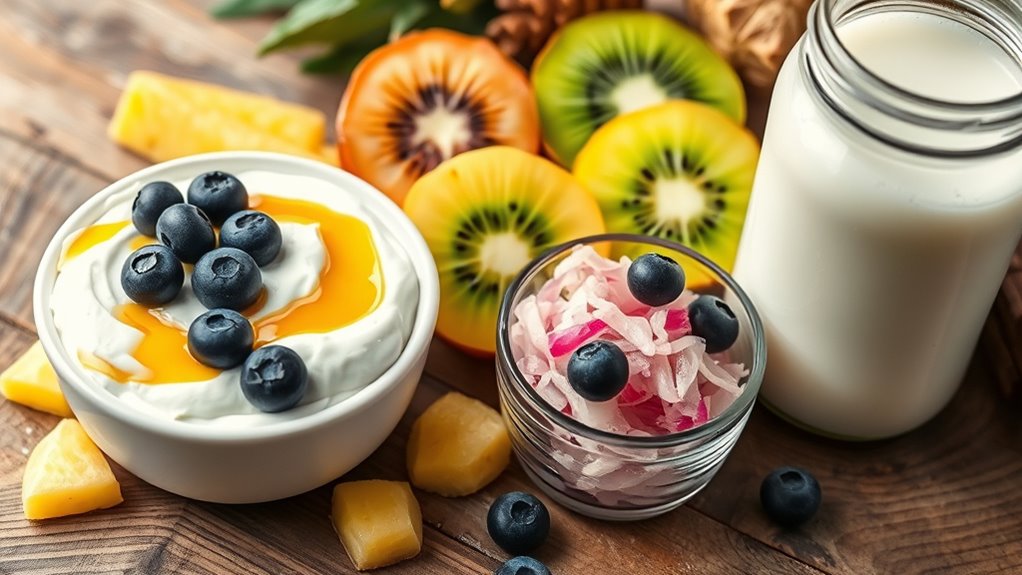
Have you ever wondered how your gut affects your overall health? It turns out, your digestive system does more than just process food; it plays an essential role in your immune function, mental clarity, and energy levels. One way to support a healthy gut is by including probiotic foods in your diet, which introduce good bacteria to keep your digestive system balanced. But it’s not just about probiotics—what you eat also matters for fueling those beneficial bacteria. That’s where fermented drinks and prebiotic fibers come into play.
Fermented drinks like kefir, kombucha, and yogurt are rich sources of probiotics. When you consume these, you’re adding live microorganisms directly into your gut, helping to improve digestion and restore balance if your system gets disrupted. These drinks are easy to incorporate into your daily routine, whether you enjoy a glass of kefir with breakfast or a invigorating kombucha as a midday pick-me-up. They’re not only tasty but also packed with beneficial bacteria that can support your immune system and reduce inflammation.
Fermented drinks like kefir, kombucha, and yogurt boost your gut with live beneficial bacteria.
However, to maximize the benefits of probiotics, you also need to feed the good bacteria already residing in your gut. That’s where prebiotic fibers come in. Prebiotics are types of dietary fiber found in foods like garlic, onions, bananas, asparagus, and whole grains. When you eat these foods, the prebiotic fibers serve as fuel for the probiotics, helping them thrive and multiply. This symbiotic relationship enhances your gut health because the probiotics can do their job more effectively when they’re well-fed. Consuming prebiotic-rich foods alongside fermented drinks creates a powerful combination that boosts your gut’s microbial diversity and resilience.
It’s important to remember that not all fibers are created equal. Prebiotic fibers specifically resist digestion in the upper gastrointestinal tract, making their way to your colon where they support the growth of beneficial bacteria. By regularly including fermented drinks and prebiotic fibers in your diet, you’re taking proactive steps toward maintaining a balanced microbiome. This can lead to better digestion, fewer bloating issues, and even improved mood and energy levels.
Incorporating these foods is straightforward—you can start with a glass of kombucha in the morning and add garlic or bananas to your meals. Over time, these small changes can have a big impact on your gut health. Remember, nurturing your gut with fermented drinks and prebiotic fibers isn’t just about digestion; it’s about supporting your overall well-being. When your gut is happy, so are you.
Products Worth Considering

Instant Pot Vortex Plus 10-Quart 7-in-1 Air Fryer Oven

De'Longhi Stilosa Compact Manual Espresso Machine with Milk Frother

Vitamix Propel Series 750 Professional-Grade Blender, 4 Programs, Black
As an affiliate, we earn on qualifying purchases.
Frequently Asked Questions
Can Probiotics Replace Antibiotics During Infections?
Probiotics can’t replace antibiotics during infections, as antibiotics target harmful bacteria causing illness, while probiotics support your gut health. Relying solely on probiotics may risk antibiotic resistance if infections worsen. While probiotic efficacy helps maintain a healthy microbiome, it’s essential to follow your healthcare provider’s advice for infections. Combining antibiotics with probiotics can promote recovery and reduce side effects, but probiotics alone won’t effectively treat bacterial infections.
Are All Fermented Foods Equally Beneficial for Gut Health?
Not all fermented foods are equally beneficial because their fermentation process varies, affecting probiotic diversity. Imagine a garden: some plants thrive with diverse pollinators, others need specific ones. Similarly, foods like yogurt and sauerkraut offer a broad probiotic spectrum, boosting your gut health. You benefit more from a variety, as different strains support different functions, making your gut ecosystem stronger and more resilient.
How Quickly Can I See Improvements in Digestion?
You might notice improvements in digestion within a few days to a few weeks, but the timing of effects varies based on individual variation. Some people feel quicker relief, while others see gradual changes over time. To speed up your progress, incorporate probiotic foods consistently and pay attention to how your body responds. Patience is key, as gut health improvements depend on your unique digestive system and lifestyle.
Can Probiotic Foods Help With Autoimmune Conditions?
Probiotic foods can support autoimmune regulation and immune modulation, potentially easing symptoms of autoimmune conditions. By introducing beneficial bacteria, you help balance your immune system, which may reduce inflammation and improve overall health. While they aren’t a cure, consuming probiotic foods like yogurt, kefir, or sauerkraut regularly can enhance your immune response, offering some relief and promoting better immune function over time.
Are There Any Risks for Pregnant Women Consuming Probiotic Foods?
You should proceed with caution, as pregnancy safety is key. While probiotic foods are generally safe, there are some probiotic risks for pregnant women, especially if they have a weakened immune system or underlying health issues. It’s wise to consult your healthcare provider before adding them to your diet. Don’t put all your eggs in one basket, so get personalized advice to guarantee both you and your baby stay safe.
Conclusion
By embracing probiotic-packed foods, you’re nurturing your gut and nurturing your glow. With mindful munching, you’ll master the magic of a healthier, happier belly. Remember, a balanced diet boosts your body’s balance, banishing bloating and boosting bliss. So, start savoring these sensational foods today, and watch your wellness widen with every wonderful bite. Your gut will thank you, and your glow will grow, guiding you to greater good health with each delicious, dynamic dose.