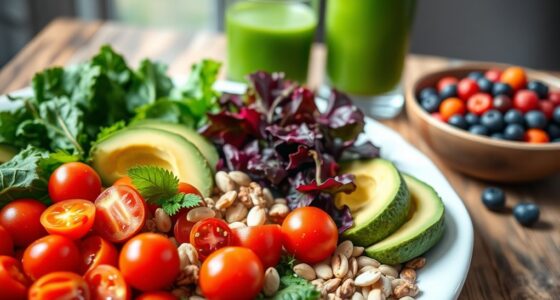

Eating plenty of fiber is key to a healthy diet because it supports digestion, helps control blood sugar, and lowers bad cholesterol. Insoluble fiber adds bulk to your stool, preventing constipation, while soluble fiber slows sugar absorption and improves heart health. Combining both types boosts overall wellness and keeps you feeling full longer. Incorporating fiber-rich foods like oats, fruits, and vegetables can make a big difference—stay with us to discover more about fiber’s powerful benefits.
Key Takeaways
- Dietary fiber supports digestive health by promoting regular bowel movements and preventing constipation.
- Soluble fiber helps regulate blood sugar levels and lowers LDL cholesterol, reducing heart disease risk.
- Insoluble fiber adds bulk to stool, aiding in digestive regularity and preventing disorders like diverticulitis.
- Consuming both fiber types enhances overall wellness through improved digestion and cardiovascular health.
- Increasing fiber intake through whole grains, fruits, vegetables, nuts, and seeds benefits weight management and vitality.
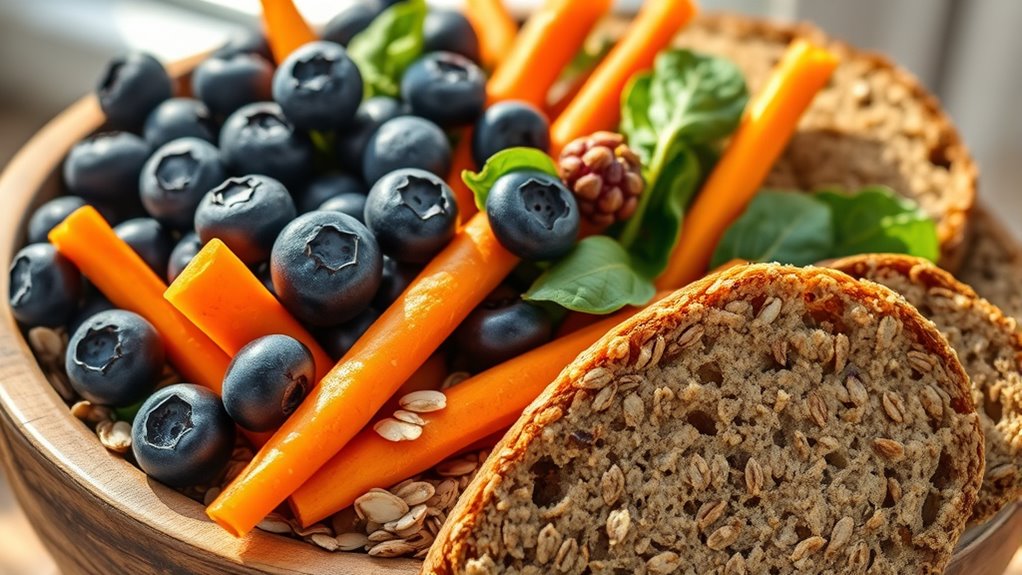
Have you ever wondered why fiber is so important for your health? It’s because fiber plays a crucial role in keeping your digestive system functioning smoothly and supporting overall well-being. There are two main types of fiber—soluble and insoluble—and each offers unique benefits that contribute to your health in different ways. Understanding how these fibers work can help you make smarter dietary choices and improve your overall wellness.
Soluble fiber dissolves in water, forming a gel-like substance in your gut. This type of fiber is found in foods like oats, beans, lentils, fruits such as apples and oranges, and some vegetables. When you consume soluble fiber, it helps regulate blood sugar levels by slowing down how quickly sugar is absorbed into your bloodstream. It also plays a vital role in lowering bad cholesterol (LDL), which can reduce your risk of heart disease. Additionally, soluble fiber promotes a feeling of fullness, making it easier to control your appetite and avoid overeating. This is especially helpful if you’re trying to manage your weight or maintain a healthy diet.
Insoluble fiber, on the other hand, does not dissolve in water. Instead, it adds bulk to your stool and helps food pass more quickly through your digestive system. You’ll find insoluble fiber in foods like whole wheat bread, brown rice, nuts, seeds, and the skins of fruits and vegetables. By increasing stool bulk, insoluble fiber helps prevent constipation and supports regular bowel movements. It also plays a role in reducing the risk of developing certain digestive disorders, like diverticulitis. Plus, insoluble fiber can contribute to a feeling of fullness, which helps curb overeating and supports weight management.
Both soluble and insoluble fibers work together to enhance your digestive health and protect against various health issues. They complement each other, with soluble fiber regulating blood sugar and cholesterol, while insoluble fiber ensures your digestive system stays regular and healthy. Including a variety of fiber-rich foods in your diet ensures you get enough of both types, maximizing their benefits. It’s important to increase your fiber intake gradually, along with drinking plenty of water, to prevent any gastrointestinal discomfort.
Incorporating fiber into your daily meals isn’t difficult. Think oatmeal for breakfast, a handful of nuts or seeds as a snack, whole grain bread or pasta, and plenty of fruits and vegetables. These simple choices can make a significant difference in your health over time. Remember, fiber isn’t just about digestion—it’s a key component of a balanced diet that supports your heart, weight management, and overall vitality. So, start paying attention to your fiber intake today and enjoy the many health benefits it offers.

Tasty Bite Kashmir Spinach, Ready to Eat, 10 Ounce, Microwavable Entrée in Light Curry Sauce, Vegetarian
Indian Kashmir Spinach: Sautéed fresh spinach in a light curry sauce with cubes of creamy paneer cheese; A...
As an affiliate, we earn on qualifying purchases.
Frequently Asked Questions
How Much Fiber Should I Consume Daily for Optimal Health?
You should aim for about 25 grams of fiber daily for ideal health. This supports fiber digestion and keeps your digestive system running smoothly. Incorporate fiber-rich foods like fruits, vegetables, and whole grains, but if you’re struggling, fiber supplements can help meet your goal. Remember, gradually increasing your intake prevents bloating and discomfort, ensuring you enjoy the benefits of better digestion and overall health.
Can Fiber Help With Weight Management Effectively?
Fiber can be a powerful tool in your weight management journey. It helps you feel full longer, preventing overeating, and supports healthy digestion. By following dietary recommendations for fiber intake, you’re effectively controlling hunger and stabilizing blood sugar levels. Remember, fiber absorption works best when you include a variety of high-fiber foods. Think of it as a natural appetite suppressant that keeps your weight goals within reach.
Are There Risks of Eating Too Much Fiber?
Eating too much fiber can lead to fiber overdose, causing digestive issues like bloating, gas, or constipation. Excessive fiber intake may also interfere with nutrient absorption and lead to dehydration. To avoid these risks, gradually increase your fiber intake and drink plenty of water. Remember, moderation is key, and listening to your body helps prevent the negative effects of excessive fiber consumption.
Which Foods Are the Highest in Soluble Fiber?
You’ll find the highest soluble fiber in high fiber fruits like apples, oranges, and berries, which are delicious and easy to add to your daily routine. Nutty seeds, such as flaxseeds and chia seeds, are also excellent sources of soluble fiber. Incorporating these into your diet can improve digestion and help regulate blood sugar levels. Enjoy them as snacks, toppings, or blended into smoothies for maximum benefits.
How Does Fiber Impact Blood Sugar Levels?
Fiber helps regulate your blood sugar levels by slowing down digestion, which prevents spikes after meals. It also improves insulin sensitivity, making it easier for your body to manage glucose effectively. When you include enough fiber in your diet, you’ll notice better blood sugar regulation, reducing the risk of type 2 diabetes. Keep eating high-fiber foods like fruits, vegetables, and whole grains to support steady energy and overall health.

TASTYBITE Organic Three Bean Madras Lentils, 10 OZ
No hydrogenated fats or high fructose corn syrup allowed in any food
As an affiliate, we earn on qualifying purchases.
Conclusion
Remember, fiber fuels your fitness and fosters a flourishing, healthy body. By choosing crunchy, colorful, and fiber-rich foods, you’ll boost digestion, banish bloating, and build better habits. Don’t delay—dive into delicious, fiber-filled delights today to keep your gut grateful and your goals glowing. Fuel your future with fiber’s fabulous, fantastic benefits. It’s a simple, satisfying step toward sustaining a strong, swift, and sensational you!

Tasty Bite Organic Brown Rice, 8.8 Ounce, Ready to Eat, Microwavable, Vegan, Gluten-Free
Organic Brown Rice: Nutty, organic brown rice fully cooked and ready to heat up; Serve with stir fry...
As an affiliate, we earn on qualifying purchases.

Tasty Bite Organic Jodhpur Lentils, 10 Ounce, Ready to Eat, Microwavable Entree, Vegan
Organic Indian Jodhpur Lentils Entree: Yellow lentils slow cooked to creamy perfection with savory undertones of garlic, cumin,...
As an affiliate, we earn on qualifying purchases.