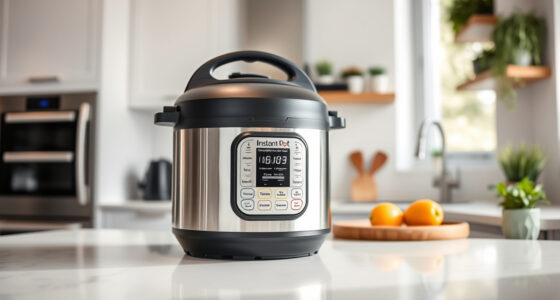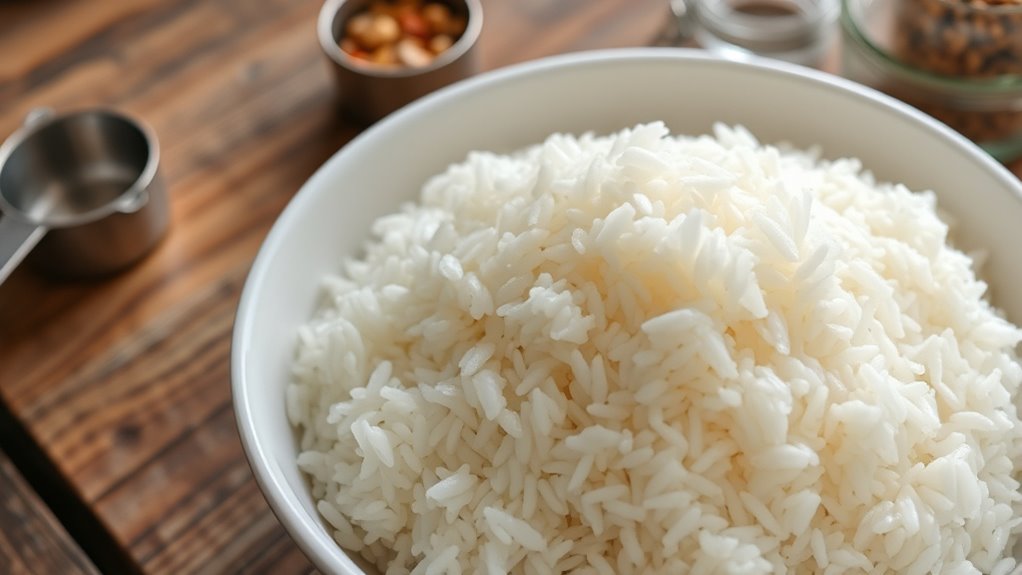

To cook perfect rice and grains every time, start by storing them properly in a cool, dry place to prevent spoilage. Measure the grains carefully and rinse thoroughly to remove excess starch. Use the right water ratio—like 1 cup rice to 2 cups water for long-grain rice—and add seasoning during cooking. Bring water to a boil, then simmer covered on low heat until absorbed. Let it rest covered for five minutes for fluffiness—these tips will guide you to flawless results.

Get kitchen staples and gadgets delivered free — and shop member deals
- Fast, free delivery on millions of items
- Access to Prime Big Deal Days deals on October 6–7
- Prime Video, Amazon Music and more included
Key Takeaways
- Store grains properly in a cool, dry place to prevent spoilage and pests.
- Rinse grains thoroughly before cooking to remove excess starch and prevent clumping.
- Use accurate water-to-grain ratios, such as 1 cup rice to 2 cups water, for consistent results.
- Bring water to a boil, then add grains, reduce heat, cover tightly, and simmer without lifting the lid.
- Rest cooked grains for five minutes covered to enhance fluffiness and even texture.

Cooking rice and grains properly guarantees they turn out fluffy, tender, and flavorful every time. To achieve this, start with good-quality grains and proper preparation. Before cooking, store your grains in an airtight container in a cool, dry place. Proper grain storage prevents moisture and pests from compromising their quality, ensuring each batch cooks consistently. When you’re ready to cook, rinse the grains thoroughly to remove excess surface starch, which helps prevent clumping and results in a lighter, fluffier texture. Rinsing is especially important if you plan to season your rice with specific rice seasoning blends, as it ensures the flavors aren’t muddled by residual dust or debris.
Once rinsed, measure the grains carefully and use the right amount of water. A common ratio for long-grain rice is 1 cup of rice to 2 cups of water, but this can vary depending on the type of grain you’re cooking. Using too much water can make your rice mushy, while too little can leave it undercooked. To enhance flavor, consider adding a pinch of salt or your favorite rice seasoning during cooking. This allows the seasoning to infuse the grains evenly, creating a more flavorful result. Keep in mind that some rice seasonings might contain salt or other strong flavors, so adjust the amount accordingly to avoid over-seasoning.
Measure grains carefully and add seasoning during cooking for maximum flavor and perfect texture.
Cooking techniques also matter. Bring your water to a boil first, then add the rice or grains, stirring once to distribute evenly. Reduce the heat to low immediately after the water resumes boiling, cover the pot tightly, and let it simmer. Avoid lifting the lid during this time, as steam is essential for even cooking. When the grains have absorbed all the water and are tender, turn off the heat and let them sit, covered, for about five minutes. This resting period allows the grains to firm up slightly and ensures every kernel is perfectly cooked. Additionally, using a high-quality rice cooker can simplify the process and help achieve consistent results.
For the best results, keep your grains stored in a cool, dry place to maintain their freshness and prevent spoilage. Proper storage also ensures that your grains stay free of pests and moisture, which can affect their texture and flavor. When you’re ready to cook, always measure carefully, rinse thoroughly, and use the right water ratios. Incorporating rice seasoning during cooking, along with good grain storage practices, transforms plain grains into a delicious, fluffy side dish every time. With these steps, you’ll consistently produce perfect rice and grains that elevate your meals.
As an affiliate, we earn on qualifying purchases.
Frequently Asked Questions
Can I Cook Rice Without Rinsing It First?
You can cook rice without rinsing it first, but it may affect the rice texture and rinse nutrients. Rinsing removes excess starch, preventing stickiness, and minimizes surface impurities. If you skip rinsing, expect a slightly stickier grain and potentially more residual dust or debris. For fluffier rice, it’s best to rinse, but if you’re short on time, cooking directly is still okay—just know the texture might differ.
What Is the Best Rice Cooker Setting for Different Grains?
Think of your rice cooker as a versatile tool, like a Swiss Army knife, ready for any grain type. For white rice, use the standard setting; for brown rice, opt for the longer cook or brown rice setting. For grains like quinoa or barley, choose a setting labeled for grains or multi-grain. Adjust time and water accordingly to guarantee each grain type cooks perfectly, just like you want.
How Do I Prevent Rice From Sticking to the Pot?
To prevent rice from sticking to the pot, use a non-stick coating or choose a non-stick rice cooker. Rinse your rice thoroughly before cooking to remove excess starch, which causes sticking. During cooking, avoid stirring too much, but once cooked, gently fluff the rice with a fork instead of stirring aggressively. This helps keep the grains separate and prevents them from sticking to the bottom or sides of the pot.
Should I Open the Lid During Cooking or Steaming?
You should keep the lid on during cooking to trap steam and guarantee even heat distribution. Proper lid placement prevents steam escape, helping the rice cook thoroughly and stay fluffy. Avoid opening the lid frequently, as this releases steam and disrupts the cooking process. Once the rice is tender and the water is absorbed, let it sit off heat with the lid on for a few minutes to finish steaming.
How Can I Reheat Rice Without Drying It Out?
You can reheat rice without drying it out by using microwave reheating. Place the rice in a microwave-safe dish, add a splash of water or broth to boost moisture retention, and cover it with a damp paper towel or microwave-safe lid. Heat in short intervals, stirring occasionally. This method helps keep your rice soft and fluffy, preventing it from becoming dry or hard.
As an affiliate, we earn on qualifying purchases.
Conclusion
By choosing the right method, measuring carefully, rinsing thoroughly, and cooking patiently, you guarantee perfect rice and grains every time. Embrace the routine of preparation, trust the process, and enjoy the consistency of tender, fluffy results. Whether you’re steaming, boiling, or simmering, follow these steps with care, attention, and practice. With each meal, you’ll master the art of cooking grains, turning simple ingredients into a satisfying, delicious experience you can be proud of.
As an affiliate, we earn on qualifying purchases.
As an affiliate, we earn on qualifying purchases.
Fall Picks
fall essentials
As an affiliate, we earn on qualifying purchases.