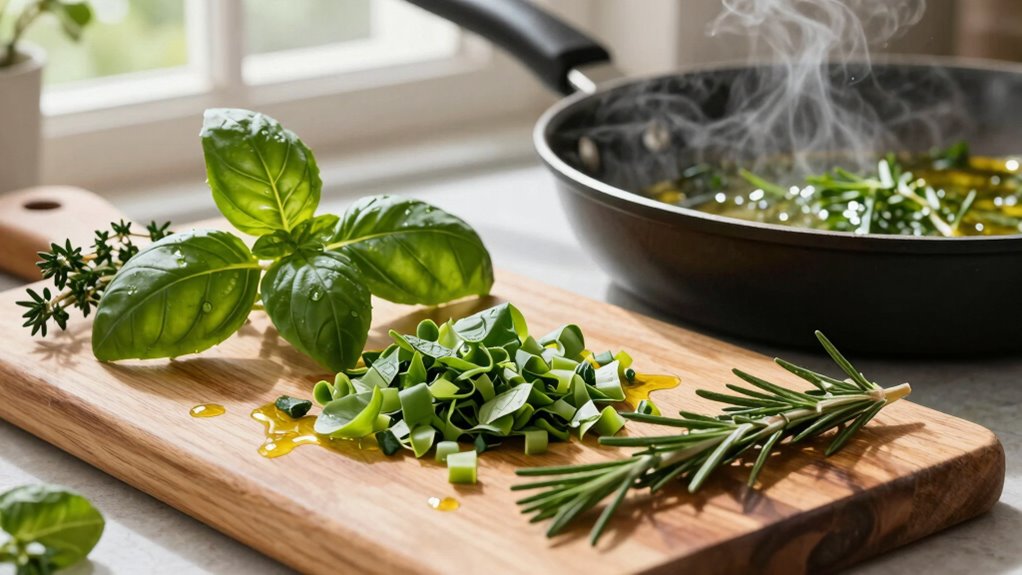
To maximize flavor, add hardy herbs like thyme and rosemary early in cooking so their oils can infuse the dish during simmering. Delicate herbs such as basil, parsley, and chives are best added at the end or just before serving to preserve their aroma. Dried herbs should be included early for full flavor development, while fresh herbs shine when layered in at the right moments. Keep these timing tips in mind to create flavorful dishes—more insights await if you continue.
Listen free for 30 days with Audible
Thousands of audiobooks and originals — cancel anytime.
As an affiliate, we earn on qualifying purchases.
Key Takeaways
- Add hardy herbs like thyme and rosemary early in cooking to allow their flavors to infuse over time.
- Incorporate delicate herbs such as basil, parsley, and chives at the end to preserve their aroma and fresh taste.
- Use preserved herbs like frozen cubes or dried versions early in cooking for deeper flavor development.
- For maximum flavor, layer herbs at different stages, starting with robust herbs and finishing with fresh delicate herbs.
- Proper preservation techniques ensure herbs retain flavor, allowing flexible addition timing for optimal taste.

Have you ever wondered how herbs can transform a simple dish into something extraordinary? The secret lies not just in the herbs you choose but also in when and how you add them. Timing is everything when it comes to extracting the maximum flavor from herbs, and understanding this can elevate your cooking. One essential aspect is herb preservation. Fresh herbs are bursting with flavor, but they don’t last forever. To keep their vibrant taste, you can preserve herbs through methods like freezing, drying, or storing them in oil or vinegar. Proper herb preservation guarantees you always have a stash of flavorful herbs ready to enhance your dishes, even when they’re out of season. Additionally, herb quality plays a crucial role in flavor extraction and overall dish success. However, if fresh herbs aren’t available, using fresh herb substitutes can be a game-changer. Dried herbs, for example, have a concentrated flavor and are best added earlier in the cooking process to allow their flavors to develop fully. Meanwhile, herbs in oil or frozen cubes can be added at different stages, depending on the dish. Using herb preservation techniques can help you maximize flavor retention and ensure your herbs contribute fully to your culinary creations.
Understanding when to add herbs is vital for maximizing their flavor. Generally, delicate herbs like basil, parsley, or chives should be added toward the end of cooking. This preserves their fresh aroma and bright flavor, which can be lost if exposed to prolonged heat. On the other hand, hardy herbs such as thyme, rosemary, or bay leaves can withstand longer cooking times. Adding these early allows their oils and flavors to infuse into the dish, creating a more complex taste. When it comes to herbs like cilantro or mint, it’s best to include them just before serving to retain their vibrant aroma and freshness. Additionally, herb infusion techniques can help extract more flavor during cooking, enhancing the overall dish. Layering herbs at different stages, such as starting with robust herbs early and finishing with delicate ones, can help build depth of flavor and complexity. Another tip is to add herbs at different stages to layer flavors throughout the cooking process. For example, start with herbs like thyme or rosemary early on when simmering a stew, then sprinkle fresh parsley or basil just before serving for a burst of freshness. This approach ensures your dishes are well-rounded and flavorful. Remember, the quality and timing of adding herbs can make or break a meal. Whether you’re using fresh herbs or their substitutes, knowing when to incorporate them will help you achieve that perfect balance of flavor. So next time you cook, pay attention to the herb preservation methods you use and the best moments to add herbs—your palate will thank you for it.
Frequently Asked Questions
Can I Add Fresh Herbs Before Storing Cooked Dishes?
You can add fresh herbs before storing cooked dishes, but it’s better to use herb storage tips to preserve their flavor. Adding herbs too early may cause them to lose their vibrant taste and aroma during storage. For maximum herb flavor preservation, add delicate herbs like basil or parsley after reheating, while sturdier ones like rosemary can be added earlier. This approach keeps your dishes flavorful and fresh.
How Do Dried Herbs Compare in Flavor to Fresh Herbs?
Dried herbs have a more concentrated flavor intensity compared to fresh herbs, but they lack the bright, vibrant notes of fresh ones. When substituting, use about one-third the amount of dried herbs as fresh. Keep in mind, dried herbs release their flavors more slowly, so add them earlier in the cooking process. Fresh herbs are best added at the end for a lively, aromatic touch.
Are There Herbs That Shouldn’t Be Cooked at All?
Think of certain herbs as delicate butterflies that can’t withstand the heat’s harsh sun. You shouldn’t cook heat-sensitive herbs like basil, parsley, or chervil, as they risk losing their vibrant essence or becoming toxic. Herb toxicity can occur if you expose these fragile greens to high heat, so add them at the end of cooking or use them fresh to preserve their flavor and safety.
What’s the Best Way to Preserve Herbs for Long-Term Use?
To preserve herbs long-term, you should try herb drying and freezing herbs. For drying, hang herbs upside down in a warm, dry place until crispy, then store in airtight containers. Freezing herbs works well too; chop them and put in ice cube trays with water or oil. Both methods lock in flavor and aroma, ensuring you enjoy fresh-tasting herbs months later.
How Do I Adjust Herb Quantities for Different Recipes?
Adjusting herb quantities depends on your appetite and the recipe’s robustness. Start small—less is often more—then add herbs gradually, balancing flavors as you go. If a herb isn’t available, consider a substitution that suits the dish’s flavor profile, ensuring flavor balancing. Remember, herbs can be potent, so tweak quantities thoughtfully, tasting and testing to achieve the perfect herb harmony in every bite.
Conclusion
Don’t be afraid to experiment with herbs at different cooking stages—you might discover new flavor combinations. Some say adding herbs early can diminish their aroma, but if you add fresh herbs toward the end, you’ll enjoy vibrant, punchy flavors. Remember, cooking is about balance and your taste buds. So, go ahead, try different timings, and trust your palate. With a little practice, you’ll master when to add herbs for every dish.
Flea & tick season Picks
flea and tick prevention
As an affiliate, we earn on qualifying purchases.