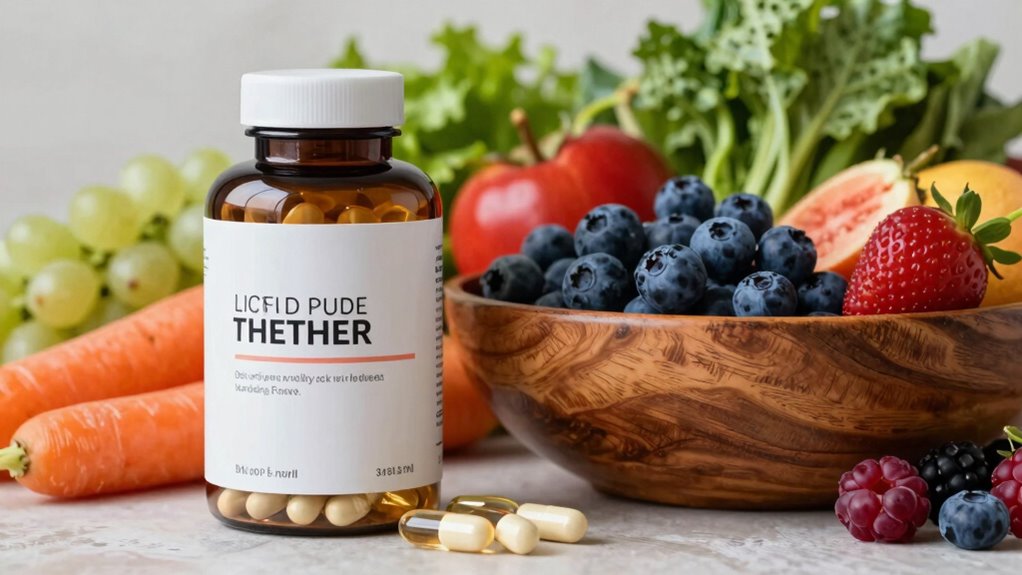

You should trust whole foods over supplements because they offer better nutrient absorption and more health benefits. Natural foods contain a complex mix of vitamins, minerals, fiber, and phytochemicals that work together for your wellbeing. Supplements can be less effective and sometimes risky if not chosen carefully. By focusing on nutrient-rich foods, you’ll improve your long-term health. Curious to discover why natural foods hold so much nutritional power? Keep exploring to learn more.
Key Takeaways
- Whole foods provide a complex nutrient matrix that enhances absorption and offers additional health benefits like fiber and antioxidants.
- Supplements may lack bioavailability and can pose health risks if taken improperly or in excess.
- Natural foods are more cost-effective and support long-term health compared to costly, isolated supplements.
- Eating real foods increases dietary satisfaction and promotes consistent, enjoyable healthy habits.
- Nutrient interactions in whole foods improve overall health, whereas supplements are best used for specific deficiencies.

When it comes to fueling your body, you might wonder whether supplements can replace real food or if sticking to natural options is better. The truth is, supplements can be convenient, but they often don’t provide the same benefits as whole foods. To understand why, you need to contemplate bioavailability factors—the way your body absorbs and uses nutrients. Whole foods generally contain a complex matrix of vitamins, minerals, fiber, and phytochemicals that work synergistically, enhancing bioavailability. In contrast, supplements tend to have isolated nutrients, which may not be absorbed as efficiently. For example, the iron in a supplement might not be as readily absorbed as the iron in a spinach or lean meat, where other compounds help facilitate uptake. So, even if a supplement packs a high dose, your body might not utilize all of it effectively. Considering safe supplement practices is also important to avoid potential health risks. Additionally, choosing high-quality supplements with proper manufacturing standards can further reduce health risks and improve efficacy. Cost-effectiveness analysis also plays a significant role in deciding whether to rely on supplements or real food. While supplements might seem cheaper and more convenient at first glance, they often turn out to be more expensive over time, especially if you need multiple doses to meet your daily nutritional needs. Buying fresh fruits, vegetables, whole grains, and lean proteins can be more cost-effective, especially when purchased in bulk or seasonal produce. Plus, whole foods offer additional health benefits that supplements can’t replicate—such as fiber for digestive health or antioxidants that support immune function. When you compare the cost per nutrient, whole foods usually provide more value, making them a smarter choice for long-term health. Furthermore, natural foods come with the added bonus of taste and satisfaction. Eating a variety of colorful fruits and vegetables can make your meals more enjoyable and satisfying, which encourages consistent healthy eating habits. Supplements, on the other hand, often lack flavor and can feel like a chore to take daily. There’s also the risk of over-supplementation, which can lead to toxicity or adverse effects, especially if you’re taking multiple supplements without medical guidance. Whole foods naturally regulate nutrient intake, reducing this risk and supporting overall well-being. Moreover, as bioavailability factors influence how well nutrients are absorbed, focusing on nutrient-rich whole foods becomes even more essential for optimal health. Incorporating nutrient-dense foods into your diet can further enhance your overall nutrient intake and health outcomes. Additionally, considering nutrient interactions can help you understand how different foods and nutrients work together to boost absorption. In the end, while supplements can be useful in specific situations—like addressing deficiencies or managing certain health conditions—they shouldn’t replace a balanced diet rich in natural, nutrient-dense foods. Your body is designed to thrive on the complexity of nutrients found in real food, which offers better bioavailability and overall health benefits. When you deliberate the bioavailability factors and perform a cost effectiveness analysis, natural foods consistently come out ahead, providing better value and supporting your health in a more holistic way.
Frequently Asked Questions
Can Supplements Replace All Nutrients Found in Real Food?
Supplements can’t replace all nutrients found in real food because they lack nutrient completeness and food synergy. While supplements can fill specific gaps, they don’t provide the complex mix of vitamins, minerals, and phytochemicals that work together in whole foods. You benefit from the natural balance and absorption that real food offers, making it essential to prioritize a varied diet over relying solely on supplements for your nutritional needs.
Are There Any Risks Associated With Taking Supplements Long-Term?
Taking supplements long-term can pose risks like nutrient dependency, which might make your body rely on them instead of natural sources. It could also impact your long-term health, causing imbalances or toxicity if taken excessively. You might overlook the importance of diverse, nutrient-rich foods. To protect your health, use supplements wisely, consult healthcare professionals, and prioritize real food to guarantee balanced, sustainable nutrition for the long haul.
How Do Cost and Accessibility Influence Supplement Versus Real Food Choices?
Economic barriers and geographic limitations greatly impact your choices between supplements and real food. If cost is high or fresh produce isn’t easily accessible in your area, supplements might seem like an easier option. However, investing in local, affordable whole foods can provide better nutrients and health benefits in the long run. Stay aware of your circumstances, and endeavor to balance convenience with nutritional value to make the best decision.
Do Supplements Have the Same Health Benefits as Eating Whole Foods?
Supplements don’t offer the same health benefits as eating whole foods because they often lack the dietary diversity and fiber found in natural foods. While supplements can help with nutrient absorption if you’re deficient, they can’t replace the benefits of a balanced diet. Eating whole foods provides a wide range of nutrients, supporting overall health and better nutrient absorption, which supplements alone can’t fully replicate.
Which Is More Effective for Specific Health Goals: Supplements or Real Food?
Real food is more effective for specific health goals because it offers better nutrient bioavailability and supports overall wellness. You get a broader spectrum of vitamins, minerals, and fiber that supplements often lack. Plus, your dietary preferences matter—choosing whole foods aligns with your lifestyle and can help you achieve your health objectives more naturally. Supplements can supplement but shouldn’t replace a balanced diet focused on nutrient-rich, whole foods.
Conclusion
Ultimately, choosing between supplements and real food comes down to understanding your body’s needs, fueling it with whole, natural ingredients, and listening to its signals. Trust the richness of fresh vegetables, the balance of whole grains, and the vigor of real fruits. Prioritize nourishment over shortcuts, embrace variety over simplicity, and focus on quality over quantity. Because when you nourish your body with real food, you empower your health, your energy, and your life.