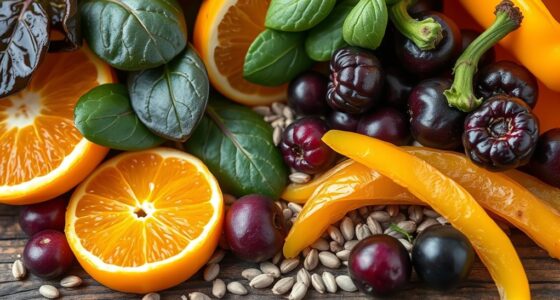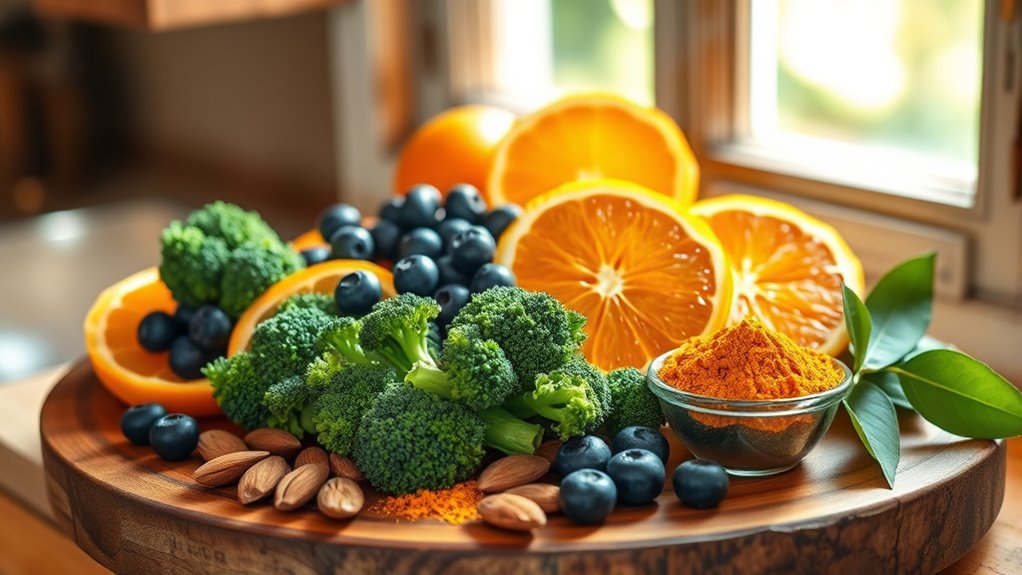

To truly boost your immunity, focus on eating a variety of nutrient-rich superfoods and herbs daily. Include colorful berries, citrus fruits, and leafy greens like spinach to supply antioxidants, vitamin C, and other essential nutrients. Incorporate herbal remedies such as echinacea, elderberry, and turmeric to support your immune defenses. Consistent consumption of these foods and herbs can strengthen your immune system naturally. Keep going to discover more tips for maintaining peak immune health.
Key Takeaways
- Incorporate berries, citrus fruits, and leafy greens regularly for their high antioxidants and vitamin C content.
- Use herbal remedies like echinacea, elderberry, and turmeric to support immune function.
- Combine superfoods into smoothies and herbal teas for consistent immune support.
- Prioritize nutrient-dense foods over avoidance to strengthen overall immune resilience.
- Maintain a routine of healthy foods and herbal remedies to promote long-term immune health.
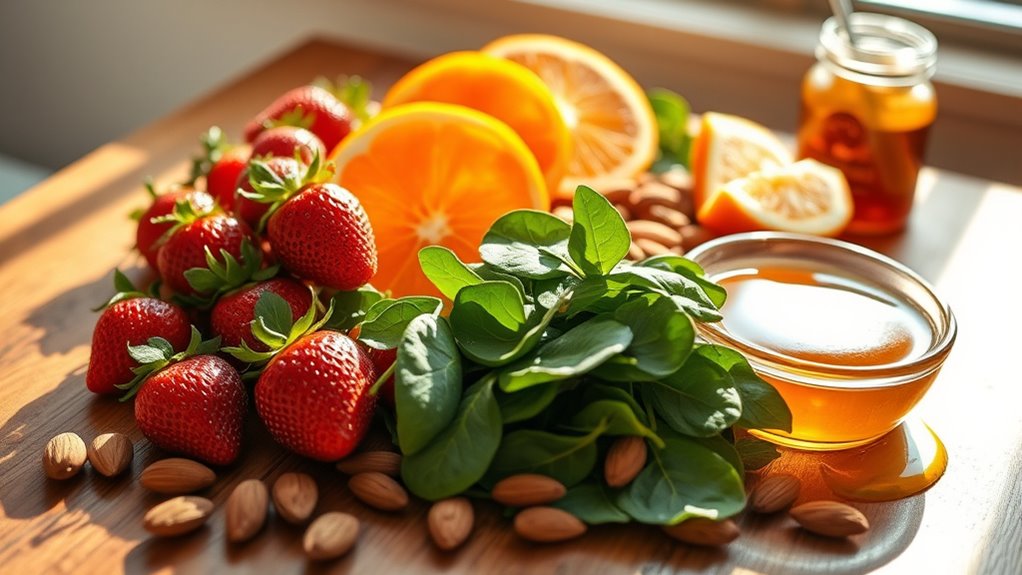
A strong immune system is essential for staying healthy, especially during flu season and times of increased stress. You want to give your body the best support possible, and one way to do that is by incorporating superfoods for immunity into your diet. These nutrient-dense foods pack a punch when it comes to boosting your immune defenses. Think of superfoods like berries, citrus fruits, garlic, and leafy greens—they’re rich in vitamins, antioxidants, and phytochemicals that help your body fight off infections. Berries such as blueberries and strawberries contain high levels of antioxidants that combat oxidative stress, while citrus fruits like oranges and grapefruits are loaded with vitamin C, a well-known immune booster. Leafy greens like spinach and kale supply nutrients like vitamin A, magnesium, and fiber, which are essential for maintaining immune health. Including these superfoods regularly can help you build resilience against common illnesses. Incorporating a variety of immune-boosting nutrients from different food sources ensures a comprehensive approach to immune health.
Alongside superfoods, herbal remedies have long been used to bolster immunity. Herbs like echinacea, elderberry, and turmeric are celebrated for their immune-enhancing properties. Echinacea, often taken as teas or supplements, may help reduce the duration and severity of colds. Elderberry syrup is another popular herbal remedy that’s rich in antioxidants and has been shown to support immune function. Turmeric contains curcumin, a compound with anti-inflammatory and antimicrobial effects that can help your immune system stay balanced. When you incorporate herbal remedies into your routine, you’re giving your immune system an extra edge, especially during times when it’s most vulnerable.
To maximize these benefits, think about combining superfoods and herbal remedies as part of your daily routine. For example, start your day with a smoothie made with berries, spinach, and a splash of orange juice, then sip on herbal teas infused with turmeric or echinacea throughout the day. You might also incorporate garlic into your meals to add flavor and immune benefits simultaneously. Consistency is key—making these foods and remedies a regular part of your diet can help maintain your immune defenses over time. Remember, good health isn’t just about what you avoid but also about what you actively include. So, prioritize these superfoods for immunity and herbal remedies, and you’ll be giving your immune system the support it needs to keep you healthy and resilient.
Frequently Asked Questions
Can Supplements Replace Immunity-Boosting Foods Effectively?
Supplements can’t fully replace immunity-boosting foods because their efficacy varies, and natural foods often provide a broader range of nutrients. While synthetic supplements can help fill gaps, they rarely match the benefits of fresh, whole foods. You’ll get better immune support by prioritizing natural sources like fruits and vegetables, which contain essential vitamins and antioxidants, rather than relying solely on synthetic supplements that may have limited efficacy.
Are There Any Side Effects From Consuming Immunity-Boosting Foods?
You should be aware that some immunity-boosting foods can cause allergic reactions, especially if you’re sensitive to certain ingredients like nuts or shellfish. Additionally, consuming them in excess might lead to nutrient overload, which can cause side effects like nausea or stomach upset. About 10% of people report allergies to common immune foods, so it’s wise to introduce new items gradually and consult your doctor if you experience adverse reactions.
How Quickly Can I See Improvements After Eating Immune-Boosting Foods?
You might notice improvements in your immune response within a few days to a week after eating immune-boosting foods. As your immune system strengthens, you could experience some symptom relief, like fewer colds or faster recovery. However, individual results vary based on your overall health, diet, and lifestyle. Consistently consuming these foods helps maintain a strong immune response and supports ongoing symptom relief over time.
Do Immunity-Boosting Foods Work the Same for Everyone?
While immunity-boosting foods can be beneficial, their effects vary based on your personal health and genetic factors. You might notice improvements sooner or later, depending on your unique body. Some people respond more positively, experiencing stronger defenses, while others see subtle changes. Ultimately, these foods support overall well-being, but their impact isn’t uniform—your individual health journey plays a significant role in how well they work for you.
Are Organic Immunity-Boosting Foods More Effective Than Non-Organic?
Organic immunity-boosting foods can be more effective because organic farming reduces pesticide residue, which might otherwise hinder your immune system. When you choose organic, you’re likely to consume fewer chemicals, supporting better overall health. While both organic and non-organic foods offer nutrients, organic options often have higher antioxidant levels, aiding your immunity. So, if you want cleaner options that may boost your immune response, organic foods are a smarter choice.
Conclusion
Remember, building your immunity is like tending a garden—you need the right nutrients to keep it thriving. For example, my friend started eating more citrus and noticed she got sick less often. Studies show that a balanced diet rich in immune-boosting foods can reduce illness risk by up to 50%. So, think of your plate as a shield—fuel it with colorful, nutrient-packed foods, and you’ll strengthen your defenses just like fortifying walls around a castle.