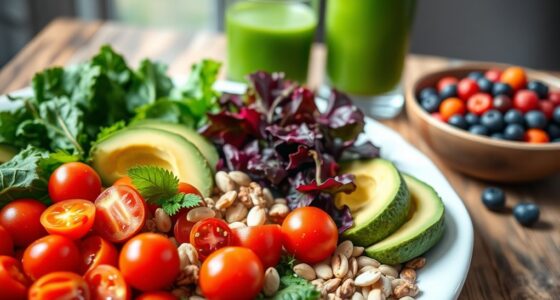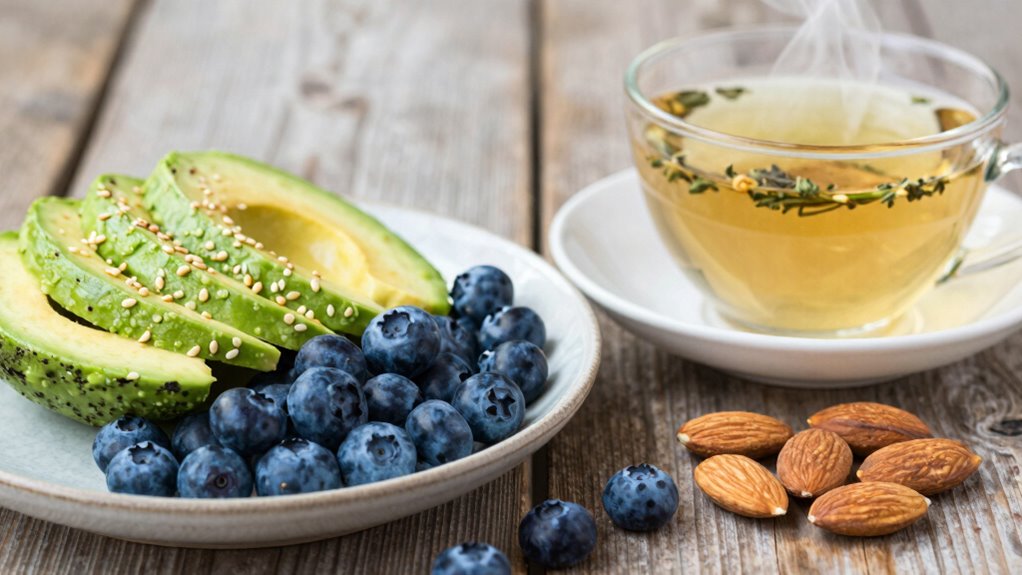
When you’re feeling anxious, focus on foods rich in magnesium like nuts, seeds, and leafy greens. Incorporate omega-3 fatty acids from fatty fish such as salmon and mackerel to support brain health and reduce inflammation. Include complex carbs like oats and sweet potatoes to boost serotonin and stabilize blood sugar. Stay well-hydrated and limit caffeine to help manage stress levels. For more tips on relaxing foods, keep exploring what can help ease your nerves naturally.
Key Takeaways
- Consume magnesium-rich foods like nuts, leafy greens, and seeds to naturally relax muscles and lower cortisol levels.
- Incorporate omega-3 fatty acids from fatty fish such as salmon and mackerel to reduce inflammation and support mood stability.
- Eat complex carbohydrates like oats, sweet potatoes, and whole grains to boost serotonin and stabilize blood sugar.
- Stay well-hydrated and limit caffeine intake to prevent dehydration and minimize anxiety symptoms.
- Practice good sleep hygiene with consistent routines and screen-free time to enhance emotional resilience and reduce stress.
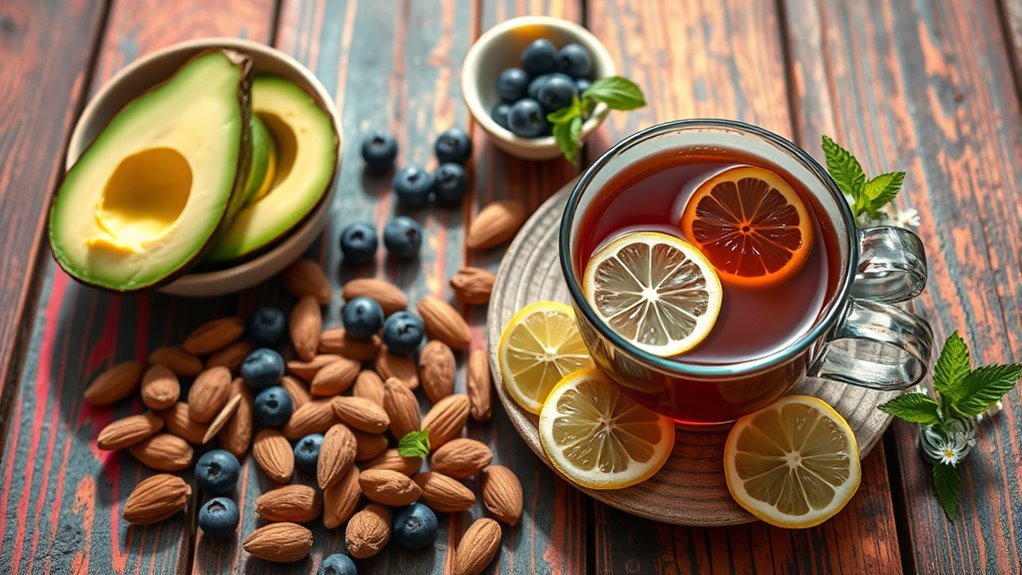
When life gets overwhelming, what you eat can make a real difference in how you handle stress. Your diet influences your mood, energy levels, and overall ability to cope with anxiety. Incorporating stress-busting foods can help you stay grounded during tough times. But it’s also essential to combine these foods with healthy habits like meditation techniques and good sleep hygiene. Meditation can calm your mind, reduce cortisol levels, and sharpen your focus, making it easier to manage daily pressures. Meanwhile, prioritizing sleep hygiene ensures your body gets the rest it needs to recover and maintain emotional resilience. Together, these practices complement your diet, creating a thorough approach to stress management.
Start by including foods rich in magnesium, like nuts, seeds, and leafy greens. Magnesium acts as a natural relaxant, helping your muscles unwind and calming your nervous system. When you’re feeling anxious, reaching for a handful of almonds or spinach can provide immediate relief. Omega-3 fatty acids, found in fatty fish like salmon and mackerel, are also vital. They help reduce inflammation and support brain health, which can lower feelings of anxiety over time. Incorporating these into your meals regularly can promote a balanced mood. Additionally, choosing foods that are nutrient-dense ensures your body receives the essential vitamins and minerals needed to support resilience against stress.
Including magnesium-rich foods like nuts, seeds, and leafy greens supports relaxation and reduces anxiety.
Complex carbohydrates such as oats, sweet potatoes, and whole grains are another smart choice. These foods increase serotonin production, the brain’s feel-good neurotransmitter, helping you feel more relaxed. They also stabilize blood sugar levels, preventing energy crashes that can trigger irritability and stress. Pairing these with protein-rich foods like eggs, beans, or lean meats can further enhance your mood and sustain your energy throughout the day.
Don’t forget to hydrate properly and limit caffeine intake, as dehydration and excessive caffeine can heighten feelings of anxiety. Drinking enough water supports your body’s stress response and keeps your brain functioning at its best. Additionally, maintaining good sleep hygiene—such as sticking to a consistent sleep schedule, avoiding screens before bed, and creating a calming bedtime routine—can greatly reduce stress levels. When your sleep improves, your ability to manage stress increases because your brain is better equipped to process emotions and recover from daily strain.
Incorporating these foods and habits isn’t about perfection but consistency. Small changes can lead to big improvements in how you handle anxiety and pressure. By nourishing your body with stress-reducing foods, practicing meditation techniques, and prioritizing sleep hygiene, you create a solid foundation that supports your mental health during stressful times. Remember, what you put into your body, combined with mindful practices, can empower you to face life’s challenges with greater resilience and calm.
Frequently Asked Questions
Can Specific Foods Completely Cure Anxiety?
No, specific foods can’t completely cure anxiety, but they can help manage it. By practicing mindful eating, you become more aware of emotional triggers that lead to anxiety and choose nourishing options to stabilize your mood. Incorporating stress-busting foods into your diet supports your mental health, but it’s crucial to combine this with other strategies like therapy or exercise for effective anxiety management.
Are Supplements Necessary Alongside Stress-Busting Foods?
Supplements aren’t always necessary, but they can be a game-changer if you struggle to get enough stress-busting nutrients from food alone. Just be cautious—supplement safety and nutrient interactions matter. You don’t want to accidentally cause more stress with unwanted side effects. Talk to a healthcare provider first to ensure your supplement routine complements your diet. When used wisely, supplements can support your anxiety management without turning your routine upside down.
How Quickly Can I Expect Food to Reduce My Stress?
You might notice some calming effects within 20 to 30 minutes after eating stress-busting foods, but immediate effects are rare. Timing expectations vary depending on your body’s response and the specific foods you choose. While some people feel quicker relief, others may need consistent consumption over days or weeks for lasting stress reduction. Incorporate these foods regularly, and you’ll increase your chances of experiencing more immediate and sustained calming effects.
Do Individual Dietary Preferences Affect Stress Relief?
Did you know that personal taste preferences and cultural dietary habits considerably influence stress relief? You’re more likely to benefit from stress-busting foods if they align with what you enjoy and are accustomed to eating. When your diet reflects your cultural background and personal tastes, it’s easier to stick with healthy choices. So, customizing your stress-relief foods to match your preferences makes relaxation more achievable and sustainable.
Are There Any Foods to Avoid During Anxiety Episodes?
During anxiety episodes, you should avoid foods that trigger your food allergies or conflict with your dietary restrictions. Spicy, greasy, or processed foods can worsen your symptoms, so steer clear of them. Also, limit caffeine and sugar intake, as they can increase anxiety. Always check ingredient labels to guarantee the food aligns with your dietary needs, helping you stay calmer and more in control during stressful times.
Conclusion
Remember, choosing the right foods is like planting seeds for calm amidst chaos. Just like my friend who started munching on walnuts during stressful days, she found her anxiety easing little by little. Incorporating stress-busting foods into your diet can help you navigate life’s storms with more ease. So, next time anxiety hits, reach for those calming snacks—you’re giving yourself the tools to stay grounded when it matters most.