
When you see labels like organic, non-GMO, or other claims, it’s important to understand their meaning. Organic labels indicate the product was produced without synthetic chemicals and adheres to strict environmental standards. Non-GMO labels show the product doesn’t contain genetically modified organisms. Additional claims like “free-range” or “grass-fed” provide insights into animal farming practices. By understanding these labels, you can make healthier, more ethical choices—if you keep exploring, you’ll discover how to decode these labels even better.
Key Takeaways
- Understand that organic labels indicate products made without synthetic chemicals and adhere to strict environmental and safety standards.
- Recognize that Non-GMO labels certify products do not contain genetically modified organisms, often overlapping with organic standards.
- Be aware of additional claims like “free-range” or “grass-fed,” which reflect animal husbandry practices and ethical standards.
- Verify certification seals to ensure claims are trustworthy and comply with regulatory standards for transparency.
- Educate yourself on label standards to make informed choices supporting health, sustainability, and ethical farming practices.
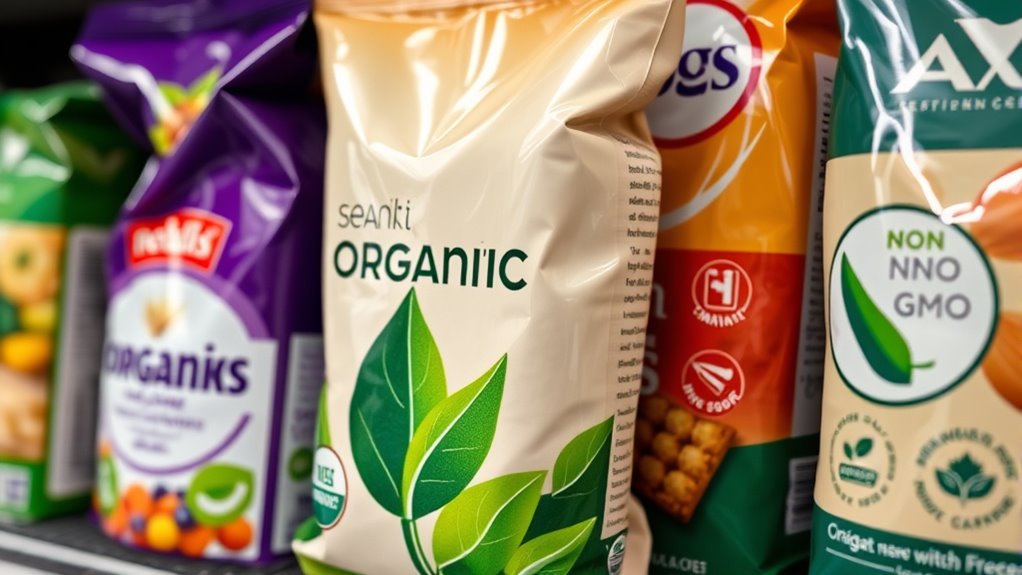
Have you ever looked at a food label and felt overwhelmed by the information? With so many claims, certifications, and buzzwords, it’s easy to get confused about what really matters. When trying to make healthier choices, understanding labels becomes vital, especially with terms like “organic,” “non-GMO,” and others. These labels are meant to guide you towards products that align with your values, whether it’s supporting sustainable farming practices or ensuring food safety standards are met. But the labels can be tricky to interpret if you don’t know what to look for.
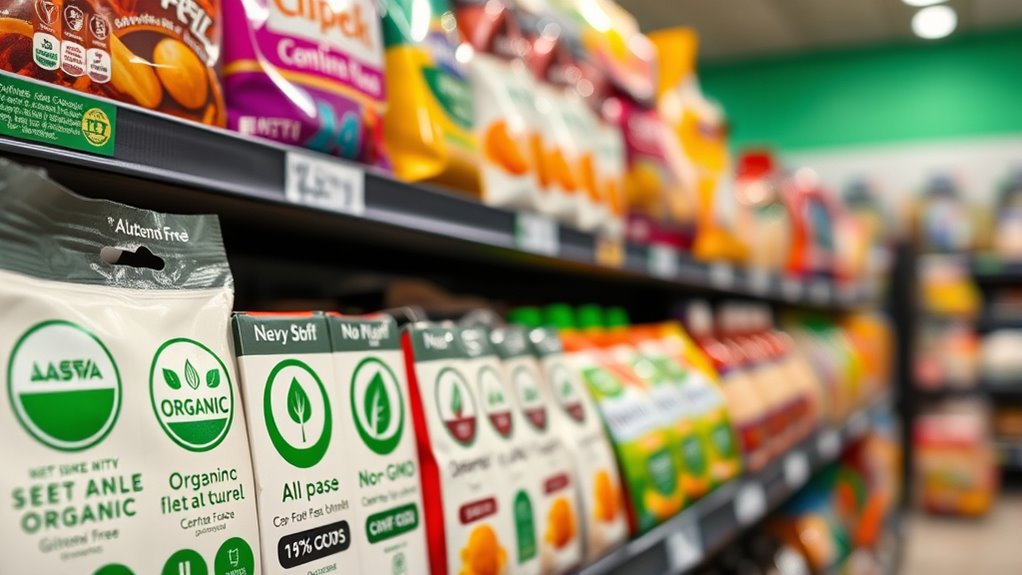
Starting with organic labels, it’s important to recognize that they indicate the product was produced without synthetic pesticides, fertilizers, or genetically modified organisms. Organic certification requires adherence to strict standards set by regulatory bodies, which often include sustainable farming principles. These practices focus on maintaining soil health, conserving water, and promoting biodiversity, aligning with a broader commitment to sustainable farming. When you see an organic label, it’s a sign that the producer has met these rigorous standards, helping you support environmentally friendly agriculture and reducing your exposure to potentially harmful chemicals. Additionally, organic certification guarantees that food safety standards are upheld, minimizing risks related to chemical residues and contaminants.
Organic labels indicate products made without synthetic pesticides, fertilizers, or GMOs, supporting sustainable farming and food safety standards.
The non-GMO label, on the other hand, indicates that the product does not contain genetically modified organisms. This label appeals to consumers concerned about the long-term health and environmental impacts of GMOs, as well as those who prefer natural farming methods. While non-GMO doesn’t necessarily mean the product was produced using sustainable farming practices, it often overlaps with organic standards, which prohibit GMOs altogether. Both labels serve to give you confidence that the food aligns with your personal values regarding food safety, environmental health, and transparency.
It’s also worth noting that other claims, like “free-range,” “grass-fed,” or “hormone-free,” provide additional insights into how animals were raised and how the food was produced. These labels often reflect adherence to specific food safety standards and ethical practices, giving you more confidence in the product’s quality. However, not all claims are regulated equally, so it’s essential to check for official certifications or trusted third-party labels to verify their accuracy. Moreover, understanding the regulations behind food labeling can help you better interpret these claims and ensure they are trustworthy.
In the end, decoding food labels isn’t just about reading words; it’s about understanding the standards behind those words. By familiarizing yourself with what each label signifies—especially regarding sustainable farming and food safety standards—you can make more informed choices that support your health, the environment, and ethical farming practices.
Frequently Asked Questions
How Can I Verify if a Product Is Truly Organic?
To verify if a product is truly organic, check for an organic certification label from a reputable organization like USDA Organic. This certification guarantees the product meets strict standards, including limited pesticide residues and no synthetic chemicals. You can also research the producer’s practices and ask for detailed information about their farming methods. Trusting certified labels helps you avoid products that might falsely claim to be organic.
What Do Non-Gmo Labels Guarantee About the Food?
You might think a non-GMO label guarantees your food’s purity, but don’t be fooled—it’s more about label verification than absolute truth. It guarantees the product isn’t made from genetically modified ingredients, yet it doesn’t guarantee overall health benefits or organic standards. So, while it suggests fewer biotech tweaks, remember, the label only tells part of the story. Always dig deeper to truly know what’s in your food.
Are All Natural Claims on Labels Accurate?
Not all natural claims on labels are accurate; many can be just natural illusions designed to appeal to consumers. You should be cautious, as some companies use label deception to make their products seem healthier or more natural than they actually are. Always read ingredient lists and research brands if you want to avoid being fooled by misleading claims. Don’t rely solely on “natural” labels—look for transparency and verified certifications instead.
How Does “Cage-Free” Differ From “Free-Range”?
You might think “cage-free” and “free-range” mean similar, but they differ in poultry standards. “Cage-free” means hens aren’t kept in cages, but they still stay indoors with limited space. “Free-range” allows outdoor access, reflecting more natural farming practices. While both terms suggest better living conditions, “free-range” typically indicates a higher standard, giving hens a chance to roam outside, unlike cage-free poultry.
Can Food Labels Be Legally Misleading or False?
Yes, food labels can be legally misleading or false due to label deception and marketing tactics. Companies sometimes use vague or unregulated terms to make products seem healthier or more ethical than they are. To avoid being misled, you should research labels carefully and look for third-party certifications. Remember, marketing tactics often aim to influence your buying choices, so staying informed helps you make better decisions.
Conclusion
By understanding the subtle language on food labels, you can make choices that truly nurture your well-being. While some claims may seem like gentle whispers, they often carry deeper stories about care and quality. Trust your instincts and seek clarity—your journey toward nourishing yourself with intention is a beautiful act of self-love. Embrace the little details; they’re the quiet promises that your body and soul deserve the very best.