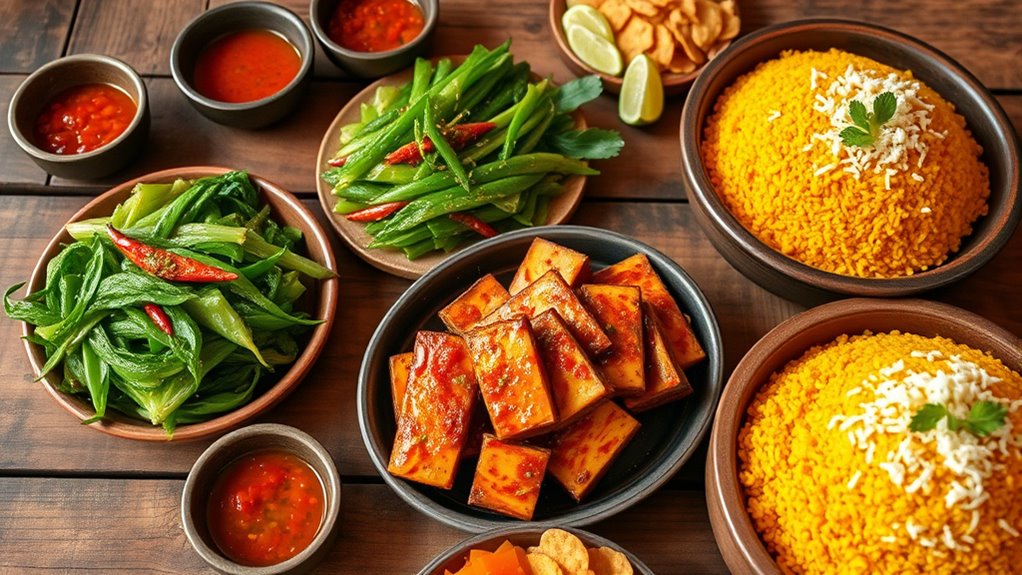

Yes, many Indonesian dishes are naturally vegetarian, highlighting fresh vegetables, herbs, and fragrant spices. Classics like Gado-Gado and Sayur Lodeh showcase bold flavors without meat, while plant-based adaptations of rendang and satay use tofu, tempeh, and rich coconut milk. Modern twists keep traditional tastes alive while appealing to vegetarian and vegan lifestyles. If you want to explore how Indonesian cuisine combines authenticity with innovation, there’s plenty more to discover.
Key Takeaways
- Many traditional Indonesian dishes like Gado-Gado and vegetable Satay are naturally vegetarian or easily adapted.
- Modern versions use tofu and tempeh to replace meat, maintaining authentic flavors.
- Street foods and restaurant menus often feature plant-based options with rich spices and bold flavors.
- Indonesian plant-based dishes emphasize balancing sweet, sour, salty, and spicy tastes without animal products.
- Growing interest in sustainability and health fuels the popularity of flavorful, vegetarian Indonesian cuisine.

Indonesian cuisine offers a rich variety of plant-based dishes that highlight the nation’s vibrant flavors and diverse ingredients. When you explore these dishes, you’ll notice how they seamlessly blend traditional flavors with modern adaptations, making vegetarian options both authentic and innovative. Many traditional recipes have been crafted over centuries, using local herbs, spices, and vegetables to create complex tastes that satisfy the palate. These dishes often emphasize balance—combining sweet, sour, salty, and spicy elements—without relying on animal products. For example, dishes like Gado-Gado, a salad of fresh vegetables topped with peanut sauce, showcase how simple ingredients can come together in a flavorful way rooted in tradition. You’ll find that the essence of Indonesian cuisine lies in its ability to preserve cultural authenticity while evolving to meet contemporary dietary preferences.
Indonesian plant-based dishes blend rich tradition with modern flavors, emphasizing balance and vibrant ingredients.
Modern adaptations of these plant-based dishes have gained popularity, especially as more people seek healthier and sustainable eating options. Chefs and home cooks alike are reimagining classics, using innovative techniques or substituting ingredients to cater to vegetarian and vegan lifestyles. For instance, tofu and tempeh—traditional soy-based proteins—are now often featured as main ingredients in dishes that once relied heavily on meat, allowing you to enjoy familiar flavors without compromising your dietary choices. These adaptations still honor the core of Indonesian culinary traditions but present them in new ways, often with a contemporary twist that appeals to a broader audience. Additionally, modern heat pump technology has made it easier for homes to maintain comfortable indoor environments while supporting energy efficiency and sustainability.
You’ll also notice how street food vendors and restaurants are increasingly offering plant-based options that stay true to traditional flavors. Spicy sambals, aromatic coconut milk, and fragrant herbs are used generously, ensuring that plant-based versions don’t sacrifice the depth of taste. Whether it’s a vegetable satay skewered and grilled with savory peanut sauce or a vegetable rendang simmered in rich spices, these dishes exemplify how traditional flavors can be preserved while embracing modern dietary trends. The fusion of old and new makes Indonesian plant-based cuisine both comforting and exciting, giving you the chance to experience authentic flavors in a way that aligns with current health and sustainability values.
Ultimately, Indonesian cuisine’s plant-based dishes prove that you don’t need meat to enjoy bold, satisfying flavors. By appreciating the balance of traditional flavors and embracing modern adaptations, you’ll find a diverse and delicious spectrum of vegetarian options that reflect Indonesia’s culinary richness and innovative spirit.
Frequently Asked Questions
Are Indonesian Vegetarian Dishes Suitable for Vegans?
Most Indonesian vegetarian dishes can be suitable for vegans, but you need to check ingredients carefully. Many tofu dishes and coconut-based recipes are naturally vegan, as they use plant-based ingredients. However, some dishes may contain animal-derived additives like fish sauce or eggs. Always ask about ingredients or request modifications to enjoy authentic Indonesian cuisine fully vegan, especially with popular dishes like tofu stir-fries or coconut curries.
How Do Traditional Indonesian Dishes Incorporate Plant-Based Ingredients?
You’ll find that traditional Indonesian dishes incorporate plant-based ingredients naturally, like tofu sambal and tempeh satay, which highlight the rich flavors of local spices. These dishes often use coconut milk, vegetables, and legumes, creating hearty, flavorful options. As you explore, you notice how plant-based ingredients are woven seamlessly into recipes, making them both delicious and authentic, perfect for anyone seeking vegetarian or vegan-friendly options.
Are There Regional Differences in Vegetarian Options Across Indonesia?
You’ll find significant regional variations in vegetarian options across Indonesia, reflecting its rich culinary diversity. In Bali, seafood and vegetable dishes dominate, while Java offers hearty vegetable stews and stir-fries. Sumatra features spicy, plant-based curries, and Sulawesi highlights unique vegetable salads. These regional differences show how local ingredients and cultural influences shape vegetarian cuisine, so you can enjoy a variety of delicious, plant-based meals no matter where you travel in Indonesia.
What Are Some Common Spices Used in Indonesian Vegetarian Cooking?
Imagine vibrant markets filled with fragrant stalls—cloves, turmeric, and coriander seeds create bold spice blends that define Indonesian vegetarian dishes. You’ll often encounter flavors like the warm, earthy notes of turmeric, the sweet aroma of cinnamon, and the pungency of garlic and shallots. These spices build complex flavor profiles, transforming simple vegetables into aromatic, savory meals. Your palate will enjoy a tapestry of tastes rooted in regional spice traditions that make each dish unique.
Can These Plant-Based Dishes Be Easily Made at Home?
Absolutely, you can easily make these plant-based Indonesian dishes at home. With DIY recipes available online, you can follow simple steps to create authentic flavors. Plus, ingredient substitutions allow you to adapt recipes based on what you have. Just gather common spices like turmeric, galangal, and lemongrass, and you’ll be well on your way to enjoying delicious, vegetarian Indonesian meals anytime you want.
Conclusion
As you explore Indonesian cuisine, you’ll find plant-based dishes that bloom like vibrant gardens on your plate. These flavors, rich and diverse, invite you to taste the harmony between tradition and nature’s bounty. Embrace the journey, where every bite is a brushstroke in a living masterpiece. Vegetarian options in Indonesia aren’t just meals; they’re a symphony of colors and textures, waiting to awaken your senses and deepen your culinary adventure.