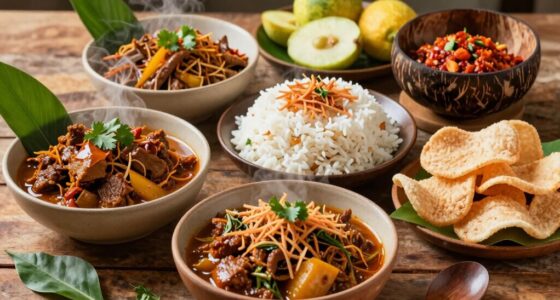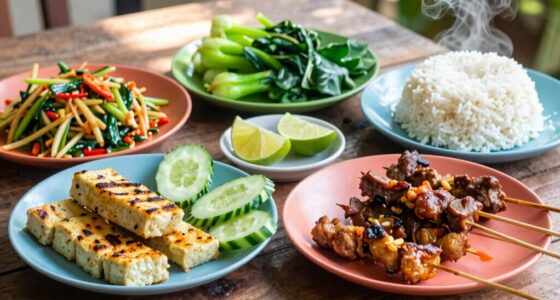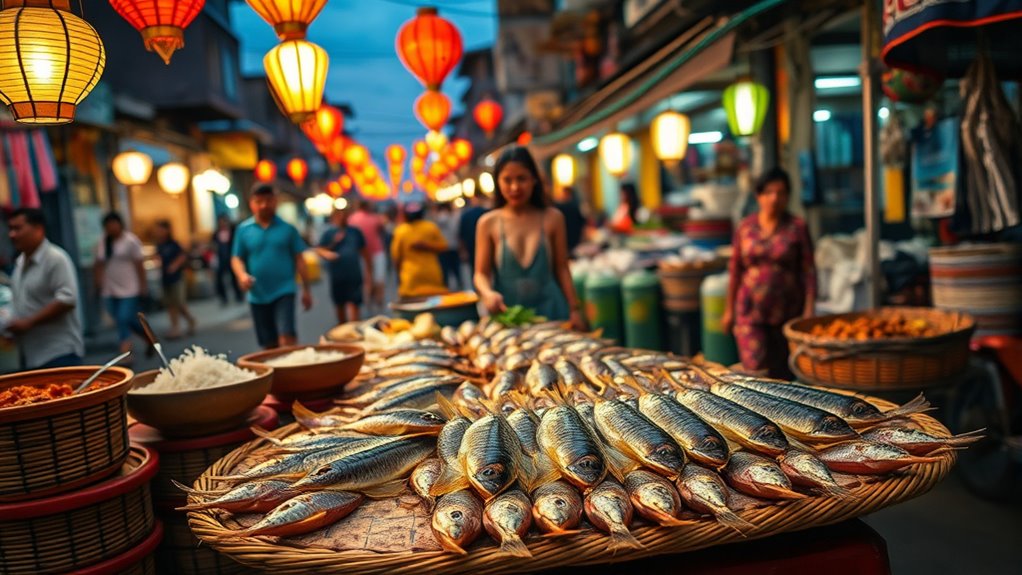

Pecel lele showcases Indonesia’s vibrant street food scene by serving crispy, deep-fried catfish cooked fresh from local fish farms. As you enjoy this flavorful dish, you’re part of a tradition supported by nearby fish farmers who provide steady supplies. This connection keeps the street vendors stocked with quality ingredients and maintains the lively, communal atmosphere. Keep going to discover how this fish farming culture shapes Indonesia’s culinary identity and keeps the streets buzzing.

Get kitchen staples and gadgets delivered free — and shop member deals
- Fast, free delivery on millions of items
- Access to Prime Big Deal Days deals on October 6–7
- Prime Video, Amazon Music and more included
Key Takeaways
- Pecel Lele is a popular Indonesian street dish made from deep-fried catfish served with sambal and rice.
- The dish’s popularity is closely linked to local fish farming practices supplying fresh catfish.
- Vendors rely on nearby fish farms to ensure a steady, affordable supply of fresh catfish for street preparation.
- Pecel Lele embodies Indonesian street food culture, offering communal, flavorful, and affordable dining experiences.
- Sustainable fish farming supports the authenticity and vibrancy of the street food scene, preserving regional culinary traditions.

Pecel Lele is a popular Indonesian dish that features deep-fried catfish served with flavorful sambal and rice. This dish has become a staple in street cuisine across Indonesia, showcasing the country’s rich culinary traditions. As you explore Pecel Lele, you’ll notice how the roots of this dish are deeply connected to local fish farming practices. Many street vendors source their catfish from nearby fish farms, supporting local economies and guaranteeing fresh ingredients for their customers. Fish farming in Indonesia has grown considerably over the years, allowing vendors to access high-quality catfish efficiently. This close connection between fish farming and street cuisine makes certain that Pecel Lele remains affordable, accessible, and authentic.
Pecel Lele’s authenticity is rooted in local fish farming supporting affordable, fresh street cuisine.
When you walk through bustling streets and see vendors grilling or frying catfish, you’re witnessing an essential part of Indonesia’s fish farming industry. These vendors often have long-standing relationships with fish farmers, guaranteeing a steady supply of fresh fish. The process of fish farming here is tailored to meet the demands of street cuisine, emphasizing quick turnaround and freshness. This symbiotic relationship benefits both farmers and vendors, helping sustain local communities. Plus, fish farming techniques adapted for this purpose prioritize quality, which directly influences the taste and texture of the Pecel Lele served on the streets. Additionally, the growth of fish farming industry in Indonesia has played a crucial role in supporting the availability of fresh fish for street vendors and local markets.
Street cuisine plays an indispensable role in Indonesian culture, and Pecel Lele exemplifies this perfectly. It’s not just about eating; it’s about experiencing a lively, communal atmosphere where vendors serve up crispy catfish topped with spicy sambal, paired with rice and sometimes vegetables. The aroma alone attracts passersby, making it a popular choice for locals and tourists alike. You can find Pecel Lele stalls in almost every city or town, often operating late into the night. The quick, efficient service and flavorful dishes make it a favorite among those seeking affordable, satisfying meals on the go.
In essence, Pecel Lele embodies a harmonious blend of fish farming, street food culture, and local flavor. It highlights how Indonesian street cuisine leverages sustainable fish farming practices to produce delicious, authentic dishes. When you indulge in Pecel Lele, you’re not just enjoying a meal; you’re participating in a vibrant tradition that supports local farmers, celebrates regional flavors, and keeps the street food scene thriving. This dish reminds you of the importance of sustainable food sources and how they can be seamlessly integrated into everyday street cuisine, creating a culinary experience that’s both satisfying and culturally meaningful.
Top picks for "pecel lele catfish"
As an affiliate, we earn on qualifying purchases.
Frequently Asked Questions
What Are the Main Health Benefits of Eating Pecel Lele?
Eating pecel lele offers health benefits like high-quality protein and omega-3 fatty acids, which support your heart and brain health. If you’re concerned about cholesterol, opt for healthier cooking methods like steaming or grilling instead of frying. These methods reduce unhealthy fats and help you enjoy the nutritional perks of catfish without raising cholesterol concerns. So, enjoy pecel lele as part of a balanced diet for better overall health.
How Do Street Vendors Ensure the Cleanliness of Their Catfish?
Imagine you’re in a time machine, and street vendors prioritize cleanliness. To guarantee their catfish are safe, they typically source from reputable fish farms with strict water quality controls. They often display transparency by maintaining cleanliness in their stalls, using clean water for washing, and storing fish properly. Regularly checking for freshness and avoiding contaminated water helps them keep the catfish safe for your plate.
What Is the History Behind Pecel Lele’s Popularity in Indonesia?
You might wonder about pecel lele’s popularity in Indonesia. Its historical origins trace back to traditional street food vendors who served fried catfish with sambal and rice, making it affordable and accessible. Over time, pecel lele gained cultural significance as a comfort food that unites communities. Its widespread appeal stems from its rich flavors and deep roots in Indonesian culinary history, turning it into a beloved national dish today.
Are There Specific Regulations for Street Food Vendors Selling Pecel Lele?
You should know that street vendors selling pecel lele must adhere to specific regulations, including obtaining street vendor licensing and following food safety regulations. These rules ensure the vendors operate legally and maintain hygiene standards, protecting customers from health risks. By complying with licensing and safety requirements, you help promote safe, high-quality street food, making the experience enjoyable and trustworthy for everyone who enjoys pecel lele on the streets.
How Does Pecel Lele Compare Nutritionally to Other Fried Fish Dishes?
Sure, comparing fried fish dishes is like choosing between a salad and a donut—both have their charm. Pecel lele’s nutritional content is pretty similar to other fried fish options, but its health comparison depends on frying method and portion size. While it’s tasty and satisfying, keep in mind it’s often high in fats and calories, so enjoy it in moderation if you’re watching your health.
Conclusion
You might be surprised to learn that pecel lele has become a popular street food across Indonesia, with over 2 million catfish households contributing to its success. By embracing this affordable and delicious dish, you support local farmers and small vendors alike. So next time you see a street stall offering pecel lele, give it a try—you’re part of a vibrant tradition that keeps the streets lively and the economy thriving.
NFL season / tailgating Picks
team gear
As an affiliate, we earn on qualifying purchases.