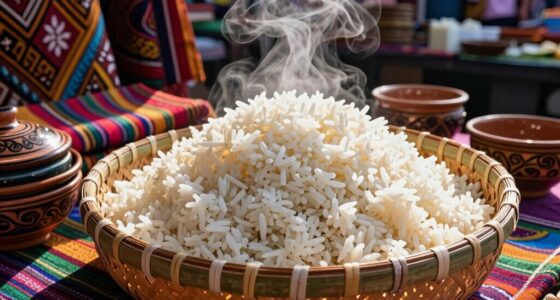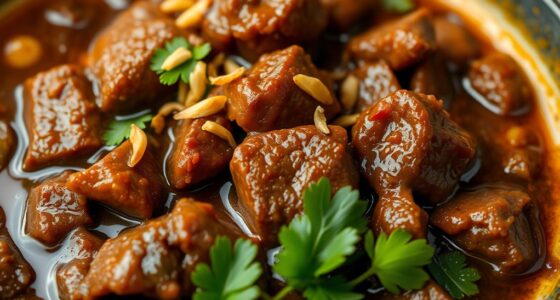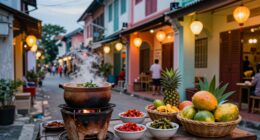
Sundanese and Javanese cuisines showcase Indonesia’s rich culinary diversity. Sundanese dishes focus on light, fresh flavors with subtle spices like lemongrass, emphasizing natural ingredient tastes and simple presentation. In contrast, Javanese cuisine features complex spice blends like cloves, cinnamon, and layered sauces, often artistically plated for visual appeal. If you want to explore how these two styles reveal different cultural values through flavor and presentation, there’s much more to discover.
Key Takeaways
- Sundanese cuisine emphasizes light, fresh spices that highlight natural ingredients, while Javanese cuisine uses complex, aromatic spice blends for layered flavors.
- Sundanese dishes are simply presented, focusing on freshness and taste, whereas Javanese cuisine features artistic plating and decorative garnishes.
- Sundanese flavors are subtle and straightforward, contrasting with Javanese’s rich, elaborate, and multi-layered spice profiles.
- Sundanese culinary philosophy prioritizes ingredient purity and natural taste, while Javanese emphasizes intricate cooking techniques and cultural symbolism.
- Both cuisines reflect Indonesia’s diverse heritage, with Sundanese showcasing simplicity and naturalness, and Javanese highlighting tradition and aesthetic elaboration.
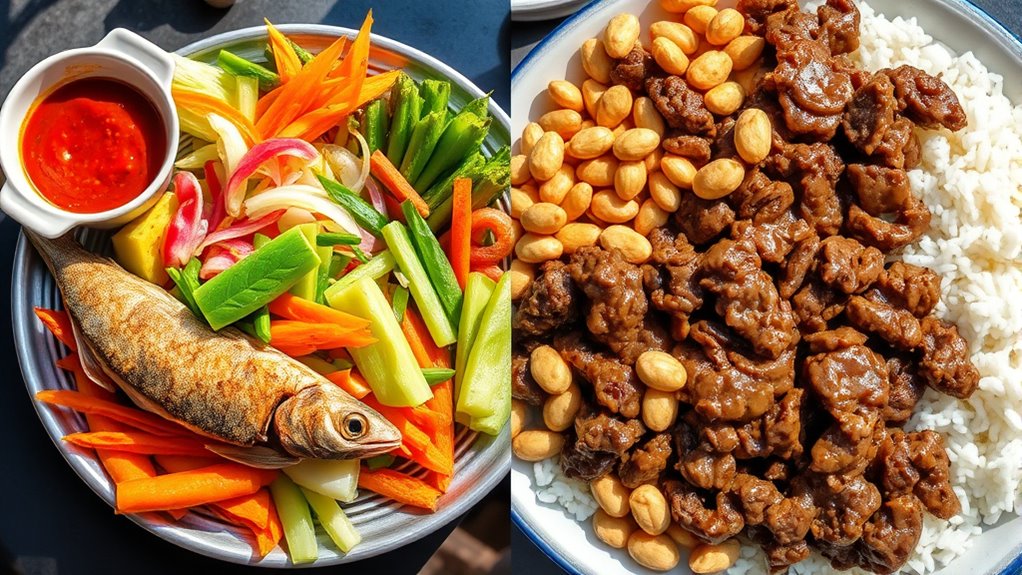
Have you ever wondered how Sundanese and Javanese cuisines differ despite both belonging to Indonesia’s rich culinary heritage? The answer lies in their use of traditional spices and their approach to culinary presentation. As you explore these two cuisines, you’ll notice that Sundanese food emphasizes fresh, raw ingredients and lighter flavors, while Javanese dishes tend to be richer, more complex, and often more elaborately presented.
When it comes to traditional spices, Sundanese cuisine favors a subtle, fresh approach. You’ll often find ingredients like lemongrass, turmeric, galangal, and fresh chili used in moderation, highlighting natural flavors rather than overpowering them. This focus on fresh, raw, and lightly cooked ingredients results in dishes that are fragrant but not overly spicy or heavy. Javanese cuisine, on the other hand, embraces a more intricate spice palette. You’ll encounter a variety of spice blends, such as the famous “bumbu,” which combines coriander, cumin, cloves, cinnamon, and nutmeg. These spices are often used to create complex, aromatic sauces and stews that have a deep, layered flavor profile. The Javanese approach to spices reflects their historical tradition of elaborate cooking and a desire to craft dishes that are both flavorful and visually appealing.
Sundanese spices are subtle and fresh, while Javanese blends are complex and aromatic, reflecting their culinary traditions.
Speaking of culinary presentation, Sundanese dishes tend to be served simply, emphasizing freshness and natural beauty. You might see raw vegetables, slices of grilled fish, or quick stir-fries arranged neatly on a plate, allowing the vibrant colors of the ingredients to shine through. The presentation is straightforward, prioritizing taste and freshness over ornate garnishing. Javanese cuisine, however, often involves a more refined presentation style. Dishes are carefully arranged, with sauces drizzled artistically and side dishes placed with precision. The use of banana leaves, decorative garnishes, and intricate plating techniques reflect the Javanese appreciation for aesthetics and the importance of hospitality in their culinary culture. Additionally, the use of vintage decor and traditional serving ware enhances the visual appeal and cultural authenticity of Javanese dishes.
In essence, your culinary journey through Sundanese and Javanese foods reveals not just different flavor profiles but also contrasting philosophies toward cooking and presentation. Sundanese cuisine invites you to enjoy light, fresh, and straightforward flavors that highlight the natural qualities of ingredients. Javanese cuisine, meanwhile, offers a richer, more layered experience, emphasizing complex spices and artistic plating. Both cuisines showcase the diversity of Indonesia’s culinary heritage, each with its own unique charm and story to tell.
Frequently Asked Questions
What Are the Key Spices Used in Sundanese Cuisine?
In Sundanese cuisine, you’ll find key spices like turmeric, coriander, galangal, and lemongrass, which create lively, vibrant flavor profiles. They often use simple spice blends that highlight natural tastes rather than overpowering them. You’ll also notice the use of chili, shallots, and garlic, adding a touch of heat and aroma. These spices come together to craft dishes that are light, invigorating, and full of nuanced flavors.
How Do Javanese Culinary Traditions Influence Their Social Gatherings?
You can see that Javanese culinary traditions deeply influence their social gatherings by emphasizing communal dining, which fosters a sense of unity and respect. Serving dishes collectively highlights the cultural significance of togetherness, hospitality, and harmony. During celebrations or rituals, sharing food strengthens bonds and reinforces social hierarchies. This tradition makes every gathering meaningful, reflecting the importance of community and mutual respect ingrained in Javanese culture.
Are There Regional Variations Within Sundanese and Javanese Cuisines?
Yes, you’ll notice regional variations within Sundanese and Javanese cuisines. For Sundanese food, regional ingredient differences, like the abundance of fresh vegetables and coconut, influence dishes, while cooking style variations add unique flavors. In Javanese cuisine, you’ll find differences in spices and techniques across areas, with some regions favoring sweeter flavors or more complex seasonings. These distinctions make each local cuisine rich and diverse.
Which Dishes Are Considered the National Symbols of Each Cuisine?
You’ll find that Sundanese cuisine’s national symbol is *Nasi Liwet*, often enjoyed during Sundanese cultural festivals, showcasing their rich flavors. Javanese cuisine’s iconic dish is *Gudeg*, celebrated during traditional Javanese dance rituals and ceremonies. Remarkably, over 80% of Indonesians recognize these dishes as cultural icons. Embrace these symbols, as they embody the vibrant history and traditions deeply rooted in each region’s identity.
How Do Traditional Cooking Methods Differ Between the Two Cuisines?
You’ll notice that Sundanese cuisine emphasizes fermentation techniques, like in their traditional soy-based condiments, and uses less grilling, favoring steaming and boiling. Javanese cooking, on the other hand, relies heavily on grilling methods, such as satays and skewers, and employs more spice blends. These differences reflect their cultural preferences, with Sundanese focusing on freshness and natural flavors, while Javanese enjoy bold, smoky tastes through their grilling techniques.
Conclusion
In the end, exploring Sundanese and Javanese cuisines is like strolling through two vibrant gardens—each offering its own unique flavors and traditions. You’ll find that Sundanese dishes are fresh and light, while Javanese fare is rich and complex. Embrace the diversity, and you’ll discover that both cuisines are treasures waiting to be uncovered. Just as a garden blooms in different ways, these culinary worlds invite you to savor their distinct, unforgettable tastes.