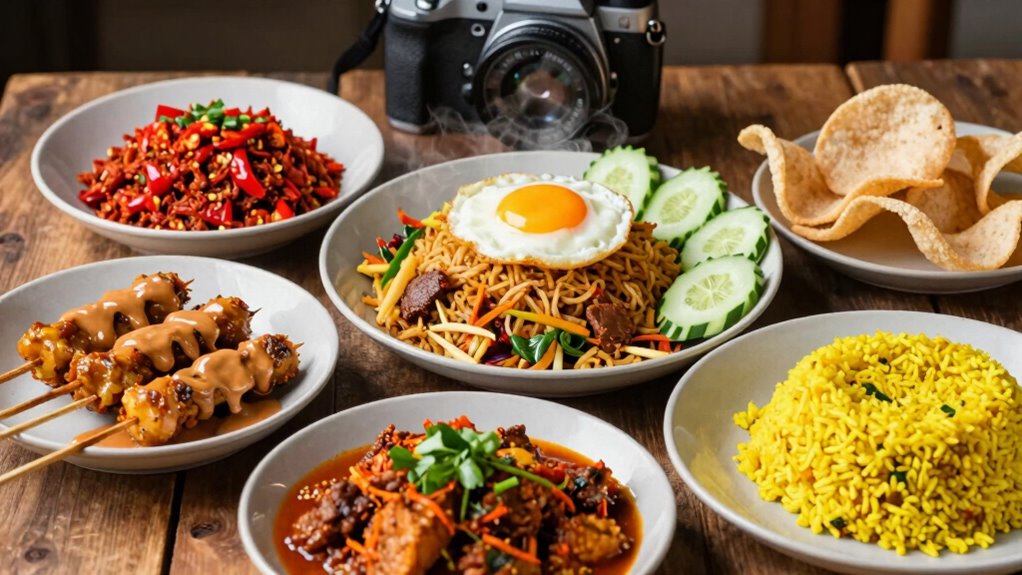

Explore Indonesia’s rich culinary diversity by trying dishes like spicy Sambal, fragrant Satay with peanut sauce, flavorful Nasi Goreng, a satisfying fried rice, and crispy Tempeh. Don’t miss Balinese Babi Guling or Sulawesi’s Coto Makassar for bold flavors. You’ll find regional variations in every dish, reflecting local ingredients and traditions. Curious about more unique flavors and dishes that tell Indonesia’s story? Keep exploring to uncover the country’s culinary treasures.
Key Takeaways
- Highlight iconic dishes like Nasi Goreng and Satay that showcase Indonesia’s diverse regional flavors.
- Emphasize dishes representing different islands, such as Sumatra’s spicy sambal and Bali’s fresh seafood.
- Include dishes with unique cooking techniques and ingredients reflecting Indonesia’s cultural influences.
- Showcase regional specialties like Coto Makassar and Java’s sweet kecap manis-glazed chicken.
- Focus on dishes that embody Indonesia’s rich culinary heritage and vibrant, layered flavors.
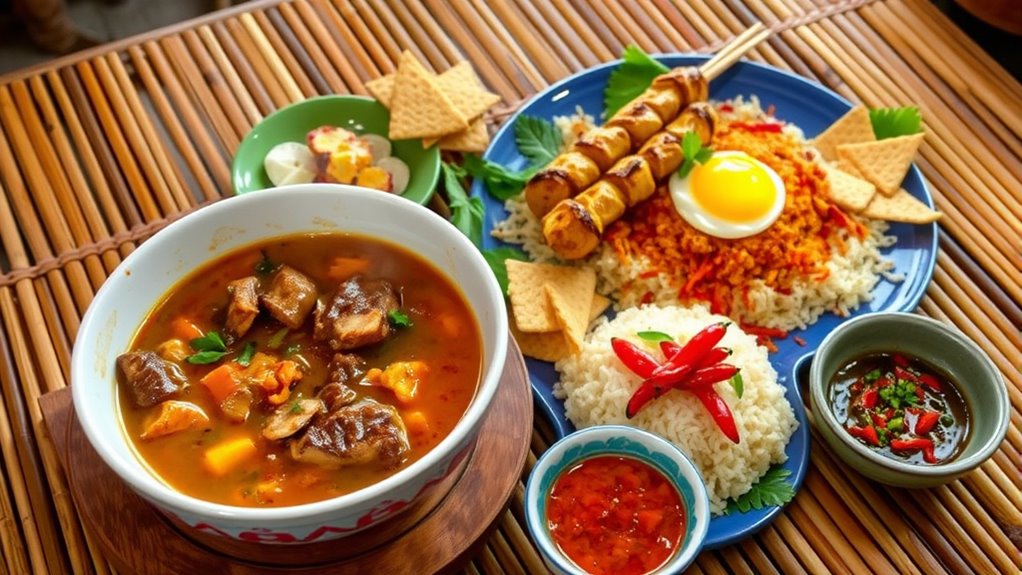
Ever wondered what makes Indonesian cuisine so vibrant and diverse? It’s the rich tapestry of regional flavors woven into each dish, reflecting centuries of culinary traditions passed down through generations. Indonesia’s archipelago comprises thousands of islands, each boasting unique ingredients, cooking techniques, and cultural influences. This diversity means that wherever you go in Indonesia, you’ll encounter flavors that tell a story of history, environment, and local customs. From the spicy, coconut-infused dishes of Sumatra to the sweet, savory flavors of Java, the country offers a culinary journey like no other.
Indonesia’s diverse flavors tell stories of history, environment, and culture across its many islands.
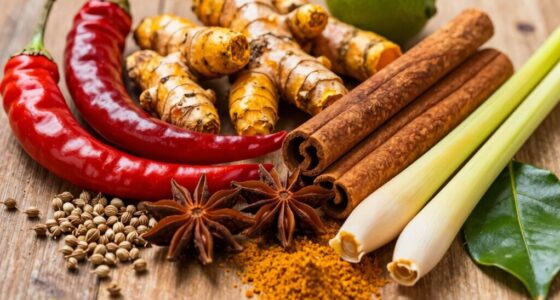
When exploring Indonesian dishes, you’ll discover how regional flavors shape the menu. For example, in Bali, dishes often feature fresh seafood and fragrant spices like turmeric and ginger, echoing the island’s maritime culture. Meanwhile, in Sulawesi, you’ll find bold, smoky flavors in dishes like Coto Makassar, which combines beef, spices, and herbs into a hearty soup. These regional differences aren’t just about ingredients—they’re about the history and cultural influences that have shaped each area’s culinary identity. These culinary traditions are deeply rooted in the local way of life, blending indigenous practices with influences from traders, colonizers, and neighboring countries. That’s what makes Indonesian cuisine so dynamic and layered, offering a taste of each region’s story.
As you try iconic dishes, you’ll notice how these regional flavors come alive on your palate. Take Nasi Goreng, Indonesia’s beloved fried rice. Its flavor varies from region to region, but it’s always a perfect blend of sweet, salty, and spicy, often topped with a fried egg and accompanied by prawn crackers. Then there’s Satay, skewered grilled meat served with peanut sauce, which has countless regional variations across the islands, each with its own twist on spices and preparation. These dishes exemplify how culinary traditions are adapted locally, creating a mosaic of tastes that make Indonesian cuisine so compelling.
Understanding the importance of regional flavors helps you appreciate why Indonesian dishes taste so unique. Every bite connects you to a specific place and its history, making your culinary experience more meaningful. Recognizing how regional ingredients and techniques are combined showcases the depth of Indonesia’s culinary heritage and helps explain the diverse flavors you encounter. The cultural influences from trade and colonization have greatly enriched the local food scene, adding layers of complexity to traditional recipes. This blending of local culinary influences results in a vibrant and ever-evolving cuisine that reflects Indonesia’s rich cultural tapestry. Whether it’s the fiery sambal from Sumatra or the sweet kecap manis glaze on chicken from Java, each dish invites you to explore Indonesia’s cultural diversity through food. Additionally, exploring regional culinary influences can deepen your understanding of how history and environment shape local flavors. Recognizing the cultural diversity within Indonesian cuisine highlights the importance of regional ingredients and techniques, enriching your appreciation of the country’s culinary heritage. So, as you indulge in these dishes, remember that you’re not just tasting ingredients—you’re immersing yourself in a vibrant, living tradition that celebrates the country’s rich heritage and regional identities.
Frequently Asked Questions
Are Indonesian Dishes Suitable for Vegetarians?
Yes, Indonesian dishes can be suitable for vegetarians. Many places offer vegetarian options and dairy-free dishes, so you can enjoy traditional flavors without meat or dairy. Dishes like Gado-Gado, a vegetable salad with peanut sauce, or Tempeh-based dishes, are great choices. Just ask about ingredients to guarantee they meet your dietary needs, and you’ll find plenty of flavorful, meat-free Indonesian options to try.
Which Dishes Are the Spiciest in Indonesian Cuisine?
You’ll want to brace yourself for the spiciest Indonesian dishes, where fiery sambal and spicy chili set your taste buds ablaze. Dishes like Sambal Matah and Ayam Betutu are renowned for their intense heat, with vibrant, red chili pastes that ignite every bite. As you indulge, the heat builds, awakening your senses with a fiery rush—these dishes promise a thrilling, mouth-tingling adventure you won’t forget.
How Do I Eat Traditional Indonesian Dishes Properly?
To eat traditional Indonesian dishes properly, start by using chopsticks etiquette, holding the chopsticks correctly and not sticking them upright in your rice. Follow traditional serving methods by using your hands for dishes like nasi goreng or satay, often with a spoon or fork. Respect the presentation, and take small bites, savoring the flavors. Be polite and patient, and enjoy immersing yourself in the cultural dining experience.
Are Indonesian Dishes Gluten-Free or Allergen-Friendly?
Did you know that around 10% of Indonesians have food allergies? Indonesian dishes can be both gluten-free and allergen-friendly, but it depends on the ingredients used. Many traditional dishes feature rice, vegetables, and meats, which are naturally gluten-free. However, some sauces and seasonings may contain common allergens like soy, peanuts, or seafood. Always ask about ingredients to guarantee your meal suits your dietary needs.
What Are Some Popular Indonesian Desserts to Try?
You should definitely try Indonesian desserts like Klepon, with its vibrant green pandan rice cake filled with palm sugar, or Dadar Gulung, a green pancake roll filled with sweet coconut and palm sugar. These traditional treats feature beautiful dessert presentation and use traditional sweet ingredients like coconut, pandan, and palm sugar. Their flavors are rich and unique, offering you a delightful taste of Indonesia’s sweet culinary heritage.
Conclusion
Exploring Indonesian dishes is like opening a treasure chest of bold flavors and vibrant colors. Each dish offers a unique taste adventure, from spicy sambal to sweet-kissed desserts. So, don’t hesitate—dive in and savor every bite. Just like a rollercoaster, your culinary journey will be full of exciting twists and delicious surprises. Embrace the flavors, and let Indonesia’s rich food culture leave a lasting impression on your palate.