To enjoy healthier Indonesian dishes, focus on lighter cooking techniques like steaming, grilling, and sautéing with minimal oil. Use aromatic spices and fresh herbs to boost flavor without added fat or calories. Incorporate spice blends and natural ingredients to enhance traditional recipes, while reducing reliance on heavy sauces or frying. These methods help preserve nutrients and support overall wellness. Keep exploring for more ideas on creating flavorful, nutritious Indonesian favorites.
Key Takeaways
- Use aromatic spices like turmeric, ginger, and lemongrass to enhance flavor and health benefits without heavy sauces.
- Opt for steaming, grilling, or sautéing with minimal oil instead of deep-frying to preserve nutrients and reduce fat.
- Incorporate spice blends and fresh herbs to add depth and brightness to dishes while limiting calorie-dense ingredients.
- Focus on fresh ingredients and natural flavors, reducing reliance on heavy oils and fried preparations.
- Experiment with light marinades and herb-infused seasonings to recreate traditional Indonesian flavors healthily.

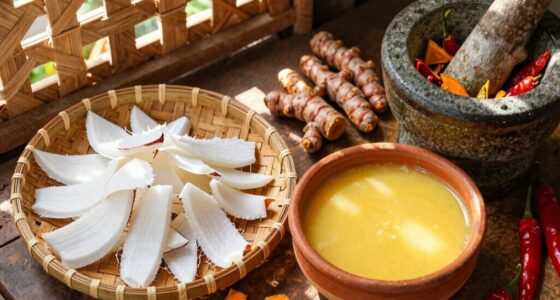
Have you ever wondered how Indonesian cuisine can be both flavorful and healthy? The secret lies in the clever use of spice blends and cooking techniques that enhance taste without adding unnecessary fats or calories. Indonesian dishes often rely on an array of aromatic spices like turmeric, ginger, galangal, coriander, and lemongrass. These spice blends aren’t just about flavor; they also offer health benefits such as anti-inflammatory properties and digestion support. When you become familiar with how to combine these spices effectively, you can create vibrant, wholesome meals that satisfy your palate and nourish your body.
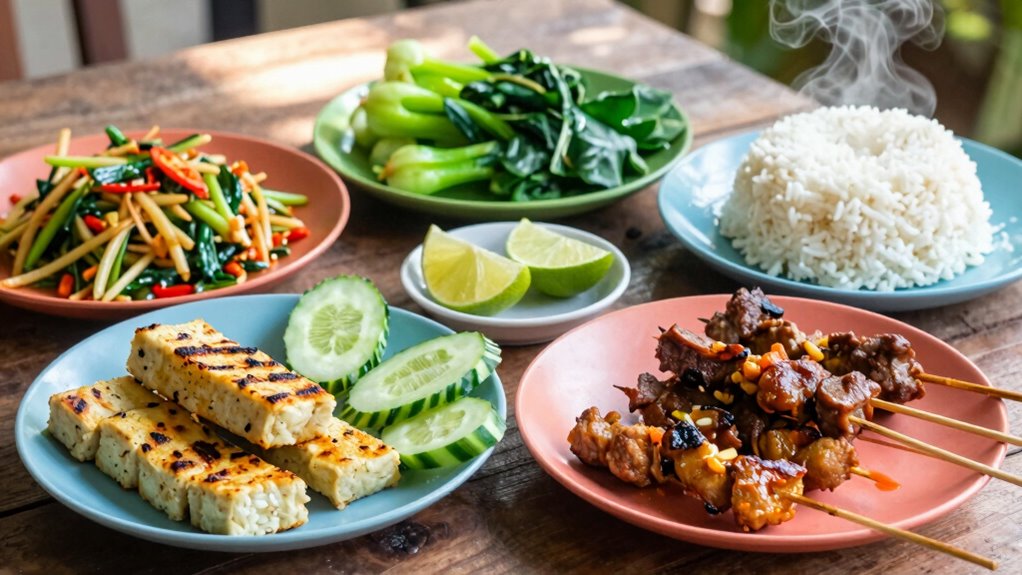
Using traditional cooking techniques in a healthier way is key. Instead of deep-frying or heavy stir-frying with excessive oil, consider methods like steaming, grilling, or sautéing with minimal oil. For example, grilled satay skewers made with lean chicken or fish retain their smoky flavor and tenderness without the added calories from frying. Steaming vegetables and seafood preserves their nutrients and natural flavors, allowing the spices to shine through without overwhelming the dish. Sautéing ingredients with a small amount of healthy oil, such as coconut or olive oil, helps to develop flavor while keeping fat content in check. These techniques not only make your meals lighter but also help retain the integrity of the fresh ingredients.
Incorporating spice blends into your cooking is easy and versatile. Instead of relying on heavy sauces or creams, you can season your dishes with these flavorful mixes to create depth and complexity. For example, a simple marinade of turmeric, garlic, and lime juice can infuse chicken with bright, bold flavors while keeping the dish light. When preparing soups or curries, add fresh herbs like cilantro or basil along with your spice blends to brighten the dish and add nutritional value. The key is to use spices thoughtfully, balancing them well so they complement the ingredients without overpowering them. This approach allows you to enjoy traditional Indonesian flavors in a healthier, lighter way.
Frequently Asked Questions
Can I Substitute Ingredients for Lower-Calorie Options?
Yes, you can substitute ingredients for lower-calorie options to reduce calories in your Indonesian dishes. For example, swap coconut milk for light coconut milk or use cooking spray instead of oil. Substituting ingredients is a great way to achieve calorie reduction without sacrificing flavor. Just be mindful of the taste and texture changes, and adjust your seasonings accordingly to keep your dishes delicious and healthier.
How Can I Reduce Salt Without Losing Flavor?
You can reduce salt by enhancing flavors with fresh herbs and spices. Use herb enhancements like cilantro, basil, or lemongrass to add freshness, and try spice alternatives such as turmeric, ginger, or chili for depth. These options boost taste without relying on salt, allowing you to enjoy flavorful Indonesian dishes that are healthier. Experimenting with herbs and spices helps maintain bold flavors while cutting back on sodium.
Are There Vegan or Vegetarian Versions of Traditional Dishes?
Sure, you can totally enjoy traditional Indonesian dishes with plant-based modifications or vegetarian alternatives. Think tempeh or tofu replacing meat, or veggie-packed versions of rendang and satay. It’s almost funny how easy it is to turn a classic into a vegan or vegetarian delight, proving that you don’t need animal products to savor rich, authentic flavors. So go ahead, indulge guilt-free with these creative, plant-based twists!
What Cooking Methods Help Retain Nutrients in Indonesian Dishes?
You can retain nutrients in Indonesian dishes by using steaming and stir-frying methods. Steaming preserves vitamins and minerals by cooking food gently with minimal water, preventing nutrient loss. Stir-frying quickly cooks ingredients at high heat, locking in flavor and nutrients while reducing oil use. Both methods are ideal for healthy Indonesian cooking, helping you enjoy authentic flavors without sacrificing nutritional value.
How Can I Make Indonesian Desserts Healthier?
Did you know that reducing sugar intake can lower diabetes risk by up to 30%? To make Indonesian desserts healthier, you should use fruit alternatives like bananas or mangoes to naturally sweeten dishes. Additionally, opt for sugar substitutes such as stevia or honey. These swaps cut down on refined sugar, boost nutrient content, and satisfy your sweet tooth without sacrificing flavor or health.
Conclusion
By choosing healthier ingredients and cooking methods, you’re transforming Indonesian favorites into nourishing, lighter dishes. Think of it like tuning a traditional instrument—retaining its beautiful sound but making it easier to play every day. I once made a lighter rendang for my family, and their smiles showed that flavor doesn’t have to be sacrificed for health. With a few simple swaps, you can keep the heart of Indonesian cuisine alive and well—delicious, satisfying, and good for you.