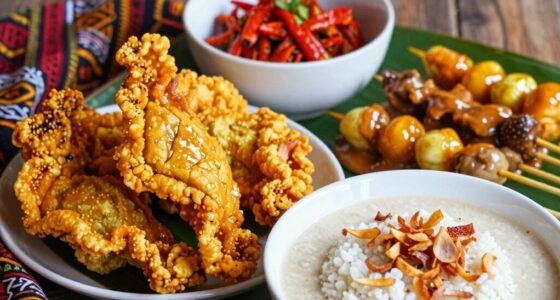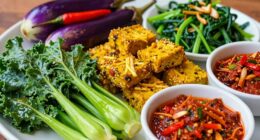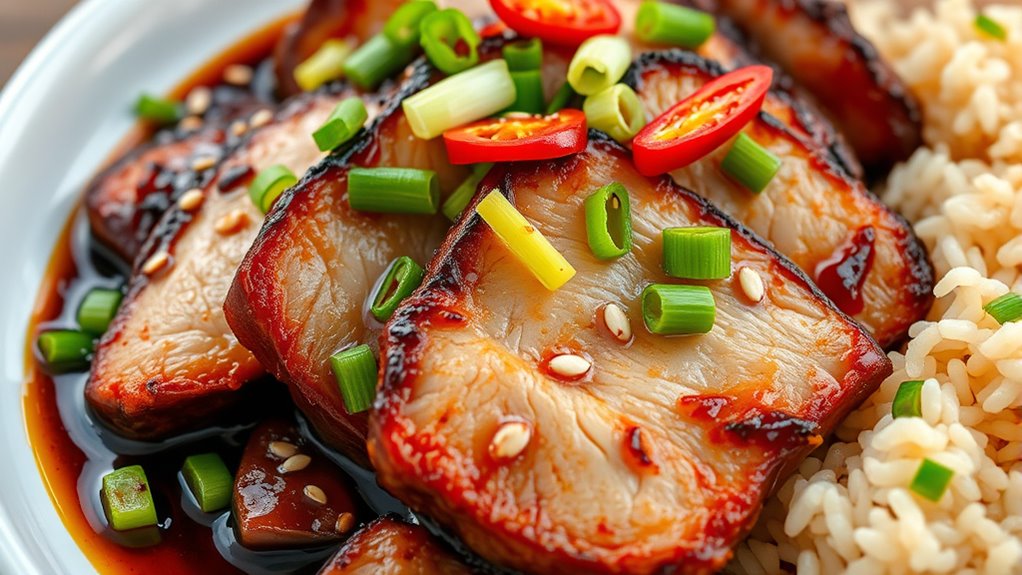

Chinese influence is woven into Indonesian dishes through shared ingredients, techniques, and flavors. You’ll notice this in popular items like dim sum, which are enjoyed as communal meals, and noodle dishes like mie ayam and bakmi goreng, blending Chinese stir-frying with local spices. Soups, spring rolls, and steamed buns also reflect Chinese culinary roots. Exploring these flavors reveals a rich history of cultural exchange that’s more extensive than you might think—there’s so much more to discover.
Key Takeaways
- Indonesian dishes incorporate Chinese ingredients like soy sauce, sesame oil, and bamboo shoots, reflecting deep culinary integration.
- Dim sum, originating from southern China, is a popular communal meal adapted with Indonesian flavors and fillings.
- Noodle dishes such as mie ayam and bakmi goreng showcase Chinese techniques combined with local spices and herbs.
- Chinese cooking methods like steaming and stir-frying are widely embraced and modified to suit Indonesian tastes.
- Indonesian cuisine features Chinese-influenced dishes like lumpia and Chinese-style soups, highlighting cultural exchange and migration.
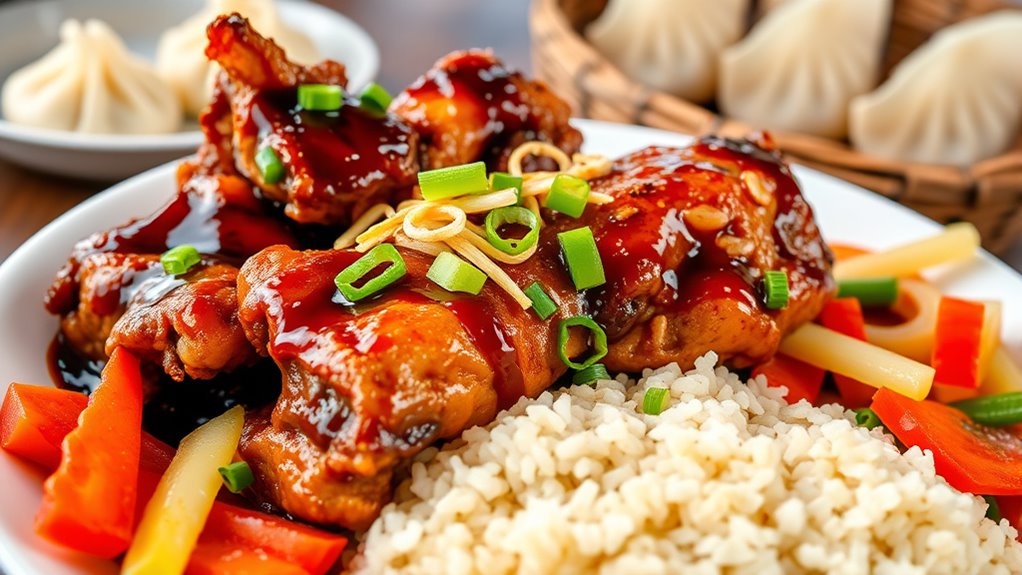
Chinese influence in Indonesian cuisine is deeply rooted in history and culture, shaping the flavors and dishes that define the country’s culinary identity. When you explore Indonesian food, you’ll notice how traditional Chinese elements seamlessly blend with local ingredients, creating a vibrant tapestry of flavors. One of the most recognizable signs of this influence is dim sum, a variety of bite-sized dishes that originated from southern China. In Indonesia, dim sum is not just a snack; it’s a communal experience enjoyed during breakfast or brunch. You’ll find dim sum stalls bustling with activity, offering steamed dumplings, buns filled with pork or vegetables, and delicate rice rolls. These dishes reflect Chinese culinary techniques and ingredients but are adapted to Indonesian tastes with local spices and fillings, making them uniquely Indonesian-Chinese fusion.
Another prominent aspect of Chinese influence lies in the Noodle Variations that dominate many Indonesian dishes. Noodles have become a staple, appearing in street food, comfort dishes, and festive meals alike. You might try mie ayam, a chicken noodle soup with savory broth, tender chicken, and bok choy, or bakmi goreng, a fried noodle dish packed with vegetables, eggs, and sometimes seafood or chicken. These noodle dishes often feature soy sauce, sesame oil, and garlic—staples in Chinese cuisine—yet they’re prepared with Indonesian ingredients like sweet soy sauce and local herbs, giving them a distinct local flavor. The art of noodle making and stir-frying techniques are directly influenced by Chinese culinary traditions, but over time, Indonesians have added their own twist, balancing savory, sweet, and spicy elements.
The Chinese influence extends beyond these examples; it’s woven into the very fabric of Indonesian daily eating habits. You’ll notice Chinese-style soups, stir-fries, and breaded dishes like lumpia (spring rolls) that are now considered local staples. Chinese culinary techniques, such as steaming and quick stir-frying, have been embraced and adapted to create dishes that resonate with Indonesian palates. The fusion is so natural that it feels like a shared culinary heritage, with each dish telling a story of migration, adaptation, and cultural exchange. As you savor Indonesian dishes, recognize that these flavors and techniques are a delicious testament to centuries of Chinese impact, enriching the country’s culinary landscape with a diverse and dynamic array of tastes.
Top picks for "chinese influence trac"
As an affiliate, we earn on qualifying purchases.
Frequently Asked Questions
How Did Chinese Immigrants Initially Introduce Their Culinary Traditions?
When Chinese immigrants arrived, they introduced their culinary traditions through dishes like dim sum and noodle variations. You’d notice how they brought unique ingredients and cooking techniques, sharing them with locals. They prepared small, flavorful bites for dim sum and crafted a variety of noodles, blending their flavors with local ingredients. This initial food sharing helped establish Chinese culinary influence, which gradually became an essential part of Indonesian cuisine.
Are There Specific Regions in Indonesia With Stronger Chinese Culinary Influence?
You’ll notice stronger Chinese culinary influence in regions with Chinatown districts, like Jakarta and Medan, where Chinese communities thrive. These areas showcase regional culinary differences, blending Chinese flavors with local ingredients, creating unique dishes. In these neighborhoods, Chinese restaurants and markets are more prevalent, making it easier to experience authentic Chinese-inspired cuisine. So, if you explore Chinatown districts across Indonesia, you’ll find the most pronounced Chinese culinary influence.
What Are the Key Ingredients in Chinese-Influenced Indonesian Dishes?
You’ll notice that key ingredients in Chinese-influenced Indonesian dishes include soy sauce, garlic, ginger, and scallions, blending with local spices. This fusion flavor creates unique dishes, where ingredient variations produce vibrant tastes. The contrast between savory soy and sweet palm sugar highlights the culinary hybrid. These ingredients come together to form a rich tapestry of flavors, inviting you to explore the delicious interplay of Chinese and Indonesian culinary traditions.
How Has Chinese Cuisine Adapted to Indonesian Tastes Over Time?
You see that Chinese cuisine has adapted to Indonesian tastes through fusion flavors and culinary integration. Over time, local ingredients and spices blend with traditional Chinese methods, creating dishes that feel familiar yet unique. You might notice sweeter sauces, spicier profiles, or the use of indigenous herbs, all reflecting the cultural exchange. This evolution showcases how Chinese cuisine seamlessly merges with Indonesian flavors, enriching both culinary traditions.
Are There Any Traditional Chinese Cooking Techniques Still Used in Indonesia Today?
Yes, traditional Chinese cooking techniques are still used in Indonesia today. You’ll notice fusion techniques, like stir-frying with local spices, and ingredient substitutions, such as using palm sugar instead of traditional Chinese sweeteners. These adaptations help preserve authentic flavors while blending Chinese methods with Indonesian ingredients, creating a unique culinary experience. So, the cooking style remains vibrant, incorporating both traditional techniques and local influences seamlessly.
Conclusion
As you explore Indonesian dishes, it’s fascinating to realize how Chinese flavors unexpectedly blend into every bite. Coincidentally, many traditional recipes share ingredients and techniques with Chinese cuisine, revealing a shared history you might not have noticed. This hidden influence reminds you that food often connects cultures in surprising ways, turning your culinary journey into a delightful discovery. Next time you enjoy Indonesian dishes, remember—you’re tasting a delicious story of cultural exchange that’s been quietly simmering for generations.