
To sneak veggies into meals for picky eaters, blend or puree vegetables into sauces, smoothies, or baked goods to make them seamless and less noticeable. Use herbs, spices, or flavorful ingredients like cheese and lemon to mask vegetable tastes. Incorporate small, finely grated pieces into familiar dishes to avoid resistance. Creative presentation ideas and consistent experimentation can make vegetables more appealing, encouraging healthier eating habits. Keep exploring these tips to discover more clever ways to serve veggies effortlessly.

Get kitchen staples and gadgets delivered free — and shop member deals
- Fast, free delivery on millions of items
- Access to Prime Big Deal Days deals on October 6–7
- Prime Video, Amazon Music and more included
Key Takeaways
- Blend vegetables into sauces, smoothies, or batters for seamless inclusion.
- Use pureed or grated veggies in familiar dishes like pasta or baked goods to hide their presence.
- Add flavor masking ingredients such as cheese, herbs, or lemon to improve taste and reduce vegetable bitterness.
- Incorporate small, evenly distributed vegetable pieces in meals to make them less noticeable.
- Present vegetables creatively and subtly to make healthy eating more appealing to picky eaters.
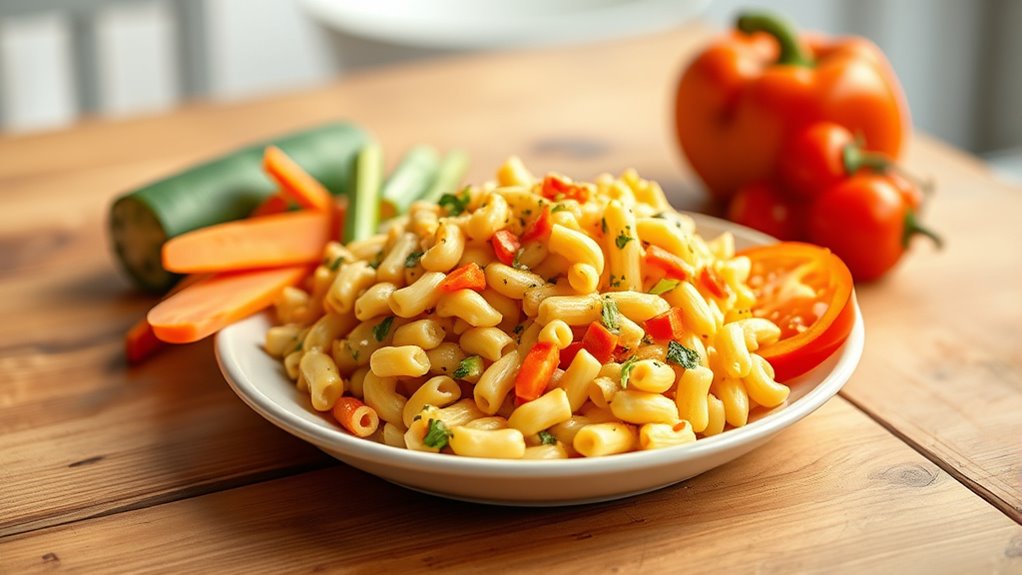
Adding vegetables to meals can be a challenge, especially if you’re trying to get picky eaters to enjoy them. Picky eaters often resist the sight or texture of certain vegetables, making mealtime frustrating. To overcome this, many parents and cooks turn to hiding ingredients and flavor masking techniques. The goal is to incorporate vegetables seamlessly so they don’t stand out or disrupt the taste of the dish. This approach allows you to boost nutrition without stirring up fuss or rejection.
One effective method is to blend vegetables into sauces, smoothies, or batters. For example, pureed carrots or zucchini can be added into pasta sauces or casseroles. When the vegetables are thoroughly blended, they become almost invisible in the sauce, and their flavor is masked by the stronger ingredients like tomatoes, garlic, or cheese. This way, you’re not only sneaking in nutrients but also avoiding any hesitation your picky eater might have had about seeing or tasting whole vegetables. The key is to use ingredients with mild flavors that blend well, making the vegetables less noticeable.
Blend vegetables into sauces and casseroles to hide their presence and enhance nutrition seamlessly.
Flavor masking is essential when sneaking vegetables into meals. You want to ensure the taste of the dish remains appealing, so you might add spices, herbs, or flavorful ingredients that can overpower or complement the vegetable’s natural taste. For instance, adding a bit of cheese or a splash of lemon juice can help disguise any bitterness or earthiness from certain vegetables. When you’re making baked goods like muffins or bread, incorporating shredded vegetables such as carrots or zucchini can be almost unnoticeable if you balance the flavors properly. The goal is to make the vegetables a background note rather than the star of the dish.
Another trick involves using finely grated or processed vegetables that blend into the texture of the food. Finely grating spinach into meatballs or finely chopping bell peppers into stuffing ensures they’re dispersed evenly. These small pieces are less likely to be detected and less likely to turn away picky eaters. Additionally, pairing vegetables with familiar flavors or favorite ingredients helps create a more appealing dish overall.
Incorporating hidden ingredients and using flavor masking techniques require a bit of creativity and experimentation. But once you find the right combinations, you can turn almost any meal into a sneaky, nutritious delight. It’s all about making vegetables less intimidating and more appealing, so you can feed your family healthier meals without constant battles at the dinner table. With patience and clever tricks, you’ll find that sneaking veggies into everyday meals becomes easy and even fun. Incorporating tools like projector technology can also inspire creative presentation ideas to make vegetables more engaging for kids.
Frequently Asked Questions
What Are the Best Vegetables to Hide in Sweet Dishes?
You should hide vegetables like carrots, sweet potatoes, or zucchini in sweet dishes because their natural sweetness helps with flavor masking. These vegetables are rich in crucial vegetable nutrients, which boost the health benefits of your treats. Incorporate them into baked goods, smoothies, or puddings to subtly boost nutrition without compromising flavor. Your kids won’t even notice, and you’ll be giving them essential nutrients in a fun, tasty way.
How Can I Introduce New Vegetables Without Resistance?
Start with simple, sweet solutions to soften resistance. Use flavor masking—like blending spinach into smoothies or adding a touch of honey—and texture tricks, such as finely chopping veggies into sauces or casseroles. Present vegetables as part of familiar favorites, making them less intimidating. Gradually introduce new veggies alongside loved foods, encouraging curiosity without pressure. With patience and creativity, you’ll turn picky eating into an inviting, enjoyable experience.
Are There Specific Recipes That Disguise Veggies Effectively?
Yes, you can try recipes that use creative presentation and flavor masking to disguise veggies effectively. Think smoothies with hidden spinach or zucchini muffins where the flavor is masked by sweet ingredients. Soups and sauces also work well, blending veggies into smooth textures. By focusing on creative presentation and balancing flavors, you make these dishes appealing, encouraging picky eaters to enjoy their vegetables without noticing.
How Do I Ensure My Child Gets Enough Vegetables Daily?
To guarantee your child gets enough vegetables daily, focus on meal planning that includes a variety of colorful veggies in tasty dishes. Incorporate them into smoothies, pasta sauces, or baked goods to boost nutritional balance without fuss. Keep offering different options without pressure, and involve your child in choosing or preparing meals. This approach makes vegetables more appealing and helps develop healthy eating habits over time.
What Are Creative Ways to Serve Veggies for Picky Eaters?
You can make veggies appealing by trying smoothie tricks, blending spinach or carrots into fruit smoothies for a sweet, nutritious treat. Use veggie art to turn cucumbers into fun creatures or colorful veggie faces on plates, sparking your child’s curiosity. Present vegetables in bite-sized, visually interesting ways, and involve them in cooking. These creative strategies make veggie eating enjoyable and encourage your picky eater to try new flavors.
Conclusion
Now that you’ve uncovered these sneaky tricks, imagine the possibilities—what new recipes will you try next? Your picky eater might just be surprised when veggies appear where they least expect them. But beware: once they realize the secret, will your clever methods still work? Keep experimenting, stay creative, and stay tuned—there’s a whole world of tasty, veggie-packed meals waiting to be discovered. Are you ready to turn the ordinary into extraordinary? The next delicious surprise is just around the corner.
NFL season / tailgating Picks
team gear
As an affiliate, we earn on qualifying purchases.