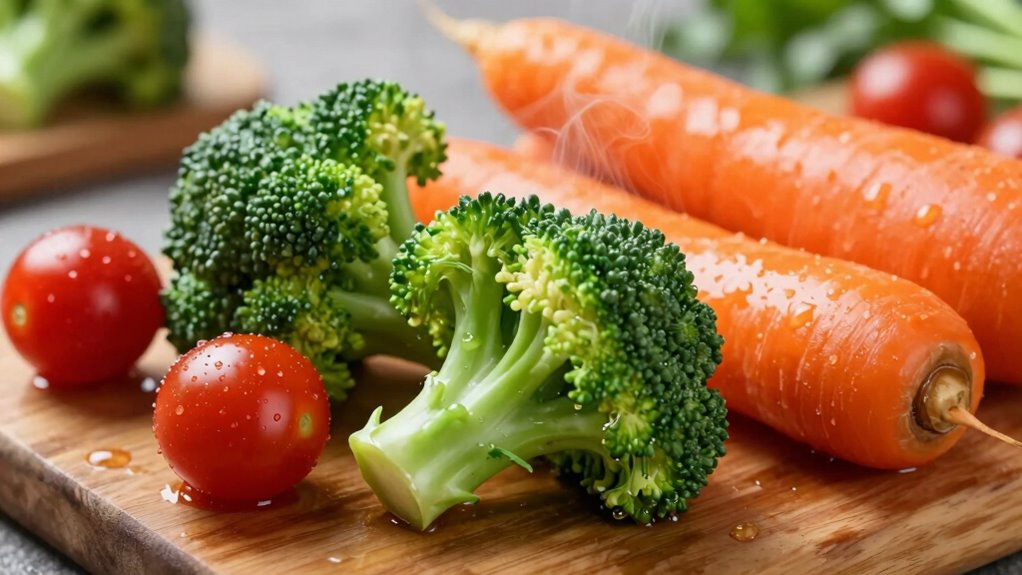
To keep your veggies nutritious, opt for steaming or microwaving, as these methods use minimal water and gentle heat, preserving maximum vitamins and antioxidants. Roasting and grilling are also great because they use dry heat that minimizes nutrient loss while enhancing flavor. Avoid boiling, which causes water-soluble vitamins to leach out. Using proper equipment and techniques can further boost nutrient retention. Discover more tips to make your vegetables as healthy as possible by exploring the full guide.
Key Takeaways
- Steam vegetables gently to preserve water-soluble vitamins and antioxidants effectively.
- Use microwave cooking with minimal water and short durations to retain nutrients.
- Roast or grill vegetables with dry heat to maintain vitamin content while enhancing flavor.
- Minimize cooking time and avoid overcooking to prevent nutrient degradation.
- Save and incorporate cooking water from boiling to recover lost vitamins and minerals.
Have you ever wondered how to get the most nutrition from your vegetables? It all comes down to choosing the right cooking methods to maximize nutrient retention. Vegetables are packed with vitamins, minerals, and antioxidants, but improper cooking can cause them to lose their nutritional value. To preserve these crucial nutrients, you need to understand which cooking techniques work best.
Steaming is often considered one of the best ways to cook vegetables if you want to retain nutrients. By exposing produce to gentle heat and moisture without direct contact with boiling water, steaming prevents leaching of water-soluble vitamins like vitamin C and B vitamins. It’s quick, efficient, and keeps vegetables tender while preserving their flavor and nutritional content. For example, broccoli and spinach steamed lightly retain more antioxidants than when boiled or microwaved.
Steaming preserves nutrients and antioxidants better than boiling or microwaving.
Boiling, on the other hand, can lead to significant nutrient loss, especially for water-soluble vitamins that dissolve into the cooking water. If you prefer boiling, try to keep the cooking time short and use the least amount of water necessary. Alternatively, you can save the cooking water for soups or sauces to recover some of the nutrients that leach out during boiling. Understanding the nutrient leaching process can help you make better decisions in the kitchen. Additionally, using proper cooking techniques can further reduce nutrient loss and enhance the health benefits of your vegetables.
Roasting and grilling are also good options, especially because they use dry heat, which helps preserve nutrients sensitive to water and heat. These methods enhance flavor through caramelization and can make vegetables more appealing without sacrificing many vitamins. But be careful not to overcook, as prolonged heat exposure can degrade heat-sensitive nutrients. Keep the cooking times short and at moderate temperatures to maximize nutrient retention.
Microwaving is a quick and convenient method that can also preserve nutrients effectively. Because it cooks vegetables rapidly with minimal water, microwaving limits nutrient loss. Just make sure to use a microwave-safe container and avoid overcooking, which can reduce vitamin content. When done properly, microwaving can be just as nutritious as steaming.
Additionally, understanding the impact of innovative cooking techniques and proper equipment can further help in nutrient preservation, ensuring you get the maximum health benefits from your vegetables.
Frequently Asked Questions
How Does Cooking Affect the Fiber Content of Vegetables?
Cooking can cause some fiber loss in vegetables, but the impact varies with different cooking methods. For example, boiling may reduce fiber content more than steaming or roasting. You should choose gentle methods like steaming to preserve the fiber and overall nutritional value. Keep in mind that overcooking can break down fiber, so aim for shorter cook times and avoid excessive heat to maintain the fiber benefits in your veggies.
Are Frozen Vegetables as Nutritious as Fresh Ones?
Frozen vegetables frequently feature freshness, flavor, and nutrients comparable to fresh options. Thanks to quick freezing, nutrients are preserved through effective preservation methods, locking in vitamins and minerals. While some nutrient loss can occur during blanching before freezing, modern techniques minimize this. So, you can confidently choose frozen veggies, knowing they deliver dense, delicious nutrition. In fact, frozen foods often save time, taste, and nutrients, making them a smart, satisfying choice.
What Is the Best Way to Store Cooked Vegetables?
You should store cooked vegetables in airtight containers to keep them fresh. Use proper storage techniques by cooling them quickly and refrigerating within two hours to prevent bacteria growth. Follow refrigeration tips like labeling containers with dates and consuming leftovers within 3-4 days. Keep your veggies at the right temperature, around 40°F, and avoid overcrowding your fridge to maintain quality and nutrients.
Do Different Cooking Oils Impact Nutrient Retention?
Think of cooking oils as the spice of your nutrient preservation recipe. Different cooking oils impact nutrient retention variably; extra virgin olive oil, for instance, preserves vitamins well owing to its antioxidant content, while oils with high smoke points, like avocado or refined oils, prevent nutrient loss during high heat. Choosing the right cooking oil guarantees your vegetables stay nutritious, giving your meal both flavor and health benefits.
Can Combining Vegetables Enhance Nutrient Absorption?
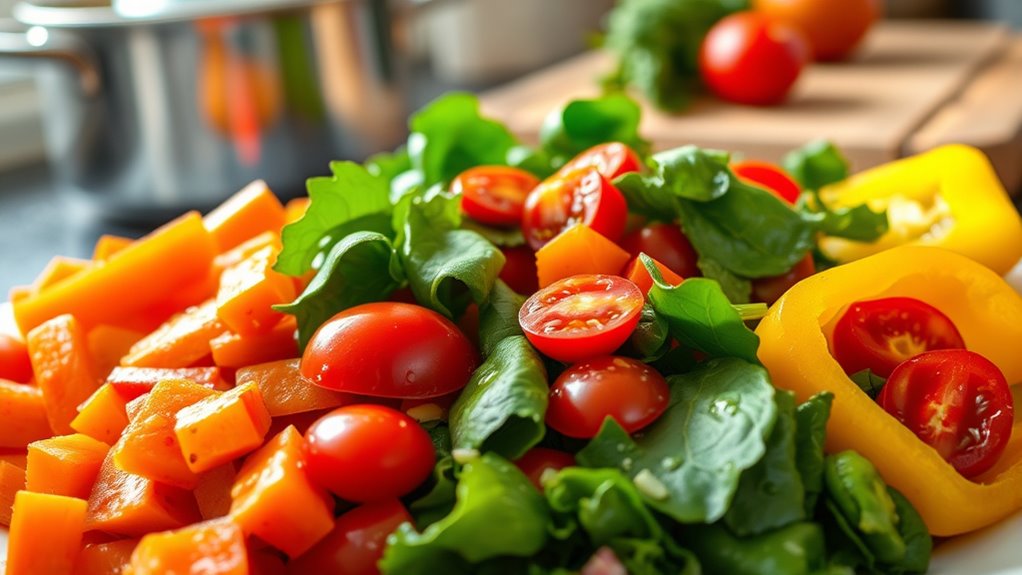
Yes, pairing vegetables can enhance nutrient absorption and flavor. When you combine colorful veggies like tomatoes with leafy greens, you boost vitamin intake, especially fat-soluble vitamins like A, D, E, and K. Plus, pairing vegetables improves flavor, making your meals more enjoyable. Experiment with pairing different veggies to maximize nutrients and create delicious, nutrient-rich dishes that support your health and satisfy your taste buds.
Conclusion
By choosing the right cooking methods, you unlock the full potential of your vegetables, nourishing your body like sunlight awakens a garden. Think of each bite as a seed of vitality—preserving their vibrant colors and flavors. When you cook wisely, you’re planting the roots of health deep within. So, embrace these techniques as your tools to cultivate wellness, turning everyday meals into flourishing fields of nourishment that sustain and inspire you.