
To spice up healthy meals, experiment with herbs and spices to create flavor harmony. Combine fresh herbs at the end for brightness, and toast dried spices to boost aroma. Use herb pairings like basil with oregano or cilantro with cumin to build complex flavors. Developing your own spice blends tailored to different cuisines also adds vibrancy. Keep exploring herb principles and spice techniques to transform simple, nutritious ingredients into delicious dishes you’ll love.

Get kitchen staples and gadgets delivered free — and shop member deals
- Fast, free delivery on millions of items
- Access to Prime Big Deal Days deals on October 6–7
- Prime Video, Amazon Music and more included
Key Takeaways
- Combining herbs that complement each other enhances flavor and prevents dishes from tasting flat.
- Creating personalized spice blends adds complexity while controlling ingredients for healthier choices.
- Toast spices before use to intensify aroma and flavor, making healthy ingredients more appealing.
- Add fresh herbs at the end for brightness; incorporate dried herbs earlier to develop deeper flavors.
- Using herbs and spices elevates simple, healthy ingredients, making meals more satisfying and delicious.
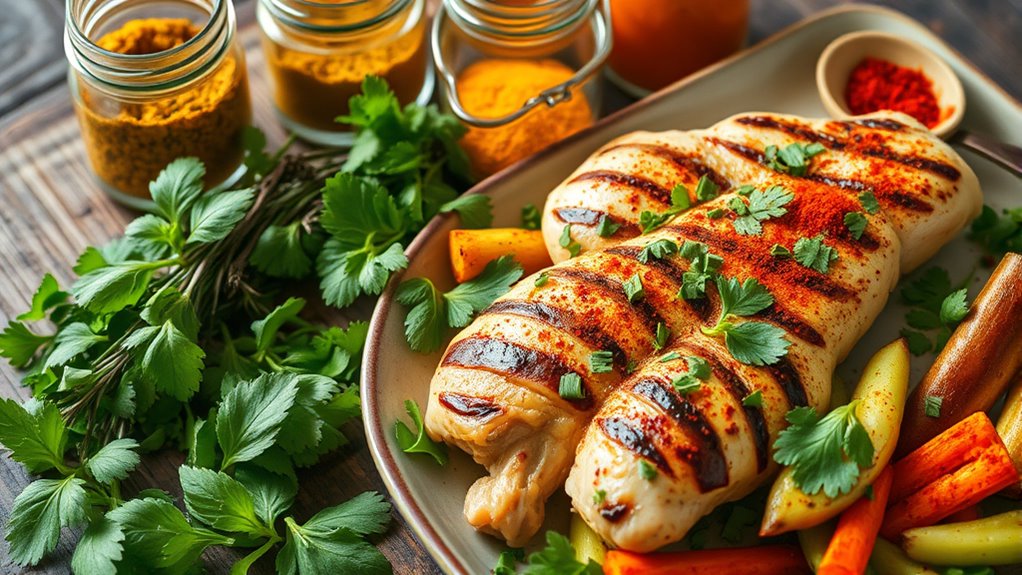
Herbs and spices are powerful tools for transforming healthy meals into flavorful, satisfying dishes. When you understand herb pairings and spice blending, you can elevate simple ingredients into culinary delights. Herb pairings involve combining herbs that naturally complement each other, creating a harmonious flavor profile. For example, basil and oregano work beautifully together in Italian dishes, while cilantro pairs nicely with lime and cumin in Mexican cuisine. By experimenting with different herb combinations, you can find new flavor dimensions and prevent your meals from tasting flat. Remember, some herbs are more potent when used together, so start with small amounts and adjust to taste.
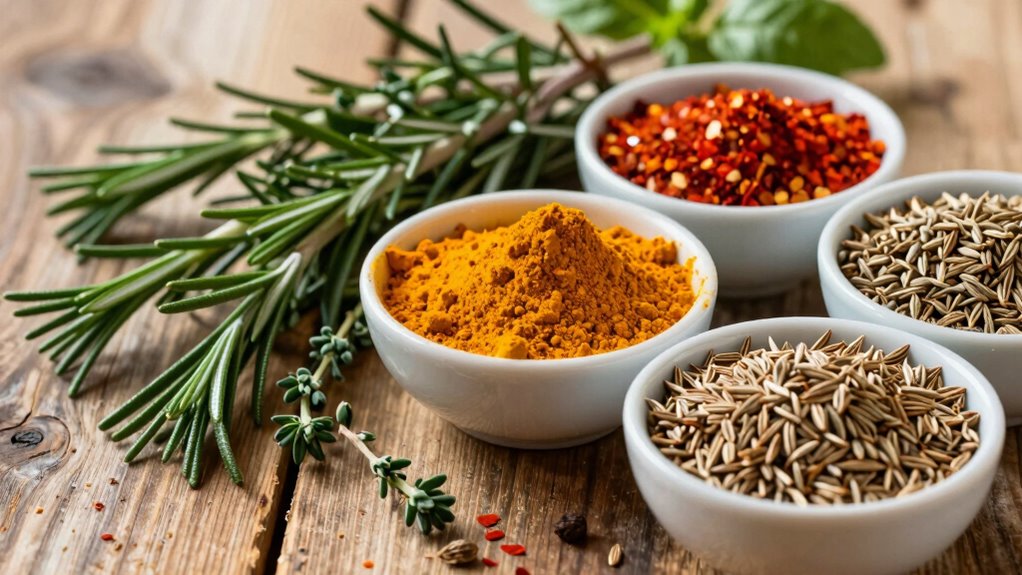
Spice blending takes this concept even further by combining various spices to create unique seasoning mixes tailored to your palate. Think of spice blends like curry powder, garam masala, or za’atar—they bring complexity and depth to your dishes. When you blend spices yourself, you control the intensity and avoid the additives often found in pre-made mixes. To develop your own blends, consider the flavors you enjoy most. Warm spices like cinnamon, cumin, and coriander pair well with hearty vegetables and grains, while bright, aromatic spices such as cardamom and turmeric can add a vibrant lift to soups and salads.
Getting creative with spice blending allows you to customize flavors to suit different cuisines or personal preferences. For instance, if you’re aiming for a Mediterranean flavor, combine oregano, thyme, garlic powder, and a touch of paprika. For a Moroccan-inspired dish, mix cumin, cinnamon, ginger, and turmeric. When you master herb pairings and spice blending, you’ll find that even the simplest ingredients—like roasted vegetables or grilled chicken—become extraordinary. Use fresh herbs at the end of cooking for bright, vibrant flavors, and incorporate dried herbs earlier to allow their flavors to develop. Spices, on the other hand, often benefit from toasting before adding to dishes, which releases their essential oils and intensifies their aroma. Additionally, understanding herb pairing principles can help you create more balanced and harmonious flavor combinations in your cooking. Exploring herb synergy can further enhance the depth and complexity of your dishes.
As an affiliate, we earn on qualifying purchases.
Frequently Asked Questions
Can Herbs and Spices Replace Salt for Flavor?
Yes, herbs and spices can replace salt for flavor, acting as effective salt alternatives and enhancing the taste of your dishes. You can experiment with garlic, pepper, cumin, paprika, or fresh herbs to boost flavor without added sodium. By using these natural seasonings, you’ll enjoy a healthier, more vibrant meal, reducing your salt intake while still satisfying your taste buds with rich flavor enhancement.
Are There Any Herbs or Spices That Boost Metabolism?
Sure, some herbs and spices are definitely the superheroes of metabolism boosting herbs and spicy metabolism enhancers. You might want to try cayenne pepper, ginger, or turmeric—they’ve earned a reputation for revving up your metabolic engine. Just sprinkle these fiery allies into your meals, and watch your calorie burn increase while you enjoy a flavorful, health-boosting boost. Who knew spicy could be so good for your body?
How Do I Store Fresh Herbs to Keep Them Fresh Longer?
To keep fresh herbs lasting longer, you should focus on herb refrigeration and preserving freshness. Trim the ends, place them in a jar with water like flowers, and cover loosely with a plastic bag. Store them in the fridge, changing the water every few days. This method helps maintain their flavor and texture, so your herbs stay vibrant and ready to spice up your healthy meals.
Can Spices Help With Food Allergies or Sensitivities?
Spices can act like gentle guardians for your meals, offering natural allergy remedies that may ease sensitivities. While they can enhance flavor and sometimes reduce the need for added salt or preservatives, you should stay cautious about spice allergy concerns. Always check ingredient labels and introduce new spices gradually. Though not a cure, carefully chosen herbs and spices might provide some relief, making your food both delicious and more comfortable for sensitive systems.
Are Dried Herbs as Healthy as Fresh Ones?
Dried herbs aren’t as potent as fresh ones; their flavor and nutrients diminish over time. You might need to use more dried herbs to match the herb potency of fresh herbs, which retain more of their natural nutrients. While both can be healthy, fresh herbs often provide higher levels of vitamins and antioxidants. So, if you want maximum health benefits and vibrant flavor, opt for fresh herbs whenever possible.
As an affiliate, we earn on qualifying purchases.
Conclusion
Just like a master painter adds vibrant hues to create a masterpiece, you can turn healthy dishes into flavorful works of art with herbs and spices. These tiny treasures hold the power to transform bland into bold, simple into spectacular. So, embrace their magic, and let each sprinkle be your brushstroke of health and flavor. Remember, with a little seasoning, you’re the artist of your own delicious, nourishing masterpiece—turning everyday meals into a symphony of taste.
As an affiliate, we earn on qualifying purchases.
As an affiliate, we earn on qualifying purchases.
NFL season / tailgating Picks
team gear
As an affiliate, we earn on qualifying purchases.