
To practice healthy portion control, learn the basic serving sizes for different foods, like using your palm for meat or a tennis ball for vegetables. Pay attention to your body’s hunger cues and avoid eating straight from packages. Stay hydrated with water before meals to help control hunger, and use smaller plates and utensils to keep portions in check. Mastering these habits can improve your health, and if you keep exploring, you’ll discover even more helpful tips.
Key Takeaways
- Use visual cues like palm-sized portions for meat and tennis ball-sized servings for vegetables to estimate appropriate amounts.
- Portion sizes impact energy, weight management, and digestion, making awareness essential for healthy eating habits.
- Eat smaller, more frequent meals and space them out to prevent overeating and support metabolism.
- Drink water before meals to promote fullness and differentiate thirst from hunger.
- Employ practical tools like smaller plates and utensils to naturally encourage moderation and mindful portioning.

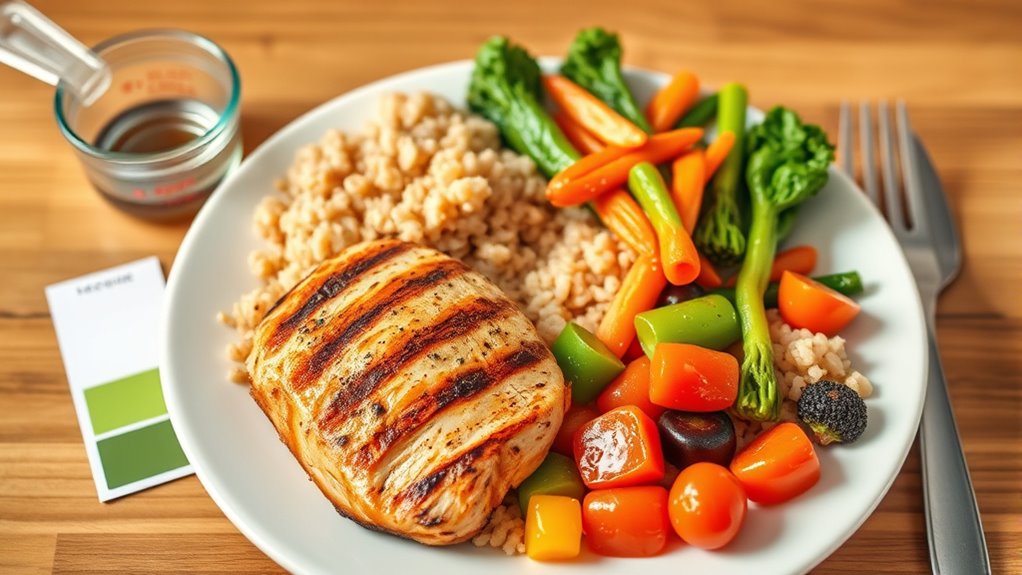
Have you ever wondered why portion sizes matter for your health? The way you serve your food directly impacts your energy levels, weight management, and overall well-being. Knowing how much to eat at each meal can be tricky, but understanding the basics of serving sizes makes it easier to stay on track. One key factor is meal timing — when you eat can influence how much you need to serve yourself. For example, eating smaller, more frequent meals helps prevent overeating because you’re less likely to feel ravenous and overindulge. Spacing out your meals keeps your metabolism active and supports proper digestion. Also, paying attention to your body’s hunger cues can guide you on when to eat and how much to serve, making your portion control more intuitive. Additionally, using tuning techniques like adjusting your eating habits can help you better manage your intake and optimize your health. Hydration tips are equally important in managing portion sizes. Sometimes, your body can mistake thirst for hunger, leading you to eat more than necessary. Drinking enough water throughout the day not only keeps you hydrated but also helps you recognize true hunger signals. Before meals, a glass of water can help you feel fuller, reducing the temptation to overeat. Proper hydration also supports digestion, ensuring that your body efficiently processes the nutrients from your meals. When you’re well-hydrated, you’re less likely to snack mindlessly or reach for larger portions simply because you’re thirsty. Incorporating hydration tips into your routine complements your efforts to control portion sizes, making it easier to stick to healthy servings. Understanding serving sizes is fundamental. For example, a typical serving of meat is about the size of your palm, while a cup of cooked vegetables is roughly the size of a tennis ball. Using visual cues helps you estimate portions without constantly measuring. It’s also helpful to use smaller plates and bowls, which naturally encourage smaller servings and prevent overeating. Combining these practical strategies with attention to meal timing and hydration tips creates a balanced approach to portion control. It’s not about deprivation; it’s about moderation and listening to your body. When you plan your meals with appropriate serving sizes, you support your health goals more effectively and enjoy your food without guilt. Over time, these habits become second nature, helping you maintain a healthier lifestyle with less effort and more satisfaction.
Frequently Asked Questions
How Can I Measure Portion Sizes When Dining Out?
When dining out, you can measure portion sizes using measuring utensils like a small cup or spoon for accurate servings. Additionally, refer to portion charts available online or on nutrition apps to estimate typical serving sizes. You might also ask your server for smaller portions or share dishes. These tips help you stay mindful of healthy portions without needing to bring your own tools.
Are There Specific Tools to Help Control Portion Sizes?
Yes, you can use measuring utensils and portion control plates to manage your servings. Measuring utensils help you accurately portion ingredients, ensuring you don’t overeat. Portion control plates are designed with sections that guide you in filling your plate with appropriate amounts of food. These tools are effective for maintaining healthy portions, making it easier to enjoy your meals while keeping your health goals on track.
Can Portion Control Aid in Weight Loss?
Yes, portion control can substantially aid in weight loss by helping you manage calorie intake and maintain proper meal timing. When you control your serving sizes, you’re less likely to overeat, making calorie counting easier and more accurate. This approach keeps your metabolism steady and prevents excess fat storage. By paying attention to portion sizes, you support your weight loss goals while enjoying balanced, satisfying meals that fuel your day.
How Do I Handle Larger Appetites Healthily?
It’s no coincidence that handling larger appetites begins with mindful eating; when you pay attention to your hunger cues, you manage cravings better. To do this, focus on slow, deliberate bites and savor each one. This approach helps you recognize true hunger versus emotional eating, supporting hunger management. By tuning into your body’s signals, you’ll find healthier ways to satisfy your appetite without overeating, leading to better overall health.
Do Portion Sizes Vary Across Different Cultures or Cuisines?
Yes, portion sizes vary across cultures and cuisines due to cultural differences and traditional practices. You might find that some cultures serve smaller portions to emphasize shared dishes, while others have larger servings for individual meals. These variations reflect cultural attitudes towards food, hospitality, and health. Understanding these differences helps you adapt your eating habits mindfully, balancing respect for traditions with your personal health goals.
Conclusion
Mastering portion control isn’t about restriction; it’s about balance. Just as a small seed holds the potential for a mighty tree, a modest serving can nourish your body and fuel your day. By choosing quality over quantity, you turn simple meals into powerful acts of self-care. Remember, it’s not about eating less, but eating wisely—where mindful choices transform your health from a fleeting goal into a lasting habit.