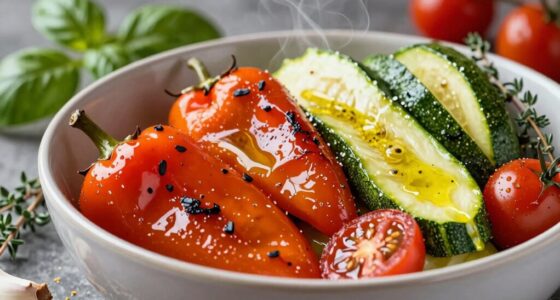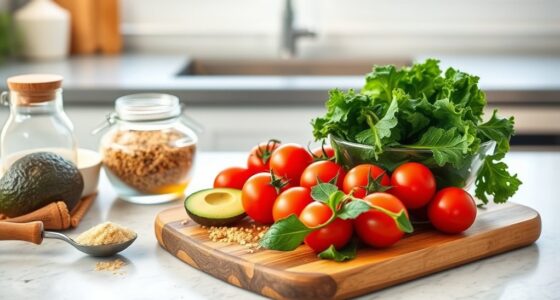
Cooking for one can be simple and healthy by planning meals ahead and using versatile ingredients like roasted vegetables, grilled chicken, or cooked grains. Portion your meals carefully with measuring tools to prevent waste, and prepare ingredients in advance for quick assembly. Store leftovers properly to reheat easily for future meals, reducing waste and extra effort. Keep exploring these strategies to enjoy satisfying, waste-free meals tailored for one.
Key Takeaways
- Plan and prepare single-serving recipes to prevent excess leftovers and reduce food waste.
- Use versatile ingredients like roasted vegetables and cooked grains to create multiple healthy meals.
- Portion ingredients accurately with measuring tools to control meal size and avoid overeating.
- Store leftovers properly in airtight containers for quick, healthy reheated meals later.
- Incorporate meal prep strategies to streamline cooking, minimize waste, and maintain a healthy eating routine.

Cooking for one can seem challenging at first, but with a few simple strategies, it becomes an enjoyable and efficient experience. One of the best ways to make it easier is by incorporating meal prep into your routine. Planning your meals ahead allows you to buy only what you need, reducing waste and saving you time during busy weekdays. When you prepare your ingredients in advance, you can portion out your meals into single-serving containers, making it convenient to grab and go. This approach not only minimizes leftovers but also encourages you to stick to healthy choices since you control the ingredients and portion sizes.
Portion control is key when cooking for one. Instead of cooking large batches and risking waste, focus on making just enough for a single meal. Use measuring cups or a kitchen scale to ensure you’re cooking appropriate portions. This helps prevent overeating and keeps your calorie intake in check, all while reducing food waste. When you plan your meals, consider recipes that naturally lend themselves to smaller portions, like salads, stir-fries, or sheet-pan dinners. These dishes are easy to scale down and often yield just the right amount for one person.
Another tip is to cook versatile ingredients that can be used across multiple meals. For example, roasted vegetables, grilled chicken, or cooked grains can be stored in the fridge and incorporated into different recipes throughout the week. This not only cuts down on prep time but also ensures you’re making the most of your ingredients. When you’re cooking for one, leftovers can be your friends—if you plan wisely. Store leftovers properly in airtight containers, and reheat them for quick lunches or dinners. This reduces waste and makes your eating habits more sustainable.
Using meal prep techniques also helps you control your portions. When you prepare your meals in advance, you can divide larger quantities into individual servings, ensuring each meal is appropriately sized. This way, you avoid the temptation to take more than you need, which often leads to waste. Additionally, mastering portion control helps you stay aligned with your health goals, whether that’s maintaining a certain weight or simply eating more mindfully. Understanding your developmental stages and how they influence habits can also help you create routines that support your healthy eating goals.
Frequently Asked Questions
How Can I Store Leftovers to Prevent Waste?
You can store leftovers efficiently by focusing on food preservation and container selection. Use airtight containers to keep food fresh longer and prevent spoilage. Label each container with the date to track freshness. Make certain containers are the right size to avoid excess air, which can cause spoilage. Store leftovers in the refrigerator or freezer promptly to maintain quality. Properly preserved leftovers reduce waste and make reheating more convenient.
What Are Quick Healthy Snacks for One Person?
Imagine grabbing a handful of almonds or a single-serve Greek yogurt; these are perfect single-serving snacks that keep your prep quick and waste minimal. Portable snack ideas like cut veggies with hummus or a hard-boiled egg fit easily into your bag, making healthy eating convenient. These quick, nutritious options help you stay energized without leftovers, turning snack time into a simple, waste-free routine.
How Do Portion Sizes Vary for Different Recipes?
Portion sizes vary depending on the recipe and your dietary needs. You should practice portion control by adjusting ingredient amounts through recipe scaling, ensuring each serving fits your goals. When cooking for one, halve or quarter recipes as needed, or use specific measuring tools to control portions accurately. This way, you minimize waste and enjoy healthy, appropriately-sized meals tailored to your preferences.
Are There Specific Kitchen Tools for Cooking Solo?
You should definitely consider mini utensil sets and single-serving cookware for cooking solo. These tools make portion control easier and minimize waste, helping you prepare just the right amount. Mini utensils are perfect for small tasks, while single-serving pots and pans save space and energy. With these tools, you’ll cook efficiently and enjoy healthy, perfectly portioned meals every time, all while keeping your kitchen organized and waste minimal.
How Can I Meal Prep Efficiently for One?
To meal prep efficiently for one, plan simple recipes that use versatile ingredients and focus on portion control strategies. Use meal prep tips like dividing meals into individual containers to avoid waste and guarantee freshness. Batch cook staples like grains and proteins, then assemble meals in small portions. This approach saves time, reduces waste, and helps you stay on track with healthy eating.
Conclusion
Cooking for one doesn’t mean sacrificing flavor or health. Imagine Sarah, who used to toss leftovers daily, now plans simple, nutritious meals like roasted veggies and grilled chicken. She saves time, reduces waste, and feels energized. By embracing these easy recipes, you’ll enjoy fresh, wholesome food without the hassle or waste. Start small, experiment, and watch how your relationship with cooking transforms—making it enjoyable and sustainable just for you.