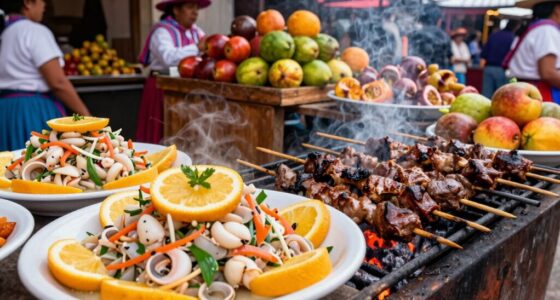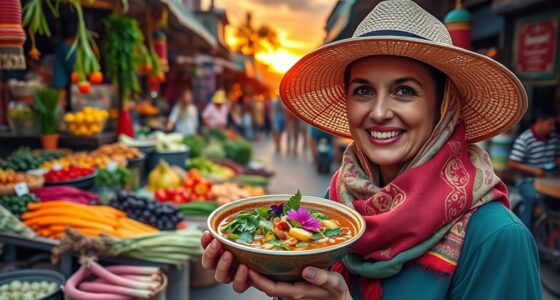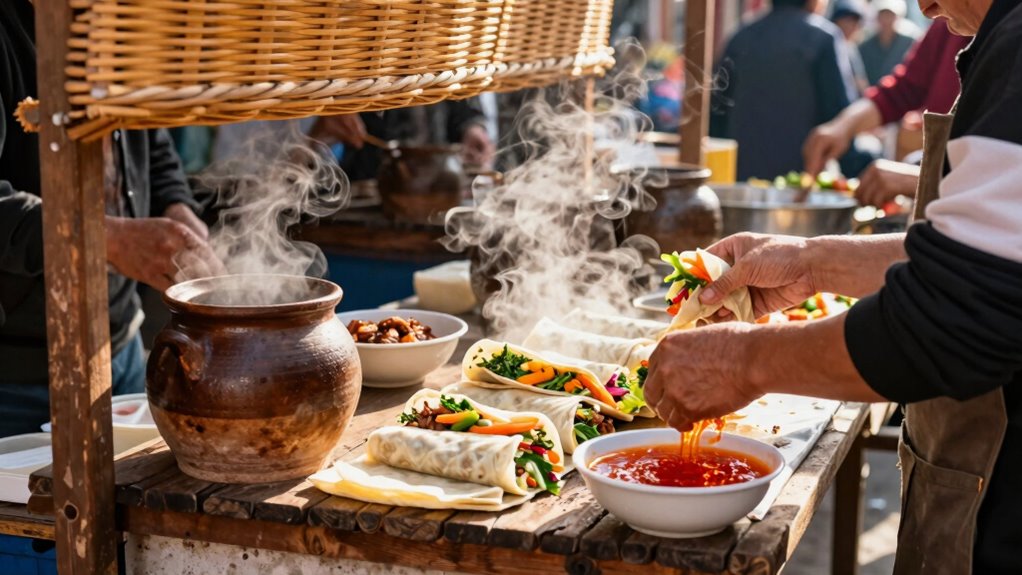

Participating in local food rituals, like sharing a traditional Ethiopian communal meal or engaging in Japan’s tea ceremonies, makes your travel experience more authentic. These customs immerse you in the culture, connect you with locals, and reveal deeper traditions. Embracing such practices shows respect and appreciation for the community’s way of life. If you want to discover more about how food rituals can transform your journeys, there’s much more to explore.
Key Takeaways
- Participating in local food customs transforms meals into immersive cultural experiences.
- Observing rituals like saying “Itadakimasu” or sharing dishes fosters genuine connections with locals.
- Engaging in traditional practices reveals the history and values behind regional cuisines.
- Embracing unique customs, such as eating with hands or communal dining, deepens cultural understanding.
- Respecting and practicing food rituals enhances authenticity and creates memorable travel moments.
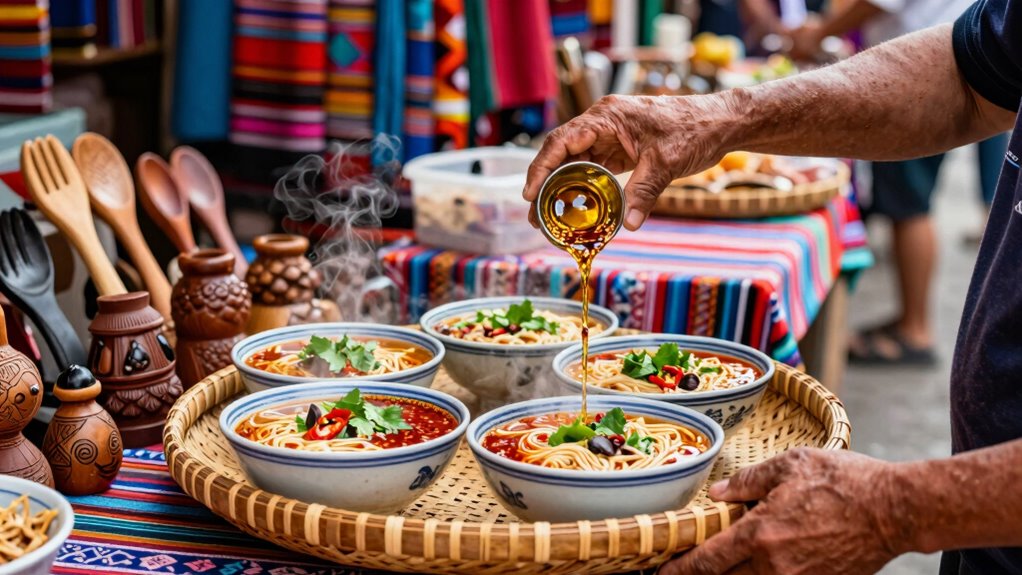
Have you ever noticed how travel often comes with its own set of food rituals? These rituals aren’t just about the food itself but about immersing yourself in the local way of life. When you’re abroad, observing or participating in cultural eating customs can transform a simple meal into an authentic experience. It’s in these moments that you truly connect with a place and its people. Traditional dining practices, whether they involve specific utensils, communal eating, or particular ways of serving, act as gateways to understanding a culture’s history and values. By engaging with these customs, you go beyond tasting new dishes—you embrace the story behind them.
Travel reveals unique food rituals that deepen your connection to local culture and traditions.
In many destinations, meals are more than just fuel; they’re social events woven into daily routines. For example, in Japan, you might learn the importance of saying “Itadakimasu” before eating, a gesture of gratitude that highlights respect for the ingredients and the effort behind the meal. In Italy, sharing a multi-course family dinner emphasizes community and tradition. Participating in these practices helps you feel more connected and respectful of local norms. It’s about stepping into their world, even if just for a moment, and recognizing that food is an essential part of cultural identity. Recognizing the cultural significance of food can deepen your appreciation and understanding of your travel destination.
Traditional dining practices often include unique customs that might seem unusual but are deeply meaningful. For instance, in Ethiopia, eating from a common plate with your hands symbolizes unity and friendship, fostering a sense of togetherness. In India, eating with your right hand and following specific etiquette reflects respect and mindfulness. When you follow these customs, you show appreciation for the culture’s values, making your experience more genuine. These rituals might seem small, but they carry significant cultural weight, and participating in them allows you to gain a deeper appreciation for the community’s way of life. Recognizing the importance of cultural identity in food rituals helps deepen your understanding of the society you’re visiting.
Traveling with an open mind to these food rituals enriches your journey. It’s not solely about the flavors but about understanding how food functions within society. Whether it’s sharing a meal family-style in Spain or participating in a traditional tea ceremony in China, these practices create memorable moments and foster meaningful connections. Embracing cultural eating customs and traditional dining practices makes your trip more authentic and respectful. It’s in these shared rituals that you find the true essence of a place—its history, its people, and its soul. Additionally, understanding the role of food in social cohesion can help you appreciate how communities build bonds around their culinary traditions.
traditional Japanese tea ceremony set
As an affiliate, we earn on qualifying purchases.
As an affiliate, we earn on qualifying purchases.
Frequently Asked Questions
How Do Travel Food Rituals Vary Across Different Cultures?
You’ll notice that travel food rituals vary greatly across cultures, reflecting unique cultural symbolism and culinary traditions. In some places, sharing a communal meal symbolizes unity, while in others, specific dishes mark religious or festive occasions. These rituals often involve specific customs, like particular utensils or timing, which deepen your connection to the local culture. Embracing these differences makes your travel experience more authentic and enriching.
Are There Specific Etiquette Tips for Participating in Local Food Rituals?
To participate respectfully in local food rituals, follow key food etiquette and participation tips. Observe how locals handle utensils, share dishes, or say specific words before eating. Don’t rush or interrupt, and show appreciation through gestures like thanking hosts or complimenting the food. If unsure, watch others first and ask politely if you’re uncertain about customs. Respecting these rituals makes your experience more authentic and appreciated.
Can Engaging in Food Rituals Enhance Cultural Understanding During Travel?
Diving into local food rituals can really open your eyes and deepen cultural bonding, making your trip more meaningful. These rituals create a sensory experience that reveals traditions and values in a way words can’t. By participating, you get a firsthand look at everyday life, fostering respect and understanding. It’s like hitting two birds with one stone—enriching your journey while connecting authentically with the community.
What Are Common Mistakes Travelers Make With Local Food Customs?
You often overlook local food etiquette and dining manners, which can lead to misunderstandings or disrespect. Avoid assuming your customs apply universally; instead, observe how locals eat, share, or use utensils. Don’t rush meals or neglect to follow specific practices. By paying attention to these subtle cues, you show respect and open yourself to genuine cultural connections, enriching your travel experience and fostering positive interactions with locals.
How Can Travelers Safely Participate in Traditional Food Rituals?
To safely participate in traditional food rituals, you should prioritize food safety by observing hygiene practices and asking about ingredients if you’re unsure. Be respectful by following local customs and asking for permission before joining. Listen to guides or locals for tips on proper etiquette, and avoid risky foods that may cause illness. By combining respect and awareness of food safety, you’ll enjoy authentic experiences without compromising your health.
As an affiliate, we earn on qualifying purchases.
Conclusion
Embracing local food rituals transforms your trip into a richer, more authentic experience, like adding vibrant colors to a black-and-white photo. When you immerse yourself in these traditions, you’re not just eating—you’re connecting with the culture on a deeper level. So, next time you travel, embrace those little rituals with open arms. They’ll turn your journey into a beautiful tapestry of flavors and memories, making your adventure feel as real and warm as a homemade meal.
hand-eating utensils for cultural cuisine
As an affiliate, we earn on qualifying purchases.
As an affiliate, we earn on qualifying purchases.
travel etiquette guide for food rituals
As an affiliate, we earn on qualifying purchases.
As an affiliate, we earn on qualifying purchases.