
To eat vegan abroad, explore local cuisines for traditional plant-based dishes like Indian dals or Mediterranean falafel. Learn key phrases in the local language to communicate your needs clearly and ask vendors or restaurant staff for vegan options. Visit local markets for fresh vegetables, grains, and spices to create your own meals. Embrace cultural customs and share dishes to find hidden vegan treasures. Keep these tips in mind to enjoy plant-based eating anywhere—and there’s even more to discover below.

Get kitchen staples and gadgets delivered free with Prime
- Fast, free delivery on millions of items
- Prime Video, Amazon Music and more included
- Member-only deals all year
Key Takeaways
- Learn local food customs and traditional dishes that are naturally vegan or easily adapted to plant-based ingredients.
- Use local language phrases to clearly communicate your vegan needs to vendors and restaurant staff.
- Explore markets for fresh produce, grains, and spices to prepare quick, customized vegan meals.
- Identify and ask about ingredients in dishes that may traditionally contain animal products to find suitable options.
- Embrace cultural dining practices and shareable dishes to discover vegan-friendly options and deepen cultural engagement.
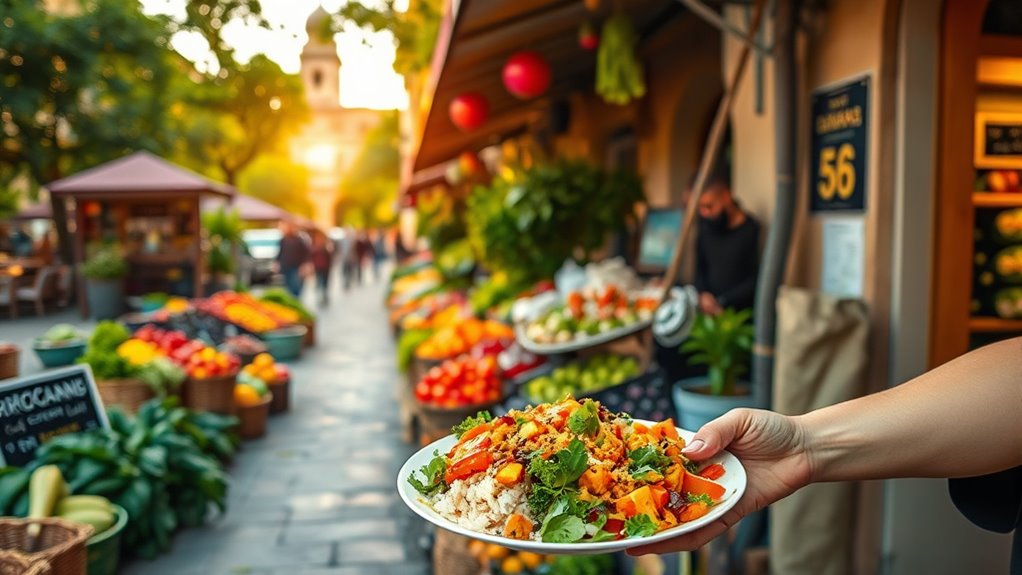
Traveling abroad as a vegan can be both exciting and challenging. As you explore new countries, you might worry about finding meals that align with your lifestyle, especially when traditional vegan dishes aren’t always prominent or well-known. But don’t let that discourage you. Instead, see it as an opportunity to immerse yourself in local culinary traditions and discover how cultural food customs can be adapted to fit your plant-based needs. Many countries have rich, traditional vegan dishes rooted in history and local ingredients. For example, in India, you’ll find a variety of flavorful curries, dals, and vegetable-based snacks that are naturally vegan or easily veganized. In Mediterranean regions, dishes like falafel, hummus, and vegetable-stuffed grape leaves are common and often prepared without animal products. Exploring these traditional vegan dishes allows you to appreciate the cultural food customs that have been passed down for generations.
Understanding the local food customs can give you clues on how to order or prepare vegan meals. In some places, dishes that appear to contain animal products might actually be made without them, especially if you know what to ask for. For instance, in East Asia, many soups and stir-fries are traditionally made with meat, but vegetarian or vegan versions are widely available, and local vendors are often happy to customize dishes for you. Learning key phrases in the local language about your dietary restrictions can help you communicate your needs clearly. Mentioning “vegan,” “plant-based,” or “no animal products” will often lead to better options. Additionally, supermarkets and local markets are treasure troves for finding ingredients that suit your diet. You can pick up fresh produce, nuts, grains, and spices to prepare quick meals or snacks on your own. Being aware of cultural food customs can help you better navigate menus and avoid misunderstandings.
Your approach to finding plant-based meals can also involve embracing the social aspect of food. Many cultural food customs emphasize sharing dishes, which makes it easier to find vegan options when you dine out. Restaurants and street vendors might not have extensive vegan menus, but they often serve simple vegetable dishes or side items that can fit your needs. Being flexible and open-minded is key—sometimes, traditional recipes can be adapted or recreated with plant-based ingredients, giving you a deeper connection to local cuisine. Remember, exploring traditional vegan dishes and understanding cultural food customs isn’t just about eating; it’s about immersing yourself in the local culture and discovering how different societies celebrate plant-based foods. With a bit of research, curiosity, and communication, you’ll find that eating vegan abroad is not only possible but also an enriching part of your travel experience.
Frequently Asked Questions
How Do I Ask for Vegan Options in Countries With Language Barriers?
When faced with language barriers, use visual communication to ask for vegan options. Carry a card with a simple picture of a plant-based meal or write “vegan” in the local language. Point to the card or use gestures to clearly convey your dietary needs. This approach helps avoid misunderstandings and guarantees you get the vegan meal you want, even in unfamiliar countries with language differences.
Are There Specific Apps Recommended for Finding Vegan Restaurants Abroad?
A picture is worth a thousand words, so start with trusted vegan travel apps like HappyCow or Vegman that help you locate vegan restaurants easily. Restaurant review platforms such as TripAdvisor or Yelp also offer valuable insights. These tools save you time and stress, guiding you to plant-based options wherever you go. Keep your phone handy, and you’ll discover delicious vegan meals abroad in no time.
How Can I Ensure Dishes Are Prepared Without Cross-Contamination?
To prevent cross-contamination, always ask about kitchen safety practices and ingredient labeling at restaurants. You can request separate utensils and surfaces for your vegan meal, and clarify if ingredients are stored separately. Communicate your dietary needs clearly, and look for places that prioritize transparency. Staying vigilant and asking questions helps guarantee your dishes are prepared safely and free from cross-contact, giving you peace of mind during your travels.
What Are Common Vegan Ingredients Used in International Cuisines?
Like a global treasure chest, international plant foods hold vegan staple ingredients that you’ll find everywhere. Think tofu, chickpeas, rice, and lentils, which serve as versatile bases. Vegetables like eggplant, spinach, and peppers add flavor and color. Coconut milk and spices such as turmeric or cumin are common in many cuisines. These ingredients help you craft delicious, authentic vegan dishes no matter where you travel, embracing the world’s culinary diversity.
How Do Cultural Differences Impact Vegan Dining Experiences?
Cultural differences greatly impact your vegan dining experience, as local food traditions shape what’s available and acceptable. You might encounter dietary taboos that restrict certain plant-based ingredients or dishes, making it tricky to find vegan options. To enjoy your trip, embrace local customs, learn about traditional dishes, and seek out restaurants that cater to vegan diets. This open-minded approach enriches your experience and helps you navigate cultural nuances with ease.
Conclusion
As you wander through bustling markets or quiet village streets, imagine the vibrant colors and enticing aromas of fresh, plant-based dishes waiting to be discovered. With an open mind and a bit of curiosity, you’ll find that vegan eating abroad isn’t just possible—it’s an adventure in every bite. Embrace the journey, taste new flavors, and let each meal be a memorable chapter in your global exploration of plant-based delights.
Fall Picks
fall essentials
As an affiliate, we earn on qualifying purchases.