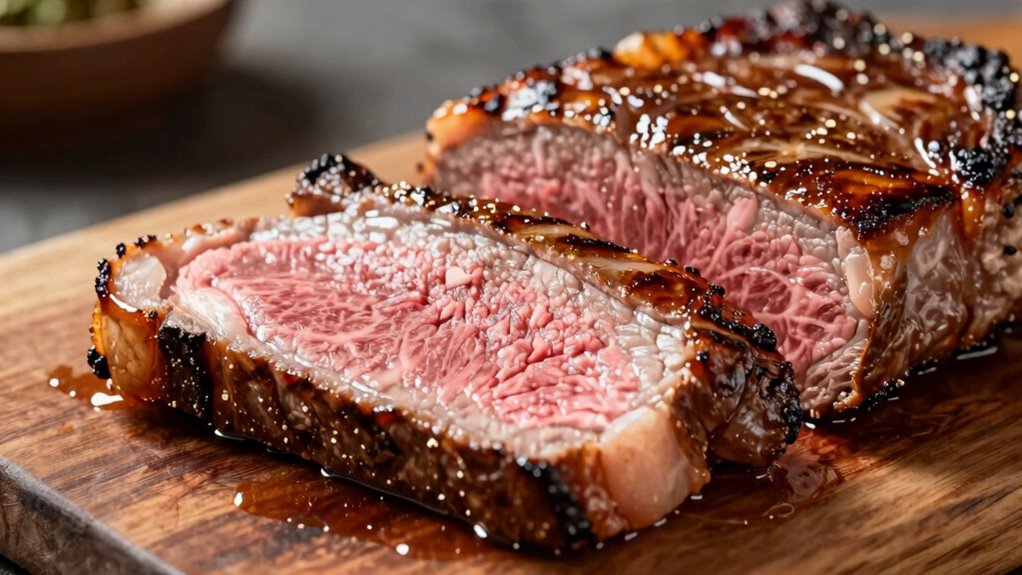

Resting meat is essential because it allows the juices to redistribute evenly, ensuring your meat stays juicy and tender. When you cut into it right away, those juices escape, leaving it dry and less flavorful. Resting also helps muscle fibers relax and finish cooking gently with residual heat, improving texture and preventing overcooking. Paying attention to this step can turn good meat into an exceptional bite. Keep exploring to discover how to make the most of this simple but powerful technique.
Listen free for 30 days with Audible
Thousands of audiobooks and originals — cancel anytime.
As an affiliate, we earn on qualifying purchases.
Key Takeaways
- Resting redistributes juices, preventing them from escaping and keeping the meat moist and flavorful.
- It allows muscle fibers to relax, resulting in more tender, less dry meat.
- Residual heat during resting causes carryover cooking for even doneness.
- Resting helps control final temperature, avoiding overcooking of thick cuts.
- Skipping resting results in loss of moisture, diminished tenderness, and less flavorful meat.
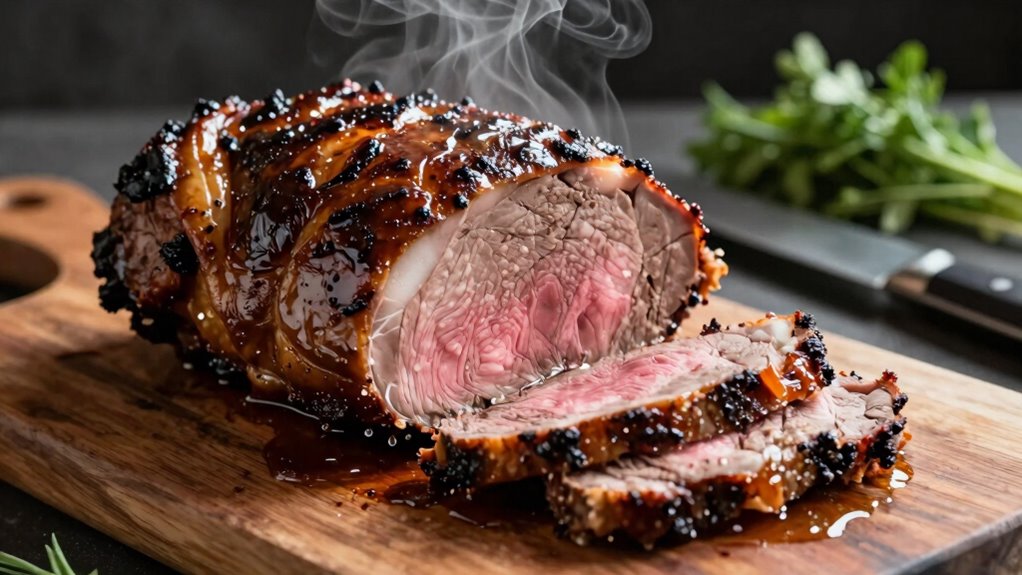
Have you ever wondered why your perfectly cooked steak seems juicier after resting? It’s not just a matter of patience; it’s rooted in the science of cooking and meat tenderness. Resting meat allows the juices, which are pushed toward the center during cooking, to redistribute evenly throughout the cut. If you cut into your steak immediately after taking it off the heat, those flavorful juices tend to escape, leaving the meat dry and less tender. When you give it a few minutes to rest—typically 5 to 10 minutes depending on the size—you’ll notice a significant improvement in both moisture and tenderness. This simple step is a vital part of the cooking science that transforms a good piece of meat into a great one.
Resting your steak redistributes juices, enhancing moisture and tenderness for a more flavorful, juicy bite.
Understanding meat tenderness is key here. When heat hits meat, muscle fibers contract, squeezing out moisture and making the meat appear firm. Resting prevents these fibers from tightening further or tearing apart, which can happen if you cut into it too soon. During resting, the muscle fibers relax, and the juices that migrated toward the center during cooking are allowed to flow back into the meat’s tissues. As a result, the meat becomes noticeably more tender and flavorful, giving you that perfect balance of moisture and texture. Meat tenderness is a crucial factor in the overall eating experience. If you skip this step, you’re fundamentally sacrificing some of the meat’s natural tenderness and succulence. Additionally, understanding the cooking science behind this process can help you better predict and control the final texture of your meat. Recognizing how heat disperses within the meat during resting can help you optimize the final results, especially as residual heat continues to evenly distribute and cook the meat through carryover cooking. In fact, knowing about residual heat can help you prevent overcooking and achieve more consistent results.
The science behind resting meat isn’t just about juice retention; it also affects how heat disperses within the meat. Residual heat continues to cook the meat slightly during resting, a process called carryover cooking. This helps the meat reach a more even internal temperature, avoiding overcooking on the outside while the inside finishes up. Plus, this gradual cooling period lets the muscle fibers relax, making each bite more tender and enjoyable. It’s a small window of patience that yields big results. Recognizing the importance of resting time can make a noticeable difference in your cooking outcomes, especially with thicker cuts of meat.
As an affiliate, we earn on qualifying purchases.
Frequently Asked Questions
How Long Should I Rest Different Types of Meat?
You should rest different meats for specific periods to maximize flavor and tenderness. For steaks, rest for about 5-10 minutes, allowing juices to redistribute. Roasts need 15-20 minutes, while larger meats like brisket or prime rib benefit from longer resting, around 20-30 minutes. Incorporate marinating techniques before cooking to enhance flavor, and consider meat aging processes—dry or wet aging—to improve texture and taste. Proper resting guarantees a juicy, flavorful result.
Does Resting Meat Affect Its Flavor?
Yes, resting meat considerably affects its flavor by enhancing it through flavor enhancement processes. When you let meat rest, the juices redistribute, preserving juiciness and improving overall taste. This resting phase allows the flavors to settle and intensify, making each bite more flavorful. Skipping this step can lead to drier, less flavorful meat, so taking the time to rest your meat truly elevates its taste and juiciness.
Can Resting Meat Improve Tenderness?
Resting meat acts like a gentle pause in a symphony, allowing flavors and juices to settle. Yes, it improves tenderness by promoting marbling enhancement and moisture retention. When you let meat rest, the muscle fibers relax, making each bite more tender and juicy. Skipping this step means losing out on the full flavor and texture potential. So, take a moment to rest your meat—your taste buds will thank you.
What Happens if I Don’t Rest the Meat?
If you don’t rest your meat, you risk losing marbling preservation and juiciness retention. The juices stay trapped during cooking, but without resting, they escape when you cut into it. This results in dry, less flavorful meat and diminished tenderness. Resting allows the juices to redistribute, maintaining moisture and flavor, so your meat stays juicy and tender, making every bite much more satisfying.
Is Resting Necessary for All Cooking Methods?
Imagine a juicy steak, resting under a tent of foil, juices shimmering like a mirror. Resting isn’t necessary for all cooking methods, but it’s essential for many, especially when understanding cooking science and meat temperature. It allows juices to redistribute, preventing dryness. Without resting, your meat’s flavor and tenderness suffer, making every bite less satisfying. So, whether grilling or roasting, resting enhances your meat’s perfect texture and taste.
As an affiliate, we earn on qualifying purchases.
Conclusion
Resting your meat isn’t just a step—it’s the secret to revealing its true soul. Like a symphony needs a moment of silence to resonate, your meat needs to rest so its juices can settle, enriching every bite with tenderness and flavor. Don’t rush this vital pause; it’s the heart of a perfect dish. Patience turns simple ingredients into a masterpiece, transforming your meal into a warm, lingering hug that leaves everyone craving more.
As an affiliate, we earn on qualifying purchases.
As an affiliate, we earn on qualifying purchases.
Labor Day sales Picks
labor day deals
As an affiliate, we earn on qualifying purchases.