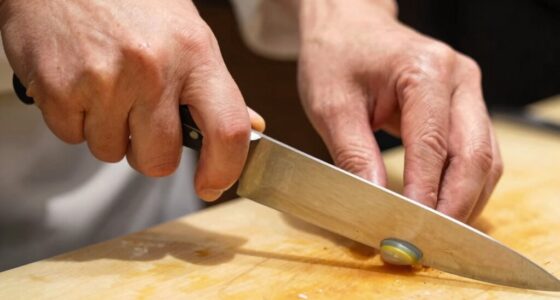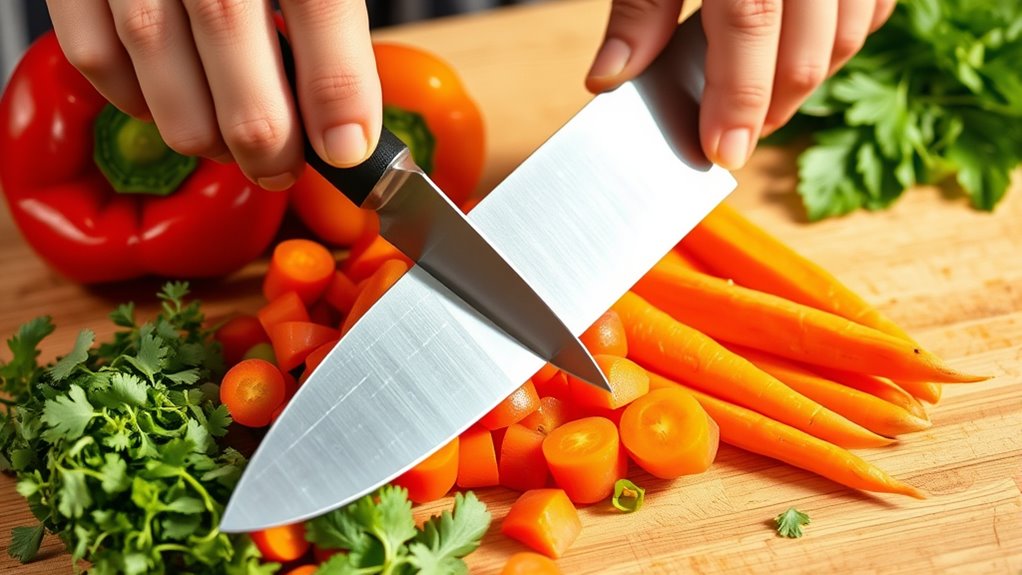

To master essential cutting techniques as a beginner, start by gripping your knife firmly with a pinch grip, ensuring control and safety. Keep your fingers curled inward on the food, using a “claw” grip to protect your fingertips. Practice a rocking motion with the tip of the blade on the cutting board for smooth cuts, and keep your knives sharp and well-maintained. Mastering these basics will boost your confidence and make your time in the kitchen safer and more efficient—keep going to discover more tips!
Listen free for 30 days with Audible
Thousands of audiobooks and originals — cancel anytime.
As an affiliate, we earn on qualifying purchases.
Key Takeaways
- Master the proper grip, such as the pinch grip, for better control and safety during cutting.
- Position your guiding hand with curled fingers (the claw grip) to protect fingertips.
- Use a rocking motion, keeping the knife tip on the cutting board for efficient slicing.
- Keep knives sharp and handle them carefully to prevent slips and accidents.
- Maintain a clean workspace and proper knife storage to ensure safety and optimal performance.

Have you ever struggled with chopping vegetables evenly or felt uneasy handling a sharp knife? If so, you’re not alone. Many beginners find knife skills intimidating at first, but with the right techniques, you can chop confidently and safely. The foundation of good knife skills starts with understanding knife safety and mastering the proper grip. When you prioritize knife safety, you reduce the risk of accidents and ensure a smoother experience in the kitchen. Always handle your knife with care, keep it sharp, and be mindful of where your fingers are at all times. A dull knife requires more force and can slip, increasing the chance of injury. Keep your cutting area clean, and never leave a knife unattended where it could fall or be grabbed improperly. Proper knife maintenance also plays a crucial role in ensuring safety and performance.
The proper grip is essential for control and safety. When holding your knife, grip the handle firmly with your dominant hand, but avoid squeezing too tightly, which can tire your hand quickly. Place your index finger and thumb on either side of the blade’s base—this is called the pinch grip—and wrap your remaining fingers around the handle. This grip gives you better control and precision, allowing you to maneuver the knife smoothly through ingredients. Practice this grip until it feels natural; it’s the key to maintaining stability and reducing fatigue during extended chopping sessions. When you use the proper grip, you’ll notice that your cuts become more consistent, and you’ll have greater confidence in your cutting abilities.
In addition to the grip, always pay attention to your cutting technique. Keep your fingers curled inward on your guiding hand, so your knuckles are the part making contact with the side of the food. This “claw” grip keeps your fingertips safe and helps you apply even pressure. As you cut, use a rocking motion, keeping the tip of the knife on the cutting board while raising and lowering the handle. This movement is more efficient and safer than chopping straight down, especially for beginners. Practice slow, deliberate motions until they become second nature. Remember, maintaining focus and controlling your movements are crucial to knife safety.
Top picks for "knife skill essential"
As an affiliate, we earn on qualifying purchases.
Frequently Asked Questions
What’s the Best Way to Sharpen My Knives Safely?
To sharpen your knives safely, start by choosing the right sharpening tool, like a sharpening stone or honing rod. Always maintain blade maintenance by regularly checking your knives for dullness. Follow safety tips such as keeping your fingers away from the blade edge and working on a stable surface. Use gentle, consistent strokes and avoid excessive pressure. Wearing cut-resistant gloves can add extra protection, ensuring safe and effective sharpening every time.
How Do I Choose the Right Knife for Different Cuts?
Choosing the right knife is like selecting a trusty steed for a journey. You’ll want to contemplate blade types suited for specific cuts—serrated for bread, paring for small tasks, chef’s for versatility. Handle ergonomics matter too; guarantee it’s comfortable and balanced in your hand. Think about what feels natural, just as a painter chooses brushes—your perfect knife makes every cut feel effortless and precise.
How Can I Prevent My Knives From Slipping?
To prevent your knives from slipping, focus on your knife grip—hold it firmly but comfortably, ensuring control. Always use a stable cutting board and secure it with a damp cloth underneath to prevent movement. Keep your fingers tucked in, using a claw grip to guide the knife safely. These steps enhance cutting board safety and give you better control, reducing the risk of slips and accidents during your prep.
What’s the Proper Way to Store My Knives?
You should store your knives properly to keep them sharp and safe. Use a knife block, magnetic strip, or individual sheath to prevent dulling and accidents. Make sure to regularly clean and maintain your cutting board, as a clean, smooth surface reduces the risk of slipping and damaging your knives. Proper knife storage and cutting board maintenance ensure safety, longevity, and peak performance for your knives.
How Often Should I Replace or Sharpen My Kitchen Knives?
You should sharpen your knives every 6 to 12 months, depending on use, and replace them when they become too dull or damaged. Proper knife maintenance, including regular sharpening, keeps them performing well. Remember, a good cutting board choice helps extend their life by preventing dulling. Don’t wait until cutting feels uneven—regular maintenance guarantees safety and efficiency, making your kitchen tasks smoother and more enjoyable.
Conclusion
Now that you’ve revealed the secrets of knife skills, you’re ready to chop, slice, and dice with confidence. Remember, every master was once a beginner, and with practice, your skills will sharpen just like your blades. Think of your knife as an extension of yourself—precision, control, and care make all the difference. So go ahead, embrace the art of cutting; after all, the kitchen is your canvas, and your knife is your brush.
Flea & tick season Picks
flea and tick prevention
As an affiliate, we earn on qualifying purchases.