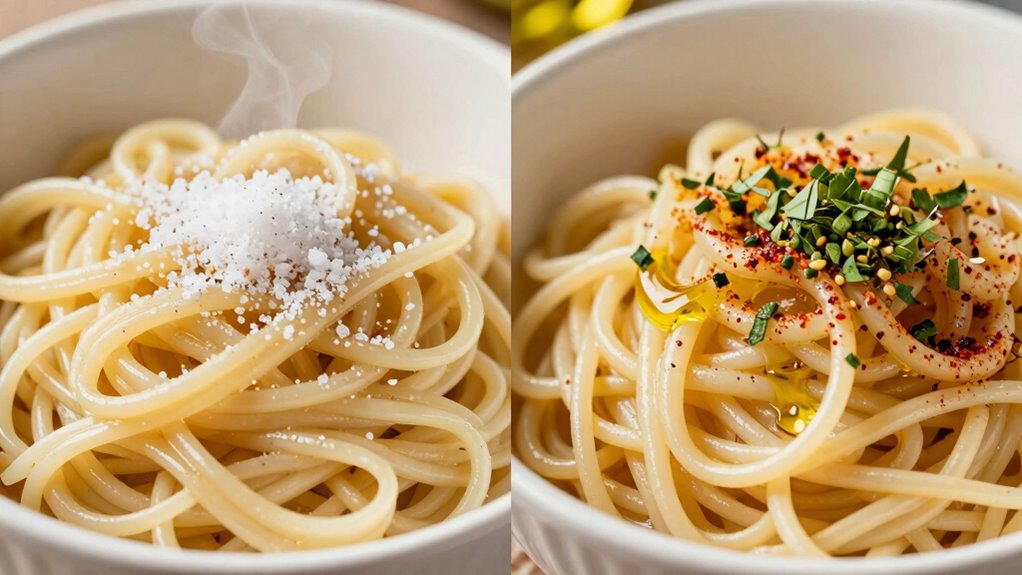

The timing of when you add salt considerably affects your dish’s flavor and texture. If you salt early, it allows ingredients to absorb seasoning deeply, enhancing natural flavors and softening textures. Late salt addition results in flatter taste, tougher ingredients, and the need for more seasoning overall. Proper timing helps balance flavors and creates a richer, more complex dish. Keep exploring to discover how mastering salt timing can transform your cooking results.

Get kitchen staples and gadgets delivered free with Prime
- Fast, free delivery on millions of items
- Prime Video, Amazon Music and more included
- Member-only deals all year
Key Takeaways
- Early salt allows deeper flavor penetration and enhances ingredient natural tastes more effectively.
- Proper timing affects texture, making vegetables softer and more tender through cell wall breakdown.
- Salt added early promotes better flavor integration, creating a more balanced and complex dish.
- Late salting can result in flatter flavors and may cause over-salting to compensate.
- Correct salt timing reduces the need for adjustments, ensuring consistent, high-quality results.

Timing when you add salt during cooking can markedly impact the final flavor and texture of your dishes. It’s a small detail that often gets overlooked, but it can make all the difference between a bland meal and a truly flavorful one. When you add salt early in the cooking process, it has more time to penetrate ingredients, leading to better flavor enhancement. For example, salting vegetables before boiling helps them absorb the seasoning, making each bite more satisfying. Conversely, adding salt too late can leave dishes tasting flat because the salt hasn’t had enough time to integrate fully. Understanding when to salt can elevate your cooking from good to exceptional. Proper salt timing allows ingredients to absorb seasoning more effectively, enhancing both flavor and texture. Salt’s role in flavor enhancement is well known, but timing determines just how effective it is. When you season early, it allows the salt to work its magic throughout the dish, drawing out natural flavors and balancing seasoning levels. This gradual infusion helps create a more complex and well-rounded taste profile. On the other hand, if you wait until the end, the salt’s impact is more surface-level, often resulting in a less nuanced flavor. You might find that your dish needs more salt at the end to compensate for this, which can sometimes lead to over-salting and an unbalanced plate. By seasoning at the right moments, you ensure each ingredient’s flavor is maximized, avoiding the need for excessive salt and preserving the dish’s integrity. Additionally, understanding seasoning techniques can help you achieve more consistent and delicious results. Texture improvement is another critical aspect influenced by salt timing. When added early, salt can help break down cell walls in vegetables or tenderize meats slightly, resulting in a more desirable mouthfeel. For instance, salting eggplant before cooking helps reduce bitterness and creates a softer, more pleasant texture. In soups or stews, early salting can improve the consistency by encouraging ingredients to break down and meld together more seamlessly. Conversely, adding salt too late can leave certain ingredients feeling tougher or less tender, since they haven’t had enough time to absorb the seasoning and soften. Proper salt timing ensures your dishes not only taste better but also feel better to eat.
As an affiliate, we earn on qualifying purchases.
Frequently Asked Questions
How Does Salt Timing Affect the Texture of Dishes?
Salt timing directly impacts the texture of your dishes by influencing flavor enhancement and moisture control. When you add salt early, it helps tenderize proteins and draw out moisture, resulting in a softer, juicier texture. Delaying salt permits the dish to retain more firmness and structure. Proper timing ensures your food has the desired bite and moisture level, making your dishes more enjoyable and well-balanced.
Can Salt Timing Influence the Nutritional Value of a Meal?
Think salt is just about flavor? Think again. Salt timing can influence the nutritional value of your meal by affecting nutrient retention, ensuring vitamins and minerals stay intact. Proper timing enhances flavor, but it also preserves nutrients, making your dish healthier. When you add salt at the right moment, you’re not just boosting taste—you’re maximizing the meal’s nutritional benefits, turning a simple dish into a nourishing masterpiece.
Does Salt Timing Vary Across Different Cuisines or Dishes?
Salt timing does vary across different cuisines and dishes, influenced by cultural variations and desired flavor enhancement. In some cultures, salt is added early to develop depth, while others add it later to preserve freshness or texture. You’ll notice these differences in practices, which shape the final taste. Understanding these variations helps you appreciate how salt timing uniquely impacts each cuisine’s flavor profile, making your cooking more authentic and balanced.
How Does Salt Timing Impact the Preservation of Certain Ingredients?
Salt timing acts like a guardian for ingredients, protecting and preserving their integrity. When you add salt early, it enhances flavor and promotes ingredient synergy, helping maintain freshness and prevent spoilage. Late addition, however, may weaken preservation effects, risking spoilage. Proper timing ensures your ingredients stay vibrant and safe, making your dish not only tastier but also longer-lasting. Timing salt correctly is essential for ideal flavor and ingredient preservation.
Are There Specific Techniques for Perfect Salt Timing in Complex Recipes?
You can achieve perfect salt timing in complex recipes by tasting and adjusting throughout cooking, ensuring ideal flavor enhancement. Incorporate techniques like salting at different stages to enhance ingredient interaction, such as seasoning early for depth or later for brightness. Use small, incremental salt additions rather than all at once, allowing you to monitor how flavors develop. This mindful approach helps balance flavors and elevate the overall dish.
As an affiliate, we earn on qualifying purchases.
Conclusion
Think about it—your timing with salt can make or break your dish. When you add salt too early, it can dull flavors or make the dish overly salty. Wait too long, and you miss out on enhancing those flavors altogether. So, next time you cook, ask yourself: are you really giving salt the attention it deserves? Small timing tweaks could transform your meal from good to unforgettable. Are you ready to master the art of salt timing?
As an affiliate, we earn on qualifying purchases.
As an affiliate, we earn on qualifying purchases.
Halloween Picks
halloween
As an affiliate, we earn on qualifying purchases.