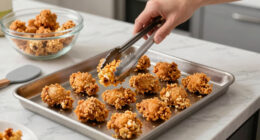
When you overcrowd your pan, it blocks heat circulation, trapping moisture and preventing the food from crisping up nicely. Crowding causes uneven cooking, steaming instead of frying, and makes the food greasy and limp. It also leads to increased oil absorption and sticking. To get that perfect crunch, you need enough space for hot air to circulate and moisture to escape. Keep these tips in mind, and you’ll discover how to master crisp, golden results every time.
Key Takeaways
- Crowding traps heat and moisture, preventing the food from crisping properly.
- Limited airflow causes uneven cooking, leading to sogginess and cold spots.
- Overcrowded pans increase oil absorption, making food greasy and less crispy.
- Insufficient space hinders moisture escape, resulting in limp, steamed textures.
- Proper spacing ensures heat circulation and prevents steaming, maintaining crispness.
If you’ve ever tried to cook crispy food in a crowded pan, you’ve probably noticed it never turns out quite right. The main issue is that the food doesn’t get that satisfying, even crunch you’re aiming for. Instead, it feels soggy or unevenly cooked. The culprit behind this is usually pan crowding, which messes with air circulation and oil absorption. When you pack too much into the pan, the air can’t circulate freely around each piece. Without proper airflow, heat gets trapped, causing some parts to steam rather than fry. This steaming prevents the surface from crisping up properly, leaving you with limp, greasy food instead of the crispy texture you want.
Crowding the pan traps heat and moisture, preventing your food from becoming crispy and evenly cooked.
Air circulation is vital because it allows heat to evenly distribute around the food. When the pan is overcrowded, the hot air gets blocked and diverted, creating cold spots. These cold spots lower the overall temperature, making it impossible for the surface of your food to reach the high heat needed to crisp. Instead of frying, your food starts to steam, and that moisture gets trapped, making the exterior soggy. You might notice that the pieces stick together or release excess moisture, further dampening the crunch. This is a direct result of limited air movement, which is why avoiding overcrowding is essential for crispness.
Oil absorption also plays a significant role here. When the pan is too crowded, the food absorbs more oil because it’s not frying evenly. Instead of forming a crisp, golden crust, the excess oil seeps into the food’s surface, making it greasy and heavy. The lack of space prevents the oil from bubbling and evaporating efficiently, which are key steps in achieving crispiness. Instead of a light, crunchy coating, you end up with soggy, oil-saturated bites. Proper spacing allows excess oil to drip away and evaporate quickly, leaving just enough to create that desirable crispy exterior. Additionally, understanding air circulation can help you optimize your cooking process for better results.
Maintaining proper pan space also helps prevent the food from steaming or sticking together, which further compromises texture and crispness. In essence, pan crowding disrupts the delicate balance needed for crispy cooking. It hampers air circulation, causing uneven heat distribution and steaming, while also leading to excessive oil absorption. To get that perfect crunch, you need to give your food space to breathe and fry. Cook in batches if necessary, and avoid overcrowding the pan. Doing so ensures heat can circulate, moisture escapes, and oil doesn’t get trapped—so every piece turns out crispy, golden, and delicious. Remember, proper technique is key to achieving that ideal texture. Developing an understanding of heat management can further improve your cooking results by ensuring consistent crispness.
non-stick frying pan for crispy food
As an affiliate, we earn on qualifying purchases.
As an affiliate, we earn on qualifying purchases.
Frequently Asked Questions
Can Using a Non-Stick Pan Prevent Crowding Effects?
Using a non-stick pan can help prevent crowding effects, but it’s not enough on its own. You need to select the right pan size to give ingredients space to cook evenly and avoid overcrowding. Proper ingredient arrangement also matters—spread everything out in a single layer to ensure crispiness. When you give ingredients room and don’t overcrowd the pan, you’ll achieve better browning and maintain that satisfying crunch.
Does the Type of Oil Influence Crispness Loss?
Yes, the type of oil influences crispness loss. When you use oils with higher smoke points, like canola or grapeseed, they maintain ideal oil temperature longer, helping you achieve better crispness. If oil temperature drops, your food absorbs more oil, leading to sogginess. Choosing the right oil and maintaining proper temperature minimizes oil absorption and keeps your food crispy, even when cooking in crowded pans.
How Does Pan Material Affect Crowding and Crispness?
The pan material greatly influences crowding and crispness because of its insulation and heat distribution qualities. If your pan insulates heat poorly, crowding causes uneven cooking, making food soggy instead of crispy. Conversely, a pan with good heat distribution ensures even cooking, even when crowded. So, choosing a pan with ideal insulation and heat conduction helps maintain crispness, preventing crowding from ruining your food’s texture.
Is There a Specific Cooking Technique to Avoid Crowding?
To avoid crowding, you should use a technique that involves proper ingredient layering and even seasoning distribution. First, don’t overcrowd the pan; give each piece enough space to breathe. Cook in batches if needed. Spread ingredients in a single layer and guarantee seasoning is evenly distributed before cooking. This allows heat to circulate, helping ingredients crisp up evenly without steaming or sogginess.
How Does Crowding Impact Cooking Time?
Overcrowding effects can increase your cooking time by up to 50%, because it hampers heat distribution. When you pack the pan too tightly, the heat can’t circulate evenly, causing slower cooking and uneven results. This means your food takes longer to cook through, and you risk sogginess instead of crispness. To avoid this, cook in smaller batches or give space between items for better heat transfer and faster, more consistent cooking.
air circulation pan for frying
As an affiliate, we earn on qualifying purchases.
As an affiliate, we earn on qualifying purchases.
Conclusion
When your pan is overcrowded, steam gets trapped, and moisture piles up, making your food soggy instead of crispy. Imagine trying to fry chicken in a packed pan—without space, the heat can’t circulate properly, and the result is limp, greasy meat. To keep that perfect crunch, give your ingredients room to breathe. Trust me, a little extra space makes all the difference in achieving that satisfying crisp every time you cook.
metal splatter screen for frying
As an affiliate, we earn on qualifying purchases.
As an affiliate, we earn on qualifying purchases.
heat resistant silicone spatula
As an affiliate, we earn on qualifying purchases.
As an affiliate, we earn on qualifying purchases.