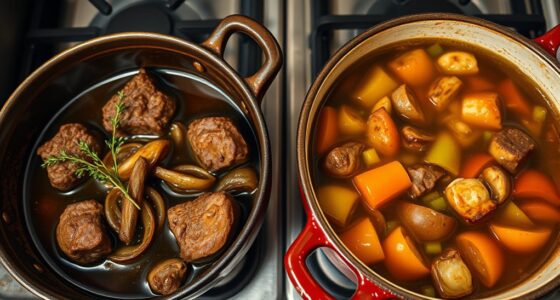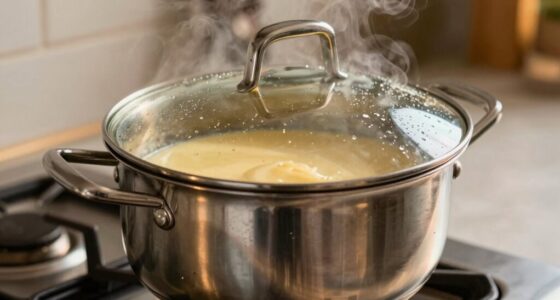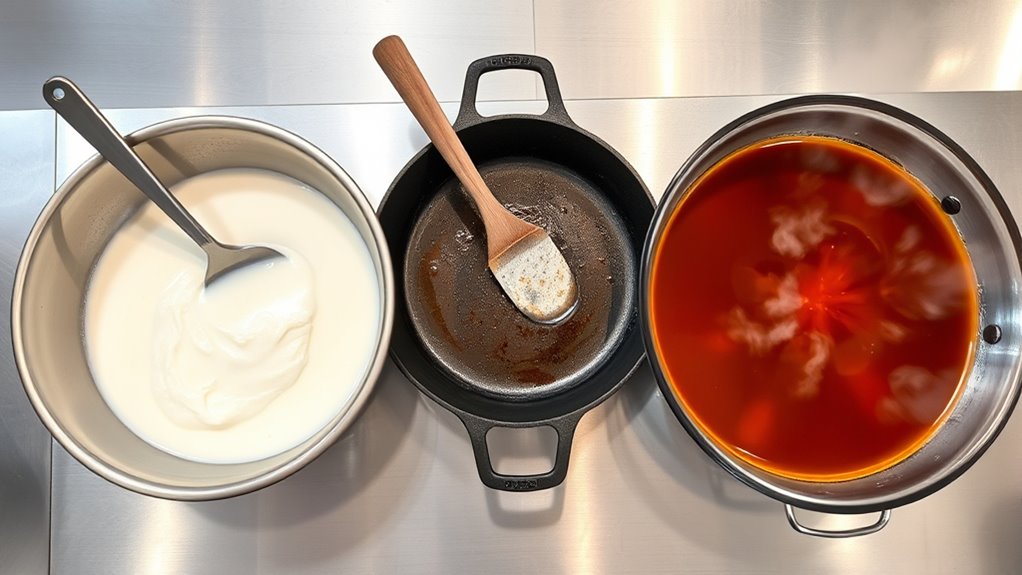

When thickening sauces or soups, choose the method that fits your needs: cornstarch slurries work quickly for a clear, smooth finish but may lack depth, while roux provides a stable, creamy texture with richer flavor but takes more time to prepare. Reductions naturally concentrate flavors and thicken through evaporation but require patience. Each technique offers unique results—continue exploring to find the perfect trick for your culinary creations.
Key Takeaways
- Cornstarch slurries offer quick, translucent thickening ideal for sauces and soups, but may lack depth of flavor.
- Roux provides a stable, opaque base with richer taste, suitable for hearty sauces like béchamel and gumbo.
- Reductions naturally thicken liquids through evaporation, concentrating flavors and creating a glossy, rich consistency.
- Each method varies in preparation time, flavor impact, and appearance, influencing their best application in recipes.
- Combining these techniques can achieve complex textures and enhanced flavor profiles in culinary and cosmetic uses.
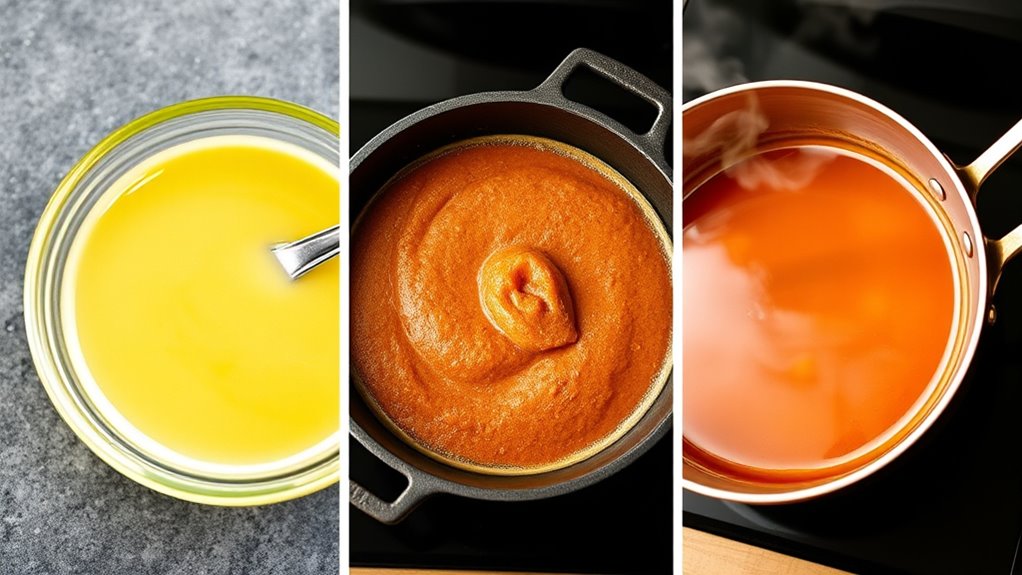
If you want to add more substance to your recipes or hair treatments, mastering thickening tricks can make a big difference. Knowing how to properly thicken sauces, soups, or even homemade masks ensures the final product has the right texture and consistency. One of the most versatile methods involves using gelatin gels and egg thickeners. Gelatin gels are excellent for creating smooth, firm textures in both culinary and cosmetic applications. When prepared correctly, they can help solidify desserts like panna cotta or stabilize hair masks that need a thicker consistency. Egg thickeners, on the other hand, are a classic in many kitchens. Whisked eggs or egg yolks are often used to thicken custards, sauces, and soups. They work by gently coagulating when heated, giving you a rich, velvety finish. To avoid curdling, you should temper eggs by slowly adding hot liquid, then return everything to gentle heat. Incorporating these techniques allows you to control the thickness without adding extra fats or starches.
When it comes to thickening with gelatin gels, you’ll find it straightforward to create a firm structure in your recipes. Dissolving gelatin in cold water first, then heating it until fully dissolved, gives you a clear, flexible gel that can be added to liquids for a smooth texture. This method is particularly useful for setting desserts or stabilizing hair treatments that require a thicker consistency. Egg thickeners are similarly adaptable; whisking eggs with a bit of liquid before cooking prevents lumps and ensures even thickening. This approach is especially effective for making custards or creamy sauces, where a gentle heat causes the eggs to coagulate and thicken the mixture naturally.
In contrast, cornstarch slurries and roux are more traditional thickening agents often used in cooking. Cornstarch slurries involve mixing cornstarch with cold water, then adding it to hot liquids. This creates a quick, translucent thickening effect. Roux, a mixture of flour and fat cooked together, develops a deeper flavor and provides a more stable, opaque thickening. Reductions involve simmering liquids to evaporate water, concentrating flavors and naturally thickening the mixture. While these methods are effective, they can alter the appearance and taste more profoundly than gelatin gels or egg thickeners. Choosing the right technique depends on your desired outcome, but mastering these tricks ensures you can adapt to any recipe or DIY hair treatment with confidence.
Frequently Asked Questions
Can I Substitute Cornstarch With Flour in All Recipes?
Yes, you can substitute flour for cornstarch in most recipes, but keep in mind it may affect the gluten alternatives and thickening consistency. Flour thickens more slowly and needs to be cooked longer to eliminate raw taste. Use about twice as much flour as cornstarch, and make a slurry with cold water before adding. Adjust cooking time to achieve the desired thickness without overdoing it.
What Is the Best Thickening Method for Delicate Seafood Dishes?
Oh, because seafood delicately whispering “please don’t ruin my texture” isn’t enough, you want the perfect thickening? Use a cornstarch slurry for gentle thickening—it’s quick, clear, and won’t overpower delicate seafood flavor or texture. Avoid heavy roux or reductions that might muddle the subtlety. With this method, you’ll preserve the seafood’s tender integrity while achieving a silky, refined sauce that complements without overwhelming.
How Do I Prevent Lumps When Making a Roux?
To prevent lumps when making a roux, you should focus on proper lump prevention and whisking techniques. Start by heating your fat and adding flour gradually, whisking constantly to combine smoothly. Keep the mixture moving to avoid clumps, especially at the beginning. If lumps form, you can strain the roux or whisk vigorously to break them up. Consistent, gentle whisking is key to achieving a silky, lump-free roux.
Are Reductions Suitable for Gluten-Free Cooking?
Reductions are generally not suitable for gluten-free cooking because they often rely on ingredients containing gluten, like wheat-based thickeners. Instead, you can use gluten-free alternatives like cornstarch or arrowroot to thicken sauces or in baking. These options provide effective thickening without gluten, helping you attain the desired consistency while maintaining a gluten-free diet. Always check labels to verify your ingredients are truly gluten-free.
How Long Should I Simmer to Make a Proper Reduction?
Think of simmering a reduction as guiding a gentle river to a calm lake. To achieve the perfect reduction consistency, you should simmer for about 15-30 minutes, depending on the volume and desired thickness. Keep an eye on it, stirring occasionally, until it reduces by half or reaches your preferred thickness. This process concentrates flavors and creates a rich, velvety sauce that elevates your dish effortlessly.
Conclusion
Now that you know the secrets behind cornstarch slurries, roux, and reductions, you hold the power to transform any dish with the perfect thickening trick. Each method offers a unique rhythm—quick, creamy, or deeply concentrated—allowing you to craft textures as rich as a symphony. So, experiment boldly, find what works best, and let your kitchen creations sing with the harmony of thickened perfection. After all, mastery is just a stirring away.