
If you want to thicken sauces without flour, try using cornstarch or arrowroot powder, which dissolve easily in cold water and create clear, glossy textures. Potato starch thickens quickly, especially in heartier sauces, while pureed vegetables add natural richness and flavor. Instant potato flakes are a fast alternative, providing quick thickening with a hearty texture. Keep in mind how each option works; exploring further will give you even more tips.
Key Takeaways
- Use cornstarch or arrowroot powder mixed with cold water to create a slurry, then add to simmering sauce for quick thickening.
- Incorporate pureed vegetables like carrots, potatoes, or pumpkin to naturally thicken and enrich flavors.
- Stir in instant potato flakes or powder directly into the sauce and cook briefly for rapid thickening.
- Add potato starch dissolved in cold water for a hearty, effective thickener suitable for stews and robust sauces.
- Rely on simmering the sauce longer or reducing it to concentrate flavors and naturally thicken without additional ingredients.
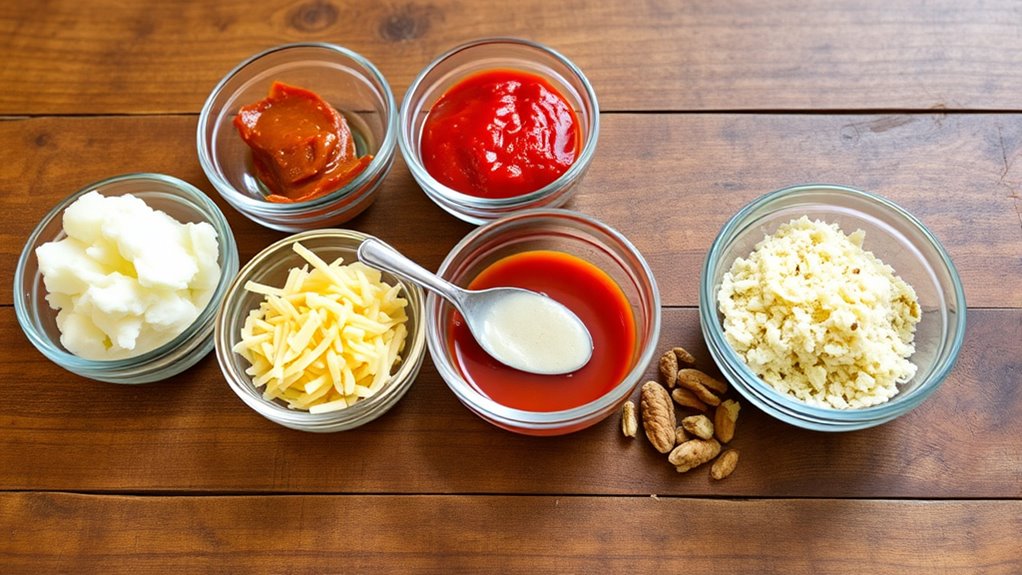
If you’re looking to thicken sauces without using flour, there are plenty of effective options to try. One popular choice is cornstarch, which acts as a great cornstarch substitution. It dissolves easily in cold water, creating a slurry that, when added to your simmering sauce, thickens it quickly without adding extra flavor. To use cornstarch effectively, mix a tablespoon with an equal amount of cold water until smooth, then stir it into your sauce. Bring the mixture to a gentle boil and simmer for a minute or two until it reaches your desired consistency. Cornstarch is known for its ability to produce a clear, glossy finish, making your sauces look appealing and feel velvety.
Beyond cornstarch, arrowroot alternatives are an excellent choice, especially if you want a more neutral, glossy finish. Arrowroot powder comes from a root vegetable and acts similarly to cornstarch but is often preferred for its ability to thicken at lower temperatures and produce a more transparent sauce. To use arrowroot, create a slurry by combining one tablespoon of arrowroot with one tablespoon of cold water, then stir it into your simmering sauce. Unlike flour, you don’t need to cook it for long; just a quick boil will activate its thickening power. Arrowroot is also a good option if you’re seeking gluten-free alternatives or want a slightly more delicate texture in your sauces. Using natural thickeners like pureed vegetables or potato starch can provide additional flavor and texture options, depending on your dish.
Arrowroot powder provides a clear, glossy finish and thickens at lower temperatures.
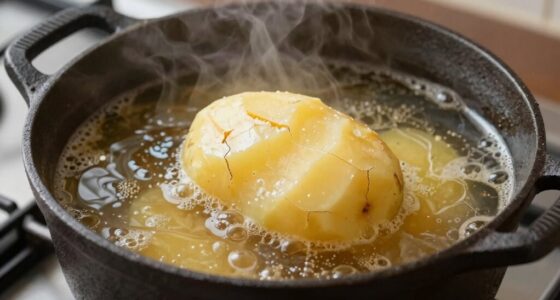
If you’re exploring other options, potato starch can serve as a reliable thickener. It’s particularly effective for heartier sauces and can be used similarly to cornstarch and arrowroot—by mixing a tablespoon with cold water and adding it to your sauce. Keep in mind that potato starch thickens quickly and can become slimy if overused, so add it gradually and watch the consistency carefully.
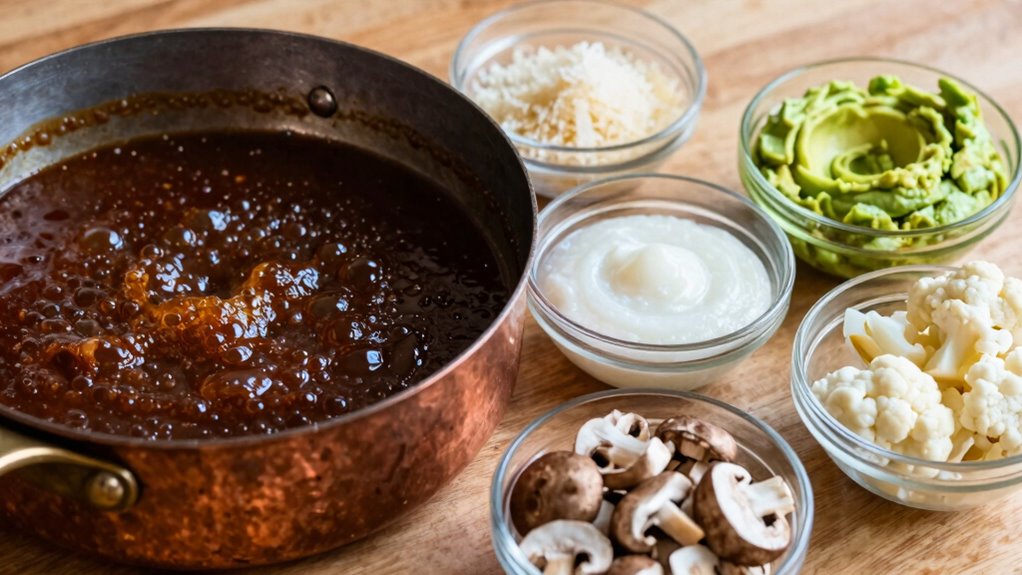
Another straightforward alternative is pureed vegetables. For example, blending cooked carrots, potatoes, or pumpkin can naturally thicken sauces while adding flavor and nutrients. Simply puree the vegetables until smooth and stir them into your sauce. This method works especially well for hearty stews and tomato-based sauces, providing a wholesome, thickened texture without the need for any powdered thickeners.
Finally, you can use instant potato flakes or instant mashed potato powder. Just stir a small amount into your sauce and cook for a few minutes until it thickens. This quick fix is ideal when you’re in a hurry and need to thicken your sauce without fuss. Each of these options offers a different texture and flavor profile, so you can choose based on your dish’s needs and your dietary preferences.
Frequently Asked Questions
Can I Use Cornstarch Instead of Flour to Thicken Sauces?
Yes, you can use cornstarch instead of flour to thicken sauces. Cornstarch creates a glossy, smooth texture and thickens quickly, making it a popular flour substitute. When choosing between cornstarch vs arrowroot, cornstarch is more common for sauces, but arrowroot offers a clearer finish. Just mix a small amount with cold water before adding to your sauce, and cook until thickened. It’s a simple, effective alternative to traditional flour.
Are There Vegan-Friendly Alternatives for Thickening Sauces?
Yes, you can use vegan-friendly options like plant-based starches such as arrowroot or tapioca to thicken your sauces. Vegan gelatin, made from plant extracts, can also help add body. Simply dissolve these starches in cold water before adding to hot sauces, stirring constantly until thickened. These alternatives are effective, plant-based, and fit perfectly into a vegan diet, ensuring your sauces remain rich and silky without animal products.
How Do I Prevent Lumps When Using Alternative Thickeners?
To prevent lumps when using alternative thickeners, you should always create a slurry by mixing your thickener with a small amount of cold liquid first. Whisk it well until smooth, then gradually add it to your sauce while stirring constantly. This technique helps achieve a smooth texture and even consistency, ensuring your sauce thickens evenly without lumps. Patience and continuous stirring are key for perfect results.
Can I Thicken Sauces Without Changing Their Flavor?
Think of your sauce as a delicate song—you want to enhance its harmony without changing the tune. Yes, you can thicken sauces without altering flavor by using gentle, neutral thickeners like cornstarch or arrowroot. These options help with consistency adjustment while preserving flavor. Just be sure to add them gradually and cook just enough to activate their thickening power, ensuring your sauce’s taste stays true to its original melody.
What Are the Best Natural Thickeners for Spicy Sauces?
You can thicken spicy sauces naturally with herbs like basil or oregano, which add body and flavor. Fruit purees, such as mango or tomato, also work well to thicken and enhance the sauce’s taste. Simply stir in small amounts until you reach your desired consistency. These natural thickeners keep your sauce vibrant and flavorful, without altering the spice or adding unwanted ingredients.
Conclusion
Now that you know these five easy alternatives, thickening your sauces without flour becomes a breeze. Think of each method as a secret weapon in your culinary arsenal—ready to rescue a thin, runny sauce and turn it into a luscious masterpiece. So next time your sauce needs a boost, remember: with a little ingenuity, you can transform it from watery to wonderful. After all, in the kitchen, a little creativity is the key to magic.