To smoke foods at home, choose the right wood chips like fruit woods for sweetness or hickory for bold flavors, and avoid soaking them. Maintain a steady temperature between 225°F and 275°F using a smoker or indoor setup, keeping a water pan for moisture and a consistent smoke supply. With proper techniques, you’ll develop a rich smoky aroma and even a visual smoke ring—discover more tips that can elevate your smoking skills as you continue.
Key Takeaways
- Choose appropriate wood chips (fruit woods, hickory, mesquite) based on desired flavor; avoid soaking to maintain smoky intensity.
- Maintain steady low temperatures (225°F–275°F) using water pans and consistent heat sources for optimal smoke ring and flavor development.
- Use traditional or indoor smoking appliances designed to control temperature, airflow, and moisture for effective home smoking.
- Keep a continuous supply of dry wood chips to produce consistent smoke and ensure even flavor absorption.
- Patience, consistent technique, and proper environment management are essential for achieving tender, flavorful smoked foods at home.
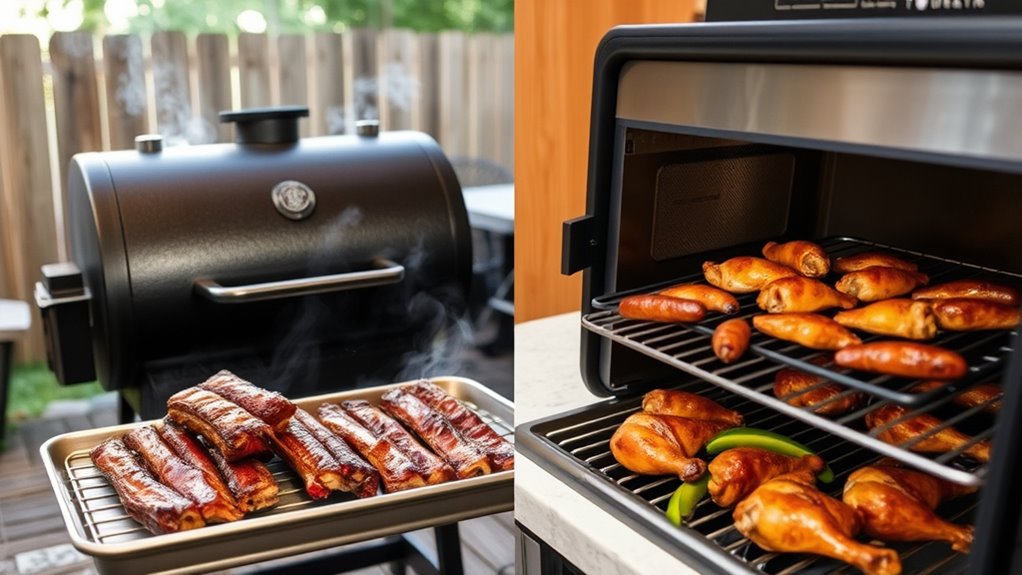
Have you ever wondered how to add rich, smoky flavor to your home-cooked meals? Achieving that authentic barbecue taste starts with understanding how to select the right wood chips and how smoke ring formation works. When you’re choosing wood chips, you want to consider the flavor profile you’re after. Fruit woods like apple and cherry give a sweet, mild smoke, perfect for poultry and fish. Hickory offers a bold, bacon-like aroma, making it ideal for pork and ribs. Mesquite provides a strong, earthy smoke and is great for quick cooks or when you want a pronounced smoky flavor. Avoid soaking your wood chips because wet wood produces more steam than smoke, which can dilute the smoky intensity you’re aiming for. Instead, make sure your chips are dry and manageable, and keep a steady supply of fresh chips to maintain consistent smoke.
Once you’ve selected your wood, it’s time to focus on smoke ring formation. This pinkish layer, just beneath the surface of the meat, is a sign that your meat has absorbed a good amount of smoke, and it’s often associated with authentic barbecue. To promote a proper smoke ring, you need to keep the temperature low and steady during smoking—around 225°F to 275°F. This slow cooking allows the nitric oxide in the smoke to react with the myoglobin in the meat, creating that beautiful pink ring. Using a water pan in your smoker can help regulate temperature and keep the environment moist, which also assists in smoke ring development. It’s important to note that the smoke ring isn’t just about aesthetics; it’s an indicator that your meat has absorbed smoky flavors deeply. Additionally, implementing audit processes can help ensure your smoking techniques are consistent and meet your standards.
Your choice of wood chips and understanding of smoke ring formation are vital steps in perfecting your smoked dishes. Consistent temperature control and patience allow the smoke to penetrate the meat thoroughly, resulting in tender, flavorful results. Whether you’re using a traditional BBQ smoker or an indoor smoking appliance, the principles remain the same. By selecting the right wood for your flavor profile and managing your smoking environment carefully, you’re setting yourself up for success. The smoky aroma will fill your kitchen or backyard, and the visual cue of a well-formed smoke ring will remind you that your efforts are paying off. With practice, you’ll master these techniques, and your home-cooked smoked dishes will become the envy of family and friends alike.
Frequently Asked Questions
What Types of Wood Are Best for Smoking Different Meats?
You should choose wood pairing based on the meat you’re smoking to enhance flavor infusion. For beef, opt for hickory or oak for a robust, smoky taste. For poultry, fruit woods like apple or cherry add a sweet, subtle flavor. Pork benefits from maple or pecan, which provide a mild, sweet aroma. Using the right wood guarantees your meats have complementary flavors while creating a memorable smoky experience.
How Do I Prevent My Smoked Food From Drying Out?
To prevent your smoked food from drying out, focus on moisture retention by regularly spritzing or mopping the meat during smoking. Use brining techniques beforehand to boost moisture content and enhance flavor. Also, keep the smoker’s temperature steady and avoid overcooking. Wrapping the meat in foil during the final stages can trap moisture, ensuring your smoked dishes stay juicy and tender every time.
Can I Smoke Foods Without a Dedicated Smoker?
Ever wondered if you can smoke foods without a dedicated smoker? Absolutely! You can use alternative smoking methods like stovetop smokers, foil packet techniques, or a cold smoker setup. Indoor smoking tips include using a smoker box on your grill or creating a makeshift smoker with a pan of wood chips. These options let you enjoy smoky flavor without investing in a full smoker, making home smoking more accessible.
What Safety Precautions Should I Take While Smoking Indoors?
To stay safe while smoking indoors, guarantee proper ventilation safety by opening windows or using exhaust fans to prevent smoke buildup. Keep a fire extinguisher nearby, and never leave the smoker unattended to avoid fire prevention issues. Use a suitable indoor smoking device designed for safety, and keep flammable materials away. Regularly monitor the process, and follow manufacturer instructions to minimize risks and enjoy your smoked foods safely.
How Long Can Smoked Foods Be Stored Safely?
Did you know that properly stored smoked foods can last up to 4-6 days in the fridge? You should consume them within this window to avoid spoilage risks. Store smoked meats in airtight containers or vacuum-sealed bags, and keep the fridge at 40°F (4°C) or below. If you want to extend storage longevity, consider freezing, which can keep smoked foods safe for 2-3 months.
Conclusion
So, start smoking, savor the success, and surprise your senses with smoky, succulent meals. With simple skills and steady spirit, you’ll master methods, make memories, and marvel at your mastery. Whether you’re using a basic BBQ smoker or indoor techniques, remember that patience and practice produce perfect, flavorful feasts. Embrace the smoky journey, spice up your skills, and savor the satisfying, smoky sensations that make home-cooked foods truly special.