Choosing between sautéing, searing, or simmering depends on your ingredient and desired result. Use sautéing for quick cooking of vegetables and seafood, searing to develop a flavorful crust on meats, and simmering for slow, gentle flavors in soups and stews. Matching your technique to your ingredients guarantees better flavor and texture. To master each method and elevate your cooking skills further, keep exploring how to select the right technique for every dish.
Key Takeaways
- Match ingredients to techniques: use sauté for quick vegetables, sear for meats, simmer for stews and tougher cuts.
- Consider desired flavor and texture: searing develops crust, sautéing preserves freshness, simmering melds flavors over time.
- Use proper equipment and heat levels: high heat for searing and sautéing; low to medium for simmering.
- Think about moisture content: dry ingredients are best for searing; moist ingredients suit sautéing; liquids are key for simmering.
- Assess cooking time and complexity: quick sauté for fast dishes; searing for flavor layering; simmering for long, slow flavor development.
Selecting the right cooking technique can make all the difference in achieving a delicious and satisfying meal. When you choose to sauté, sear, or simmer, you’re not just altering flavors but also influencing texture and overall dish quality. Each method has its unique purpose, and understanding how to match the right technique with your ingredients is key to culinary success. Equally important is prioritizing kitchen safety, especially when handling hot surfaces or sharp tools. Proper knife skills and awareness of your surroundings help prevent accidents, ensuring that your cooking experience stays enjoyable and safe.
Choosing the right cooking technique and prioritizing safety ensures flavorful, enjoyable, and accident-free meals.
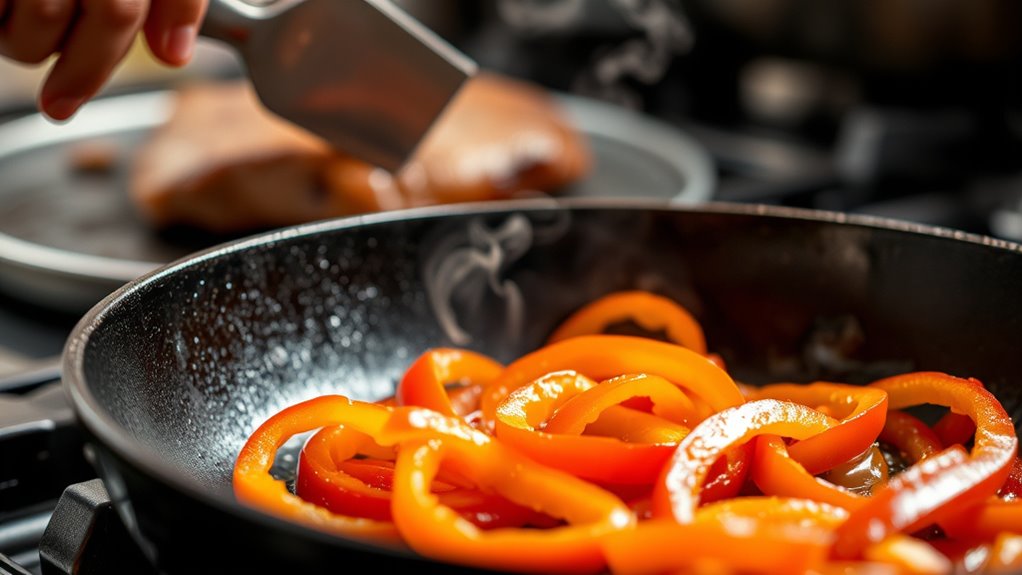
Sautéing is a quick, high-heat technique ideal for cooking vegetables, seafood, or thin cuts of meat. It requires a hot pan and a small amount of oil, which helps ingredients cook evenly while maintaining their natural flavors. When sautéing, think about ingredient pairing; for example, pairing garlic and cherry tomatoes in a skillet can create a vibrant, flavorful base. It’s important to keep your ingredients moving in the pan to prevent burning and ensure even cooking. Always use oven mitts or pot holders when handling hot pans, and make sure your cooking area is free of clutter to avoid accidents. Using the right utensils, like a wooden spoon or spatula, helps you control the ingredients better and keeps your cookware in good shape, promoting kitchen safety. Additionally, choosing a suitable projector type can enhance your cooking videos or tutorials, making your demonstrations more engaging.
Searing involves cooking food at a very high temperature to develop a flavorful crust, often used for steaks or chops. It locks in juices and creates a rich, caramelized exterior. To sear effectively, you need a hot pan and dry, seasoned ingredients—moisture can interfere with browning. When selecting ingredients for searing, consider their thickness and moisture content; thicker cuts benefit from searing before finishing with other cooking methods. Always be cautious around splattering oil, which can cause burns. Wearing an apron or using a splatter screen can shield you from hot splashes, enhancing safety in your kitchen. Proper ingredient pairing also matters here; pairing seared meats with complementary sauces or sides can elevate your dish. Furthermore, understanding the role of high-quality protein sources in your cooking can significantly improve your dishes’ flavor and nutritional value. Incorporating proper heat control is essential to prevent overcooking and achieve the perfect sear.
Simmering is a gentle, slow cooking process perfect for soups, stews, or braised dishes. It allows flavors to meld over time, producing tender, flavorful results. When simmering, choose ingredients that benefit from long cooking, such as tough cuts of meat or dried beans. Maintaining a steady, gentle bubble prevents overcooking or burning, so keep an eye on your heat level. During simmering, ingredient pairing plays a role—adding herbs, spices, or vegetables at different stages helps develop depth. Properly managing your ingredients and respecting kitchen safety protocols ensures a smooth, enjoyable cooking process. Paying attention to natural ingredients can further enhance the health benefits of your dishes and support overall wellness. To optimize your simmering techniques, understanding the science of heat transfer can be incredibly beneficial in achieving consistent results.
In all cases, selecting the appropriate technique based on your ingredients and dish goals ensures peak flavor and texture. Paying attention to ingredient pairing enhances your final result, while prioritizing kitchen safety keeps you protected. With the right approach, cooking becomes not just about creating meals but also about enjoying a safe, satisfying experience.
Frequently Asked Questions
Can I Combine Sautéing and Searing in One Recipe?
Yes, you can combine sautéing and searing in one recipe to enhance flavor and texture. This cooking method combination allows you to quickly develop a flavorful crust with searing, then finish cooking through sautéing for added tenderness. It boosts recipe versatility, giving you more control over the final dish. Just guarantee you manage heat levels carefully to avoid burning or undercooking, and you’ll get a delicious, well-balanced result.
What Are the Best Oils for Each Cooking Method?
You’re in luck—choosing the right oil is key! For sautéing, opt for olive oil, which offers health benefits but has a lower smoke point, so don’t crank the heat too high. For searing, go with coconut oil, thanks to its high smoke point, preventing burning. Knowing these oils’ benefits helps you avoid smoke and flavor mishaps—stick to the right oil, and your cooking will shine!
How Do I Tell When Food Is Perfectly Simmered?
You’ll know your food is perfectly simmered by looking for gentle, steady bubbles just breaking the surface. Visual cues include small, consistent bubbles rising slowly and little to no vigorous boiling. Use temperature indicators like a thermometer to aim for around 185°F to 205°F. Keep the heat low enough so the liquid stays barely bubbling, ensuring even cooking without overdoing it.
Are There Health Differences Between These Cooking Techniques?
You’ll find minimal nutritional impact differences among sautéing, searing, and simmering since all involve cooking food with heat. However, sautéing often uses more oil, adding extra calories, while simmering typically retains more nutrients and keeps calorie counts lower. Searing quickly locks in flavors without significant nutrient loss. Overall, your choice affects calorie differences and nutrient retention, so consider your health goals and ingredient preparation when selecting a technique.
How Do I Adjust Cooking Times for Different Ingredients?
To modify cooking times for different ingredients, consider their moisture content and thickness. For ingredients with high moisture, like vegetables, reduce cooking time to prevent over-softening. Thicker cuts, such as chicken breasts, need longer cooking or thickness adjustments, like pounding or slicing thinner. Always monitor ingredients closely, use a timer, and adjust based on texture and doneness to guarantee perfect results without overcooking or undercooking.
Conclusion
Now that you know the differences between sautéing, searing, and simmering, you’re ready to master your kitchen like a skilled painter with a palette of flavors. Think of these techniques as your culinary toolkit—each one adding a unique stroke to your masterpiece. So, trust your instincts, choose the right method for your dish, and let your cooking unfold like a symphony where every note hits just right. Happy cooking!