
Resting meat is a vital step that many home cooks skip, but it makes a big difference in juicy, tender results. When you let your meat rest for at least 5-10 minutes, juices redistribute evenly, preventing them from spilling out when you slice. It also allows the meat to finish cooking and relax, improving texture. If you’d like to master this simple technique and elevate your dishes, there’s more to discover below.
Key Takeaways
- Resting redistributes juices, ensuring meat stays moist and flavorful when sliced.
- Allow 5-10 minutes for small cuts and longer for large roasts to finish cooking evenly.
- Proper resting relaxes muscle fibers, making slicing easier and preventing juice loss.
- Cutting too early causes juices to spill out, resulting in dry, less tender meat.
- Resting improves overall texture, tenderness, and enhances the final taste of your dish.
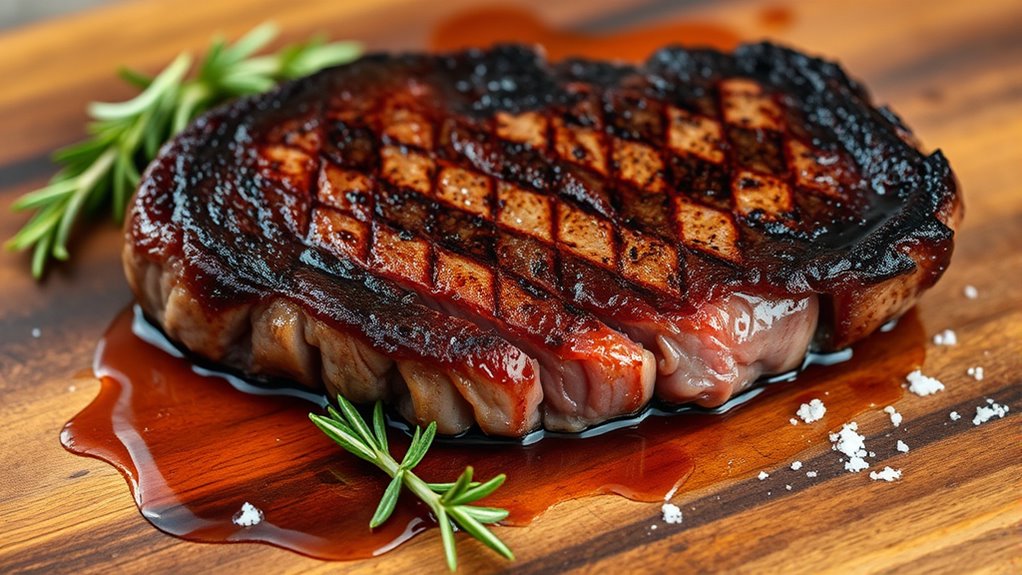
Resting meat is a crucial step in the cooking process that many home chefs overlook, yet it greatly impacts the final flavor and texture of your dish. When you pull a perfectly cooked steak or roast from the heat, it’s tempting to dig right in, but taking a few minutes to rest allows the juices to redistribute throughout the meat. This simple pause prevents the juices from spilling out when you slice, ensuring each cut stays moist and flavorful. Proper resting also helps the meat finish cooking evenly, especially if it’s been cooked to a specific temperature.
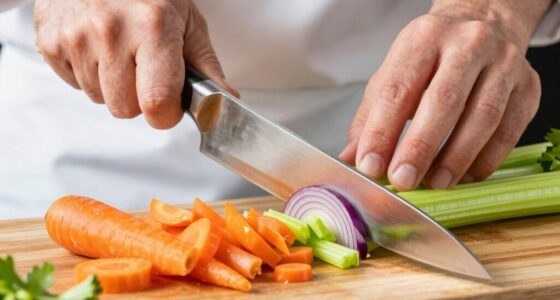
One common mistake is rushing to carve the meat immediately after cooking. Instead, hold off for at least five to ten minutes for smaller cuts, and longer for larger roasts. During this time, the residual heat continues to work, and the muscle fibers relax, making slicing easier. When you do carve, your slicing techniques can make a significant difference. Use a sharp knife and cut against the grain to maximize tenderness. Thin, even slices not only improve mouthfeel but also help the meat retain its juices better. Slicing incorrectly or too quickly can cause the juices to escape, leaving your meat dry and less flavorful.
A key factor in maintaining the quality of your meat is proper meat storage prior to cooking. Always store raw meat in the coldest part of your refrigerator, ideally at or below 40°F, to prevent bacterial growth. Keep it wrapped tightly or in an airtight container to avoid cross-contamination and prevent it from drying out. When you’re ready to cook, let the meat come to room temperature for even cooking, but don’t leave it out too long to avoid spoilage. After cooking, store leftovers promptly in airtight containers and refrigerate within two hours. Proper storage ensures that the meat stays fresh and safe to eat, as well as maintaining the quality of leftovers.
Frequently Asked Questions
How Long Should I Rest Different Types of Meat?
You should rest different meats for ideal flavor and juiciness. For steaks, rest 5-10 minutes, while roasts need 15-20 minutes. Poultry benefits from 10 minutes. During resting, use proper meat storage methods to keep it safe and fresh. Incorporate marinating techniques beforehand to enhance tenderness. Resting allows juices to redistribute, preventing dryness. Always cover loosely with foil and avoid cutting immediately to enjoy juicy, flavorful meat.
Can Resting Meat Make It More Tender?
Think of resting meat as tucking a delicate bouquet into a vase; it allows the juices to settle. Resting meat indeed makes it more tender because, during the resting duration, meat temperature stabilizes, and juices redistribute evenly. This process prevents the meat from losing moisture when cut. So, by giving your meat the proper resting time, you enhance tenderness, ensuring every bite is juicy and flavorful.
Is Resting Necessary for All Cooking Methods?
Resting isn’t necessary for all cooking methods, but it’s highly recommended for most, especially meat. When you rest meat, it allows the meat temperature to stabilize and juices to redistribute, preventing them from spilling out when you cut into it. Using proper resting techniques guarantees your meat stays juicy and tender. Skipping this step can result in dry, less flavorful meat, so it’s worth the extra few minutes.
What Happens if I Don’t Rest My Meat?
If you skip resting your meat, you’ll notice it loses meat moisture quickly, making it drier and less juicy. The juices won’t have time to redistribute, which affects flavor retention and results in a less flavorful bite. Resting allows the meat to reabsorb its juices, ensuring your meat stays moist and tender. So, always give your meat a few minutes to rest for the best flavor and texture.
How Does Resting Affect Meat Juices and Flavor?
Resting your meat helps retain its juices, preventing them from spilling out when you cut into it. This juice retention keeps the meat moist and flavorful, enhancing the overall taste. By letting it rest, you allow the meat’s internal temperature to stabilize, which boosts flavor development. Skipping this step means you lose valuable juices, resulting in drier, less flavorful meat. So, always give your meat a few minutes to rest before serving.
Conclusion
Don’t skip the resting step — it’s the secret to juicy, perfectly cooked meat. When you let it rest, the juices redistribute, ensuring each bite is tender and flavorful. Think of it as giving your meat a well-deserved break before serving; rushing it only shortchanges your effort. So next time, be patient and give your meat the time it needs. Remember, good things come to those who wait, and your taste buds will thank you for it.