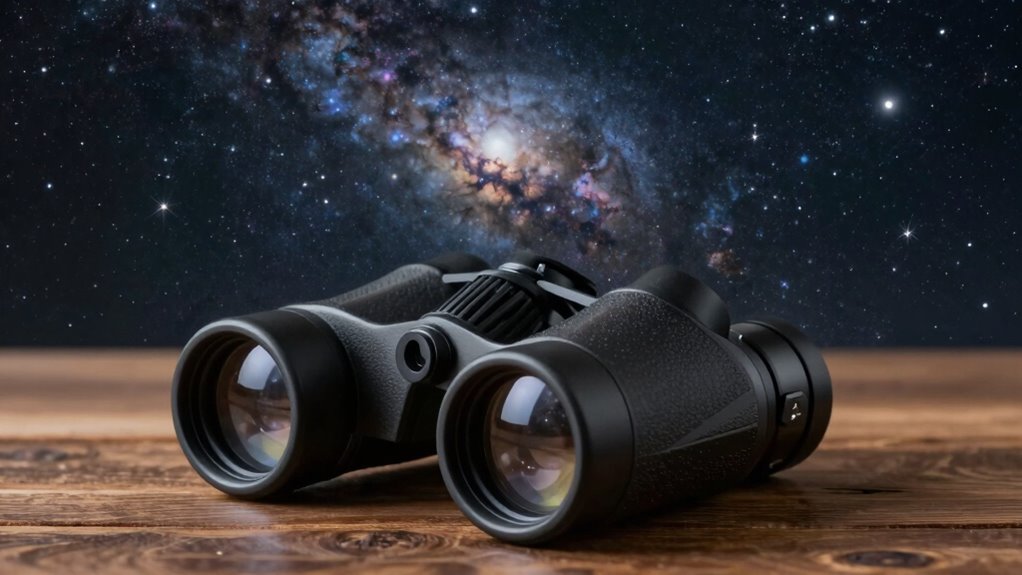

For most stargazers, the Celestron SkyMaster 15×70 is the best overall choice here: its large objectives gather plenty of light, while its magnification is more manageable than 20x and 25x models. The Celestron Cometron 7×50 is easier to handhold and learn with, and the Sogries 25×100 offers a much larger-aperture option for observers prepared to use a sturdy mount. The main tradeoff is between a wider, steadier view at lower magnification and greater reach that makes hand shake more obvious. Read on for how all 13 options compare and which fits your observing style.

Get kitchen staples and gadgets delivered free with Prime
- Fast, free delivery on millions of items
- Prime Video, Amazon Music and more included
- Member-only deals all year
Key Takeaways
- 15×70 is the most balanced format in this lineup: the SkyMaster 15×70 offers more reach than 7×50 and 12×60 models without the demanding magnification of 20x, 25x, or 25×100 pairs.
- Large aperture comes with a support requirement: the 25×100 Sogries gathers more light than the smaller options, but its size and magnification make a solid mount part of the practical setup.
- Lower magnification favors easier handholding: the Cometron 7×50 and SkyMaster 12×60 are more approachable for sweeping star fields, though they show less detail at a given distance than higher-power models.
- Zoom models trade simplicity for flexibility: the SkyMaster 15-35×70 and Sogries 15-35x70mm can change magnification, but their highest settings call for stable support and may narrow the view.
- Not every large-number specification signals an astronomy advantage: the 20×50 waterproof pair has less light-gathering area than the 70mm and 80mm options, while the 20×70 travel model emphasizes mixed use over a dedicated astronomy setup.
| Celestron SkyMaster 15×70 Astronomy Binoculars |  | Best Overall | Magnification: 15x | Objective lens diameter: 70 mm | Prism type: BaK-4 | VIEW ON AMAZON | See Our Full Breakdown |
| Sogries 25×100 Astronomy Binoculars |  | Best for Maximum Light Gathering | Magnification: 25x | Objective lens diameter: 100 mm | Weight: 8.8 lbs | VIEW ON AMAZON | See Our Full Breakdown |
| 18×70 Professional Astronomy Binoculars |  | Best for Weather-Exposed Observing | Magnification: 18x | Objective lens diameter: 70 mm | Prism type: BAK-4 | VIEW ON AMAZON | See Our Full Breakdown |
| Celestron Cometron 7×50 Astronomy Binoculars |  | Best for Beginners | Magnification: 7x | Objective lens diameter: 50 mm | Angular field of view: 6.6° | VIEW ON AMAZON | See Our Full Breakdown |
| 20×80 Astronomy Binoculars with BaK-4 Prisms |  | Best for Lunar Detail | Magnification: 20x | Objective lens diameter: 80 mm | Prism type: BaK-4 | VIEW ON AMAZON | See Our Full Breakdown |
| Celestron SkyMaster 20×80 Binoculars |  | Best for Steady Deep-Sky Viewing | Magnification: 20x | Objective lens diameter: 80 mm | Prism type: BaK-4 | VIEW ON AMAZON | See Our Full Breakdown |
| 20×70 Binoculars for Bird Watching, Hiking, and Travel |  | Best for Multi-Use Stargazing | Magnification: 20x | Objective lens diameter: 70 mm | Eyepiece diameter: 26 mm | VIEW ON AMAZON | See Our Full Breakdown |
| Celestron SkyMaster 15-35×70 Zoom Binoculars |  | Best Adjustable-Magnification Pick | Magnification: 15x to 35x | Objective lens diameter: 70 mm | Prisms: BaK-4 | VIEW ON AMAZON | See Our Full Breakdown |
| Sogries 15-35x70mm High-Powered Binoculars for Adults |  | Best for Eyeglass Wearers | Magnification: 15–35x | Objective lens diameter: 70 mm | Prism type: BAK4 Porro | VIEW ON AMAZON | See Our Full Breakdown |
| Aurosports 20×80 Binoculars with 80mm Objective Lenses |  | Best 20×80 Alternative | Magnification: 20x | Objective lens diameter: 80 mm | Prism type and material: Porro prism, BAK4 | VIEW ON AMAZON | See Our Full Breakdown |
| Celestron SkyMaster 12×60 Binoculars |  | Best Handheld Astronomy Balance | Magnification: 12x | Objective lens diameter: 60 mm | Prism type: BaK-4 | VIEW ON AMAZON | See Our Full Breakdown |
| 20×50 Waterproof Binoculars for Adults |  | Best High-Magnification Travel Pick | Magnification: 20x | Objective lens diameter: 50 mm | Eyepiece diameter: 26 mm | VIEW ON AMAZON | See Our Full Breakdown |
| Celestron SkyMaster 25×70 Binoculars |  | Best for Detailed, Tripod-Mounted Views | Magnification: 25x | Objective lens diameter: 70 mm | Prism type: BaK-4 | VIEW ON AMAZON | See Our Full Breakdown |
| binoculars for astronomy | Magnification | Objective lens diameter | Prism type | Water resistance |
|---|---|---|---|---|
| Celestron SkyMaster 15×70 Astr | 15x | 70 mm | BaK-4 | — |
| Sogries 25×100 Astronomy Binoc | 25x | 100 mm | — | — |
| 18×70 Professional Astronomy B | 18x | 70 mm | BAK-4 | — |
| Celestron Cometron 7×50 Astron | 7x | 50 mm | — | — |
| 20×80 Astronomy Binoculars wit | 20x | 80 mm | BaK-4 | — |
| Celestron SkyMaster 20×80 Bino | 20x | 80 mm | BaK-4 | Water-resistant exterior |
| 20×70 Binoculars for Bird Watc | 20x | 70 mm | — | Not water resistant |
| Celestron SkyMaster 15-35×70 Z | 15x to 35x | 70 mm | — | Water-resistant exterior |
| Sogries 15-35x70mm High-Powere | 15–35x | 70 mm | BAK4 Porro | — |
| Aurosports 20×80 Binoculars wi | 20x | 80 mm | — | Not water resistant |
| Celestron SkyMaster 12×60 Bino | 12x | 60 mm | BaK-4 | Water-resistant |
| 20×50 Waterproof Binoculars fo | 20x | 50 mm | BAK4 Porro prism | Daily waterproof; do not immerse in water |
| Celestron SkyMaster 25×70 Bino | 25x | 70 mm | BaK-4 | Water-resistant exterior |
More Details on Our Top Picks
Celestron SkyMaster 15×70 Astronomy Binoculars
The Celestron SkyMaster 15×70 is a strong middle ground for astronomy: its 70 mm objectives gather more light than the Cometron 7×50, while 15x magnification gives a closer view of the Moon and star fields. BaK-4 prisms support bright low-light viewing, and the included tripod adapter makes steady observation easier to set up. Fold-down eyecups also suit many glasses wearers. Compared with the 20×80 Astronomy Binoculars, this model offers less magnification and a smaller aperture, but that can make it a less demanding choice for mounting and handling. Its size still makes a tripod advisable for long sessions, and you must supply the tripod itself. Choose it for a versatile astronomy-first pair; skip it if you want lightweight handheld scanning.
Pros:- 70 mm objectives and BaK-4 prisms support bright low-light views
- 15x magnification brings lunar features and star fields closer than 7×50 binoculars
- Tripod adapter is included
- Fold-down eyecups accommodate eyeglass wearers
Cons:- Size and weight make a tripod advisable for extended viewing
- Tripod is not included
Best for: Stargazers seeking a versatile 15x binocular with large objectives, eyeglass-friendly eyecups, and an included tripod adapter.
Not ideal for: Casual sky scanners who want a light pair for extended handheld use, since the 15x magnification and 70 mm objectives make steady holding difficult.
- Magnification:15x
- Objective lens diameter:70 mm
- Prism type:BaK-4
- Tripod mount:¼-inch-20 adapter
- Housing:Rubber-armored, water-resistant
- Eyecups:Fold-down
- Warranty:Limited lifetime US warranty
Our verdict“Choose the SkyMaster 15×70 for a capable astronomy and distance-viewing pair if you can provide a tripod for longer sessions.”
Sogries 25×100 Astronomy Binoculars
For observers prioritizing aperture and reach, the Sogries 25×100 offers the largest objectives in this batch and 25x magnification. That combination is aimed at pulling in faint star fields and showing a larger image than the Celestron SkyMaster 15×70, though magnification alone cannot promise detail on every target. Fully multi-coated optics and BaK-4 Porro prisms are built for light transmission, while waterproof, fogproof, and shock-resistant construction suits outdoor use. The cost of this scale is practical: at 8.8 lb, it needs a sturdy tripod, and none is included. Individual focus also takes more setup than a single center-focus control. This makes the most sense for a fixed observing spot and patient setup, not for quick handheld sky scans.
Pros:- 100 mm objective lenses provide the largest aperture in this batch
- 25x magnification offers a closer view than the 15×70 options
- Fully multi-coated optics and BaK-4 Porro prisms
- Waterproof, fogproof, and shock-resistant housing
Cons:- Heavy at 8.8 lb and requires a tripod
- Tripod is not included
- Individual focus takes more adjustment than center focus
Best for: Stationary observers who want 100 mm objectives and high magnification for astronomy from a dedicated tripod setup.
Not ideal for: Beginners seeking portable, grab-and-go binoculars, since the 8.8 lb body requires a tripod that is not included and uses individual focus.
- Magnification:25x
- Objective lens diameter:100 mm
- Weight:8.8 lbs
- Prism type and material:Porro prism, BaK-4
- Optical coating:Fully multi-coated
- Eye relief:15.5 mm
- Exit pupil:4 mm
- Field of view:147 ft
- Focus type:Individual focus
Our verdict“Pick the Sogries 25×100 if maximum aperture matters more to you than portability and you already have a suitable tripod.”
18×70 Professional Astronomy Binoculars
The 18×70 Professional Astronomy Binoculars pair a larger image scale than the Celestron SkyMaster 15×70 with the same 70 mm objective diameter. That makes them a plausible step up for viewers who want more reach without moving to the much heavier 25×100 Sogries. Their IPX7 waterproof and fogproof construction adds reassurance for damp nights, and fully multi-coated optics with BAK-4 prisms are suited to low-light viewing. The included smartphone adapter is an unusual extra for recording or sharing a view, alongside a tripod adapter and carrying case. However, the 18x magnification and robust build favor tripod use, and the kit does not include a tripod. The phone attachment is secondary; choose this model mainly for weather protection and higher magnification.
Pros:- 18x magnification provides more reach than the SkyMaster 15×70
- IPX7 waterproof and fogproof construction
- Fully multi-coated optics and BAK-4 prisms
- Tripod and smartphone adapters are included
Cons:- Tripod use is advisable, but no tripod is included
- Higher magnification makes handheld views more sensitive to movement
Best for: Observers who stargaze in damp or changeable conditions and want 18x magnification with a tripod adapter included.
Not ideal for: People who need a ready-to-use tripod setup or prefer simple, lightweight handheld binoculars for casual sky viewing.
- Magnification:18x
- Objective lens diameter:70 mm
- Prism type:BAK-4
- Lens coating:Fully multi-coated
- Water and fog protection:IPX7 waterproof and fogproof
- Tripod compatibility:Built-in 1/4-inch-20 thread; tripod adapter included
- Smartphone adapter fit:2.09–3.54 in wide
- Included accessories:Smartphone adapter, tripod adapter, carrying case, lens covers
Our verdict“Choose this 18×70 model if weather protection and extra magnification matter and you can supply a tripod.”
Celestron Cometron 7×50 Astronomy Binoculars
The Celestron Cometron 7×50 is the easiest entry point here for broad, relaxed sky scanning. Its 7x magnification and 6.6° field of view make it easier to sweep across constellations than the tighter, higher-power view of the SkyMaster 15×70. The 50 mm objectives and multi-coated optics gather useful light, while the same lower magnification makes handheld viewing more practical for short sessions. It can also move from stargazing to birdwatching or scenic use, giving it broader daytime utility than the specialized 25×100 Sogries. The tradeoff is less reach and aperture, so it will not bring lunar details as close as the stronger models. BK7 prisms are also a more basic specification than the BaK-4 glass in several alternatives.
Pros:- Wide 6.6° field of view helps scan large sections of sky
- 7x magnification is more manageable handheld than higher-power options
- 50 mm objectives and multi-coated optics support bright views
- Useful for astronomy, birdwatching, hiking, and scenic viewing
Cons:- Lower magnification gives less reach for lunar and distant targets
- BK7 prisms are a more basic prism material than BaK-4 alternatives
- Tripod adapter is not included
Best for: First-time stargazers who want wide, easy handheld views and binoculars that can also serve for daytime outings.
Not ideal for: Observers focused on close lunar views or faint targets, who will benefit more from the larger objectives and higher magnification of models such as the SkyMaster 15×70.
- Magnification:7x
- Objective lens diameter:50 mm
- Angular field of view:6.6°
- Close focus distance:26.2 ft (8 m)
- Optics:Multi-coated
- Prism glass and design:BK7, Porro prism
- Tripod adaptable:Yes; adapter not included
- Warranty:Celestron Limited Lifetime US Warranty
Our verdict“Choose the Cometron 7×50 for forgiving wide-field sky scanning and daytime versatility rather than high magnification.”
20×80 Astronomy Binoculars with BaK-4 Prisms
With 20x magnification and 80 mm objectives, this model offers a more substantial step toward close lunar viewing than the Celestron SkyMaster 15×70. The larger aperture can gather more light, while BaK-4 prisms are intended to support clear views in dim conditions. A tripod mount is built in, and the carrying case helps protect the binoculars between sessions. Compared with the 18×70 Professional Astronomy Binoculars, it has a larger objective lens but less specified weather protection; the listing describes its body as waterproof and rubber-armored. At 2.08 kg, it is tiring to hold for long stretches, and the 4 mm exit pupil does not make it a lightweight wide-field option. Select it for mounted lunar and star-field viewing, not spontaneous handheld use.
Pros:- 20x magnification and 80 mm objectives offer a closer, brighter view than 15×70 binoculars
- BaK-4 prisms are suited to low-light viewing
- Waterproof, rubber-armored body
- Tripod mount and carrying case are included
Cons:- At 2.08 kg, it can become tiring to hold
- Tripod is recommended to reduce vibration
- Weather protection is specified less fully than the IPX7 18×70 model
Best for: Moon watchers and stargazers who want 20x magnification, 80 mm objectives, and a built-in tripod mount.
Not ideal for: Travelers or casual observers who want compact binoculars for quick handheld viewing, given its 2.08 kg weight and vibration sensitivity.
- Magnification:20x
- Objective lens diameter:80 mm
- Prism type:BaK-4
- Eye relief:17 mm
- Exit pupil diameter:4 mm
- Field of view:173 feet
- Focus type:Center focus, manual
- Weight:2.08 kg
- Mount type:Tripod mount
Our verdict“Choose these 20×80 binoculars for tripod-mounted lunar viewing if you value aperture and magnification over handheld comfort.”
Celestron SkyMaster 20×80 Binoculars
For astronomy buyers who can mount their binoculars, the SkyMaster 20×80 pairs high magnification with the largest objectives in this batch. Its 80 mm lenses gather more light than the 70 mm optics on the SkyMaster 15-35×70 Zoom, a useful advantage when scanning dimmer star fields. BaK-4 prisms and multi-coated optics support bright views, while the built-in tripod adapter makes a stable setup straightforward. The tradeoff is real: at 20x, hand shake is hard to ignore, and the large body is less convenient to carry or aim quickly. I’d pick it for planned sessions from a fixed spot, not casual handheld stargazing. The tripod is not included, so buyers need to provide their own support.
Pros:- 80 mm objectives gather more light than the 70 mm models in this batch
- BaK-4 prisms and multi-coated optics support bright low-light views
- Built-in tripod adapter supports steadier extended observing
- Includes a padded case and basic lens-care accessories
Cons:- Large size and weight make a tripod advisable for extended sessions
- Tripod is not included
- 20x magnification makes handheld views prone to shake
Best for: Astronomy observers who want large objectives for dimmer targets and already have a sturdy tripod
Not ideal for: Casual stargazers who want handheld viewing or a compact pair to carry on hikes
- Magnification:20x
- Objective lens diameter:80 mm
- Prism type:BaK-4
- Exit pupil:4 mm
- Tripod mount:Built-in ¼”-20 adapter
- Water resistance:Water-resistant exterior
- Included accessories:Carrying case, objective lens caps, rainguard, neck strap, lens cloth, instruction manual
Our verdict“Choose this for tripod-based astronomy when light gathering matters more than portability.”
20×70 Binoculars for Bird Watching, Hiking, and Travel
The appeal here is a 20x astronomy view in a 70 mm format that also suits distant terrestrial subjects. Compared with the Celestron SkyMaster 20×80, its smaller objectives make it the less light-gathering choice, but may suit buyers who want one pair for occasional stargazing and daytime viewing. Fully multi-coated optics and BAK4 prisms are promising for contrast and light transmission; the 3.5 mm exit pupil gives a narrower beam than the 80 mm option’s 4 mm exit pupil. At about 2.8 lb, it is still heavy to carry, and 20x magnification can make handheld astronomy frustrating. Its stated lack of water resistance also limits confidence in damp outdoor conditions. I’d treat it as a mixed-use pick, with a stable support for sky sessions.
Pros:- 20x magnification helps reveal distant terrestrial details and lunar features
- 70 mm objectives offer a substantial light-gathering aperture
- BAK4 prisms and fully multi-coated optics
- Rubber-coated grip and included neck strap
Cons:- Not water resistant
- About 2.8 lb can feel heavy on hikes
- High magnification is difficult to hold steady without support
Best for: Daytime birders and hikers who also want high-magnification views of the night sky from a supported position
Not ideal for: Observers who prioritize dim-sky light gathering, weather protection, or easy handheld use
- Magnification:20x
- Objective lens diameter:70 mm
- Eyepiece diameter:26 mm
- Prism type and material:Roof prism, BAK4
- Optics coating:Fully multi-coated, anti-reflective
- Exit pupil:3.5 mm
- Focus and diopter:Manual focus; +/-5 diopters
- Weight:1.19 kg (about 2.8 lbs)
- Water resistance:Not water resistant
Our verdict“Pick this for mixed daytime and astronomy use if you can support it and can avoid wet conditions.”
Celestron SkyMaster 15-35×70 Zoom Binoculars
The 15–35x zoom gives this SkyMaster a different role from fixed-power pairs such as the Celestron SkyMaster 20×80: start at lower power to find a target, then increase magnification when the view and stability allow. That flexibility can help with both sky and distant terrestrial observing, though zooming to 35x also magnifies shake and makes tripod support especially useful. Its 70 mm objectives are smaller than the 20×80’s, so I’d favor the 80 mm model when gathering more light is the priority. BaK-4 prisms, a rubber-armored body, and a water-resistant exterior make this a more weather-ready option than the non-water-resistant 20×70 in the batch. Buyers should still account for its bulk and bring their own tripod.
Pros:- 15x to 35x zoom allows lower-power scanning and higher-power viewing
- 70 mm objectives pair with BaK-4 prisms for dim-condition viewing
- Rubber-armored, water-resistant exterior suits outdoor use
- Includes a 1/4-20 tripod adapter
Cons:- High zoom settings amplify hand shake and call for a tripod
- Tripod is not included
- 70 mm objectives gather less light than the SkyMaster 20×80’s 80 mm lenses
Best for: Observers who want to vary magnification while scanning the sky or viewing distant landscapes from a tripod
Not ideal for: Buyers who want the simplest fixed-power setup, maximum light gathering, or easy handheld astronomy
- Magnification:15x to 35x
- Objective lens diameter:70 mm
- Prisms:BaK-4
- Tripod adapter:1/4-20 included
- Water resistance:Water-resistant exterior
- Warranty:Limited lifetime US warranty
Our verdict“Choose this if adjustable power matters more than the greater aperture of a fixed 20×80 pair.”
Sogries 15-35x70mm High-Powered Binoculars for Adults
Among the zoom models, the Sogries stands out for its stated 20.3 mm eye relief, which can make the eyepiece easier to use while wearing glasses. Its 15–35x range resembles the Celestron SkyMaster 15-35×70 Zoom, so both offer the option to find a target at lower power and magnify further. This pair adds an aluminum chassis and fully multi-coated lenses, but the supplied data does not specify water resistance or a warranty, leaving less to go on for wet-weather use. Like any 70 mm binocular pushed toward 35x, it is bulky and magnifies movement; the included tripod adapter helps, but a tripod itself is not listed. I’d choose it for eyeglass comfort, while favoring the Celestron if stated water resistance matters more.
Pros:- 20.3 mm eye relief is suited to many eyeglass wearers
- 15–35x zoom offers a broad magnification range
- BAK4 Porro prisms and fully multi-coated lenses
- Included tripod adapter supports steadier viewing
Cons:- High magnification may require tripod support to control shake
- 70 mm objectives and zoom mechanism add bulk
- Product data does not specify water resistance
Best for: Eyeglass-wearing observers who want adjustable magnification and plan to use a tripod
Not ideal for: Handheld stargazers or buyers who need documented water resistance for outdoor sessions
- Magnification:15–35x
- Objective lens diameter:70 mm
- Prism type:BAK4 Porro
- Lens coating:Fully multi-coated (FMC)
- Eye relief:20.3 mm
- Chassis:Aircraft-grade aluminum
- Tripod adapter:Included
Our verdict“Choose this zoom pair for its stated long eye relief if you observe with glasses and have a tripod.”
Aurosports 20×80 Binoculars with 80mm Objective Lenses
This Aurosports matches the 20x magnification and 80 mm aperture of the Celestron SkyMaster 20×80, making it a direct alternative for tripod-based astronomy rather than a lighter travel choice. Its BAK4 Porro prisms and fully multi-coated lenses support the low-light purpose, while rubber armor adds grip and some impact protection. The listed 15 mm eye relief may be less comfortable for some eyeglass wearers than the Sogries zoom’s 20.3 mm. The data also says it is not water resistant, which narrows its appeal for exposed outdoor sessions. A tripod mount is included, but the product notes that a tripod is required and does not list one in the accessories. The carrying bag and neck strap help transport it, though neither solves the bulk of an 80 mm pair.
Pros:- 20x magnification and 80 mm objectives suit long-range, low-light viewing
- BAK4 Porro prisms and fully multi-coated lenses
- Rubber armor offers a non-slip grip and impact protection
- Includes a tripod mount, carrying bag, and neck strap
Cons:- Requires tripod support for steady use
- Not water resistant
- 15 mm eye relief may be limiting for some eyeglass wearers
Best for: Observers seeking a fixed 20×80 configuration with a tripod mount and carrying bag
Not ideal for: Eyeglass wearers prioritizing long eye relief or stargazers who need water resistance
- Magnification:20x
- Objective lens diameter:80 mm
- Prism type and material:Porro prism, BAK4
- Lens coating:Fully multi-coated
- Eye relief:15 mm
- Exit pupil:4 mm
- Field of view:168 feet
- Focus and diopter:Center focus, manual; ±3
- Water resistance:Not water resistant
Our verdict“Choose this as a fixed 20×80 option if you have a tripod and do not need weather resistance.”
Celestron SkyMaster 12×60 Binoculars
The 12x magnification and 60 mm objectives give these binoculars a useful middle ground for scanning star fields: more reach than the 7×50 Celestron Cometron, with less magnification to steady than the SkyMaster 25×70. Their BaK-4 prisms support brighter views in dim conditions, while the rubber-armored, water-resistant body adds grip and protection for nights outside. They can be used handheld for shorter looks, though their size may tire your arms during longer sessions. A standard photo tripod mount is available when you want steadier views, but the tripod itself is not included. Choose this model if you want a capable astronomy option without committing to the heavier, higher-magnification feel of larger SkyMasters.
Pros:- 12x magnification offers more reach than low-power 7×50 binoculars
- 60 mm objectives and BaK-4 prisms support bright views in dim conditions
- Water-resistant, rubber-armored housing adds grip and protection
- Compatible with a standard photo tripod
Cons:- Tripod is not included
- Size and weight can make prolonged handheld viewing tiring
Best for: Stargazers who want more reach than a 7×50 binocular and plan to alternate between brief handheld views and tripod use
Not ideal for: Observers who want relaxed, extended high-magnification sessions without buying or carrying a tripod
- Magnification:12x
- Objective lens diameter:60 mm
- Prism type:BaK-4
- Housing:Rubber-armored
- Water resistance:Water-resistant
- Tripod compatibility:Standard photo tripod; tripod not included
- Warranty:Limited Lifetime US Warranty
Our verdict“Pick the SkyMaster 12×60 if you want a middle-ground astronomy binocular for short handheld looks and occasional tripod viewing.”
20×50 Waterproof Binoculars for Adults
With 20x magnification, this model reaches farther than the 12×60 Celestron SkyMaster, but its 50 mm objectives gather less light than that larger-lens option. That tradeoff makes it a more travel-oriented choice for buyers who also want binoculars for daytime distance viewing, rather than a dedicated deep-sky instrument. Its BAK4 Porro prisms and fully multi-coated lenses support light transmission, and the stated 168-yard field of view at 1,000 yards gives some context for scanning distant scenes. For astronomy, the high magnification can make hand shake conspicuous, so a steady support may help; no tripod compatibility is specified. The water-resistant body is described as daily waterproof, but must not be immersed.
Pros:- 20x magnification provides more reach than the 12×60 SkyMaster
- BAK4 Porro prisms and fully multi-coated lenses support light transmission
- 168-yard field of view at 1,000 yards is specified
- Center focus wheel and rubber-coated body provide practical handling features
Cons:- 50 mm objectives gather less light than the 60 mm SkyMaster 12×60
- High magnification can make handheld astronomy views hard to steady
- Water resistance does not allow immersion, and tripod compatibility is not specified
Best for: Travelers who want one high-magnification binocular for distant daytime viewing and occasional stargazing from a steady position
Not ideal for: Astronomy beginners seeking easy handheld star-field scanning or anyone who needs confirmed tripod compatibility
- Magnification:20x
- Objective lens diameter:50 mm
- Eyepiece diameter:26 mm
- Field of view:168 yards at 1,000 yards
- Prism type:BAK4 Porro prism
- Lens coating:FMC (Full Multi-Coating)
- Water resistance:Daily waterproof; do not immerse in water
Our verdict“Choose these if daytime distance viewing matters as much as occasional stargazing and you can keep the high magnification steady.”
Celestron SkyMaster 25×70 Binoculars
The 25x magnification and 70 mm objectives put the SkyMaster 25×70 toward the high-reach end of this group. Compared with the SkyMaster 12×60, it can show a more enlarged view, while the larger objectives help support bright views in low light. That extra reach comes with a clear condition: tripod mounting is advisable for extended observing, and the included adapter does not include the tripod. BaK-4 prisms and multi-coated optics suit astronomy, while fold-down eyecups accommodate eyeglasses. Its water-resistant, rubber-armored housing and supplied case and lens accessories make it a more complete kit than the 20×50 binoculars, though the 25×70 is larger and less convenient to carry or hold steady.
Pros:- 25x magnification offers greater reach than the SkyMaster 12×60
- 70 mm objectives, BaK-4 prisms, and multi-coated optics support low-light viewing
- Built-in ¼”-20 tripod adapter is included
- Fold-down eyecups accommodate eyeglasses
Cons:- Large size and weight make extended handheld use difficult
- A tripod is advisable for stable viewing but is not included
Best for: Astronomy observers who prioritize magnified views and already own or plan to use a photo tripod
Not ideal for: Casual stargazers who want compact, easy handheld binoculars for quick looks across the sky
- Magnification:25x
- Objective lens diameter:70 mm
- Prism type:BaK-4
- Optics:Multi-coated
- Tripod mount:¼”-20 adapter
- Water resistance:Water-resistant exterior
- Included accessories:Tripod adapter, objective lens caps, rainguard, carrying case, neck strap, lens cloth, instruction manual
- Warranty:Limited Lifetime US Warranty
Our verdict“Choose the SkyMaster 25×70 for more magnified astronomy views if you are prepared to mount it on a tripod.”

How We Picked
I ranked these binoculars by how well their stated magnification and objective size suit observing the night sky, then weighed the practical demands those specifications create. Larger objectives can gather more light, but higher magnification also makes hand movement more visible and generally narrows the view, so I favored a useful balance over the biggest numbers alone. I also considered whether the format seems manageable for beginners, whether a tripod is likely to be needed, and whether features such as zoom, waterproofing, or multipurpose positioning add real value for astronomy.
That logic puts the SkyMaster 15×70 first as a balanced starting point among the dedicated astronomy models. Lower-power 7×50 and 12×60 pairs rank well for ease of use, while 20x, 25x, and 25×100 options suit buyers willing to accept more shake and support needs for extra reach or aperture. Zoom and general-purpose models rank according to how well their flexibility serves stargazing, not how many uses their names promise. Product names alone do not establish optical quality, included accessories, or measured performance, so buyers should verify current specifications and package contents before choosing.
| binoculars for astronomy | Prism type | Water resistance |
|---|---|---|
| Celestron SkyMaster 15×70 Astr | BaK-4 | — |
| Sogries 25×100 Astronomy Binoc | — | — |
| 18×70 Professional Astronomy B | BAK-4 | — |
| Celestron Cometron 7×50 Astron | — | — |
| 20×80 Astronomy Binoculars wit | BaK-4 | — |
| Celestron SkyMaster 20×80 Bino | BaK-4 | Water-resistant exterior |
| 20×70 Binoculars for Bird Watc | — | Not water resistant |
| Celestron SkyMaster 15-35×70 Z | — | Water-resistant exterior |
| Sogries 15-35x70mm High-Powere | BAK4 Porro | — |
| Aurosports 20×80 Binoculars wi | — | Not water resistant |
| Celestron SkyMaster 12×60 Bino | BaK-4 | Water-resistant |
| 20×50 Waterproof Binoculars fo | BAK4 Porro prism | Daily waterproof; do not immerse in water |
| Celestron SkyMaster 25×70 Bino | BaK-4 | Water-resistant exterior |
Factors to Consider When Choosing Binoculars For Astronomy
Choosing astronomy binoculars is less about maximizing one specification and more about matching the view to how you observe. These factors can help narrow the field before comparing individual models.
Balance Magnification Against a Steady View
Magnification makes objects appear larger, but it also enlarges the effect of every movement in your hands. That can make a high-power pair tiring or frustrating even if its headline specification sounds appealing. Lower magnification tends to make it easier to sweep across broad star fields and keep an object in view. Higher power can help when you want a closer look, especially if you can support the binoculars on a tripod. Think about whether you expect to observe standing, seated, or from a fixed position before choosing the strongest magnification available.
Match Objective Size to Your Carrying and Mounting Plans
The objective lenses are the large front lenses, and larger ones can collect more light. They also add bulk, which matters when carrying binoculars to a dark observing spot or holding them for long sessions. A very large aperture may make less sense if you do not have a mount capable of holding its weight steady. Smaller models are easier to pack and lift, though they may show a less bright view of dimmer targets. Set a realistic limit for weight and support first, then choose the largest format that fits it.
Think About Field of View and Finding Targets
A wide field makes it easier to scan the sky and locate a target, while a narrower field can make it harder to orient yourself when you are new to observing. Higher magnification often comes with a narrower view, so the tradeoff can be more noticeable than the larger image suggests. For beginners, learning to move from a bright reference star to a nearby target may be easier with a broad view. Check the stated field of view when available, and compare specifications in the same units. If the listing omits it, do not assume two pairs with the same magnification will show equally much sky.
Treat Zoom as a Tradeoff, Not a Free Upgrade
Zoom binoculars let you change magnification, which can be handy when you want to scan broadly and then inspect a target more closely. At stronger settings, the view can become harder to hold steady and the visible patch of sky may shrink. The added mechanism also makes it harder to judge optical performance from magnification range alone. A fixed-power pair offers a simpler choice when you already know the kind of view you prefer. Choose zoom for the flexibility itself, and plan on support if you expect to use its highest settings.
Check Eyecup Fit, Focus, and Package Details
A binocular that is difficult to focus or position comfortably can limit an observing session, regardless of its aperture. Eyeglass wearers should check the stated eye relief and whether the eyecups fold or adjust to make room for glasses. Look for a center focus mechanism and diopter adjustment if you need to compensate for differences between your eyes. Verify whether a tripod adapter, case, or strap is included rather than assuming it comes with the product. Clear listing details make it easier to compare the complete setup you will actually use.
Match Weather Protection to Your Observing Locations
Night observing can mean cool air, dew, and repeated trips between storage and the outdoors. Water resistance can help protect equipment from damp conditions, but the word waterproof should be checked against the maker’s specific rating and care instructions. Weather protection does not replace careful storage or make optics immune to condensation. If you observe mostly from a covered area, low weight or a wider view may matter more than rugged construction. If your sessions involve exposed locations, give verified sealing and a protective case more weight in your decision.
Frequently Asked Questions
Can I use 15×70 astronomy binoculars without a tripod?
You can hold them by hand briefly, but movement is likely to make the view less steady than with lower magnification. Whether that feels acceptable depends on your grip, posture, and how long you observe at a time. A monopod or tripod can make it easier to keep an object in view during longer sessions. If you want to observe while walking around or scanning casually, a lower-power pair may be more comfortable. Choose 15×70 if its added reach matters enough to you to accept occasional or regular support.
Are 20x or 25x binoculars better for astronomy than 15×70?
They can show objects at greater apparent magnification, but that does not make them a better fit for every observer. Higher power makes hand shake more obvious and can make target finding harder if the field of view is narrower. Many observers will need a tripod to use these pairs comfortably. A 15×70 can be a more practical balance for someone who wants a substantial step up from ordinary handheld binoculars. Decide based on your mounting setup and experience as much as the magnification number.
Should I choose a 25×100 pair if I am new to stargazing?
A 25×100 model is aimed at a more deliberate setup: its large objectives and high magnification make it bulky and difficult to keep steady by hand. Before buying, confirm that you have a sturdy tripod or mount that can handle the binoculars and position them comfortably. Beginners who want to learn the sky may find a smaller, lower-power pair easier to point and use. The larger format makes sense if gathering light and viewing from a fixed location are central goals. If portability matters, the size may outweigh the benefits.
Is a zoom binocular a good first astronomy pair?
It can suit someone who values changing magnification, but the range alone does not make it easier to use. Higher zoom settings can increase shake and make it harder to find objects, and you may want a tripod for those views. A fixed-power model is simpler if you want a straightforward first setup for learning how to scan the sky. Compare the zoom pair’s field of view and weight with fixed-power alternatives before deciding. Choose zoom if the flexibility is useful enough to justify those tradeoffs.
What should I buy if I want one pair for astronomy and travel?
Start by deciding whether easy carrying or astronomy-specific light gathering matters more, since a large-aperture pair can be cumbersome on a trip. A lower-power, lighter model can be simpler to carry and use without a mount, though it will show a different view from a large 70mm or 80mm astronomy pair. The 20×70 travel model in this roundup has a multipurpose name, but its relatively high magnification still merits checking its weight and stability needs. Compare those details with smaller options before treating any pair as an all-purpose choice. For frequent travel, comfort and packability may matter more than maximum magnification.
Conclusion
For the broadest mix of astronomy reach and manageable size, I would start with the Celestron SkyMaster 15×70 as the best overall pick. The Celestron Cometron 7×50 is my choice for beginners who want a simpler, easier-to-handhold view, while the Celestron SkyMaster 12×60 suits buyers seeking a middle ground at lower power. For a larger fixed observing setup, the Sogries 25×100 is the best premium-style choice in this lineup, provided you have a sturdy mount. The 20×50 Waterproof Binoculars may appeal when weather protection and general carrying matter more than large objectives, but their smaller aperture makes them a less specialized astronomy pick. Match the binoculars to your support, portability needs, and preferred field of view, then verify the seller’s specifications and included accessories.
NFL season / tailgating Picks
team gear
As an affiliate, we earn on qualifying purchases.